
How to Care for Spring Beauty
Grow Spring Beauty (Claytonia virginica), a dainty spring ephemeral, in dappled woodland soil that stays moist while it blooms and flowers.
Read the full Spring Beauty encyclopedia entry →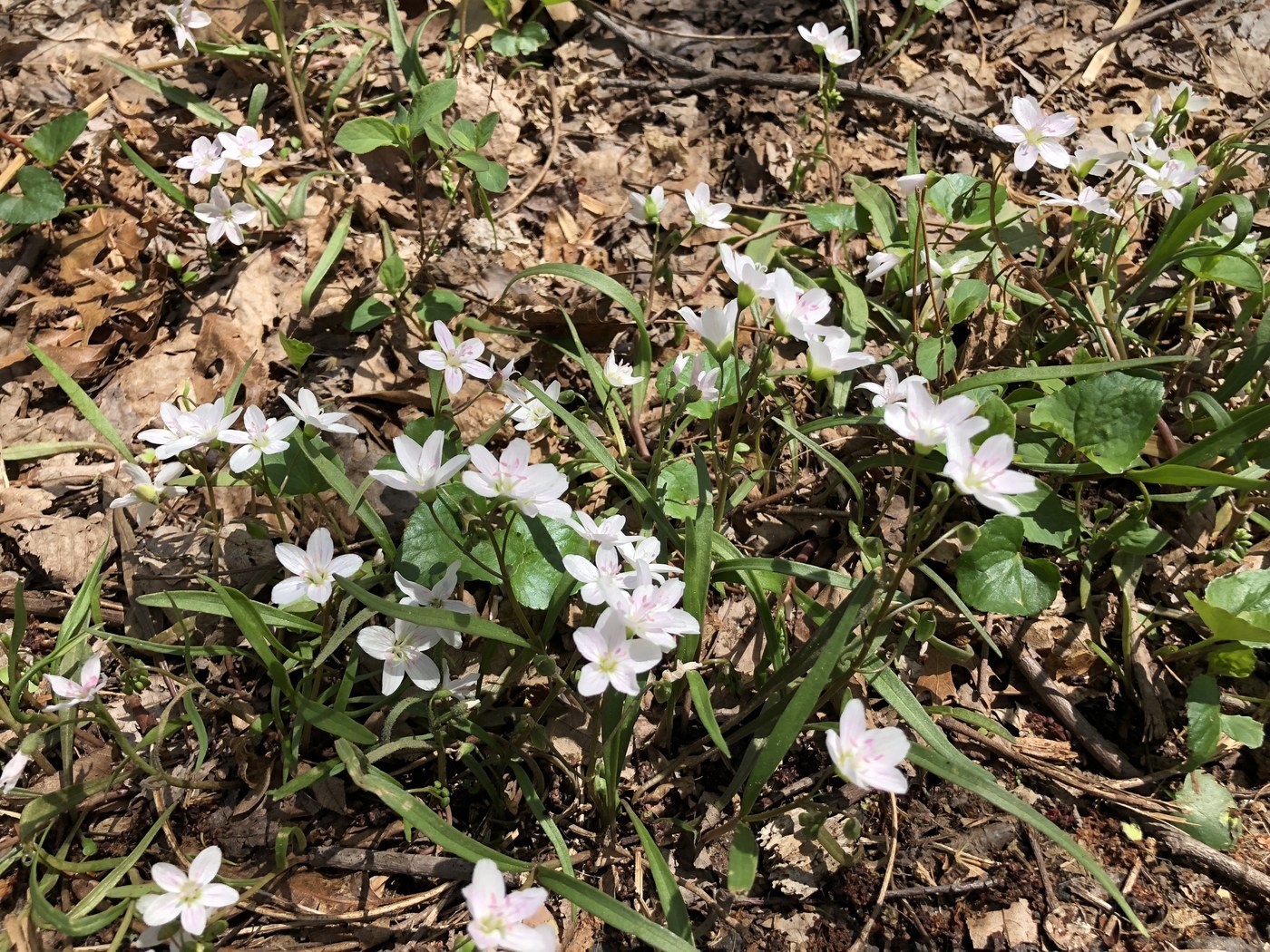
Spring Beauty (Claytonia virginica) is a low-growing spring ephemeral prized for its starry white-to-pink flowers etched with candy-stripe veins. It rises from a small underground corm, blooms in early spring, then quietly goes dormant, making it a charming addition to woodland gardens and naturalized lawns.
Light
Spring Beauty thrives in partial shade to full sun, echoing its native woodland floor where it soaks up light in early spring before the tree canopy leafs out. In gardens, a spot under deciduous trees is ideal: bright and open while it flowers, shaded once dormant. It will also grow in open, sunny meadow settings as long as spring moisture is adequate.
Water
Keep the soil moderately moist during the active spring growing and flowering period, when the plant does most of its work. Consistent spring moisture produces the best flowering. Once foliage yellows and the plant enters summer dormancy, it needs little to no supplemental water and prefers drier, undisturbed soil until the following spring.
Soil & Potting
Plant in humus-rich, loose woodland soil with plenty of leaf mold or compost, mimicking the deep, spongy duff of a forest floor. It appreciates a slightly acidic to neutral pH and good drainage that still retains spring moisture. Set corms a couple of inches deep in fall. If growing in containers, use a rich, well-draining loam-based mix and a deep enough pot to accommodate the corm.
Humidity & Temperature
As a hardy temperate native, Spring Beauty is well adapted to cold winters, which its corms actually require to trigger spring emergence. It handles the cool, damp air of early spring naturally and needs no special humidity. Summer heat simply pushes it into dormancy, which is normal and healthy.
Feeding
This is a low-feeding plant that gets most of what it needs from rich woodland soil. An annual autumn topdressing of leaf mold or well-rotted compost is more than enough. Avoid heavy synthetic fertilizers, which can encourage lush foliage at the expense of the delicate flowers.
Propagation
Spring Beauty spreads readily by self-sown seed and by producing offset cormlets underground. To propagate deliberately, lift and divide the small corms in late summer or fall while dormant, replanting them promptly. You can also collect and sow fresh seed in fall, though seed-grown plants take a few seasons to reach flowering size.
Repotting / Pruning
No pruning is needed; simply let the foliage die back naturally after flowering, since the fading leaves recharge the corm. Container-grown plants can be refreshed by lifting and replanting the corms in fresh soil during dormancy every couple of years. In the garden, leave clumps undisturbed to naturalize into drifts.
Common Problems & Pests
Spring Beauty is largely trouble-free. The most common issue is rot from soggy soil during its summer dormancy, so avoid overwatering once foliage fades. Slugs may nibble tender spring growth in damp conditions. In lawns, mowing too early before the foliage has yellowed will weaken the corms over time.
Seasonal Care Tips
In fall, plant or divide corms and topdress with leaf mold. In early spring, ensure steady moisture as growth and flowers appear. After bloom, let the leaves yellow and die back undisturbed. Through summer, keep the dormant area on the drier side and mark the spot so you do not accidentally dig into resting corms.
Frequently asked questions
Why did my Spring Beauty disappear in summer?
This is completely normal. Spring Beauty is a spring ephemeral that flowers early, then dies back to its underground corm and goes dormant through summer, re-emerging the following spring.
How much sun does Spring Beauty need?
It grows well in partial shade to full sun. In its native woodland habit it enjoys full early-spring sun before trees leaf out, then dappled shade once dormant.
When should I water Spring Beauty?
Focus watering on the spring growing and flowering period, keeping soil moderately moist. Reduce water sharply once foliage yellows and the plant enters summer dormancy.
How do I propagate Spring Beauty?
Lift and divide the small corms in late summer or fall while the plant is dormant, or sow fresh seed in fall. It also self-sows and forms offset cormlets on its own.