
How to Care for Staghorn Fern
Grow a dramatic mounted Staghorn Fern (Platycerium bifurcatum) with bright indirect light, soak-and-dry watering, and humidity for antler-like fronds.
Read the full Staghorn Fern encyclopedia entry →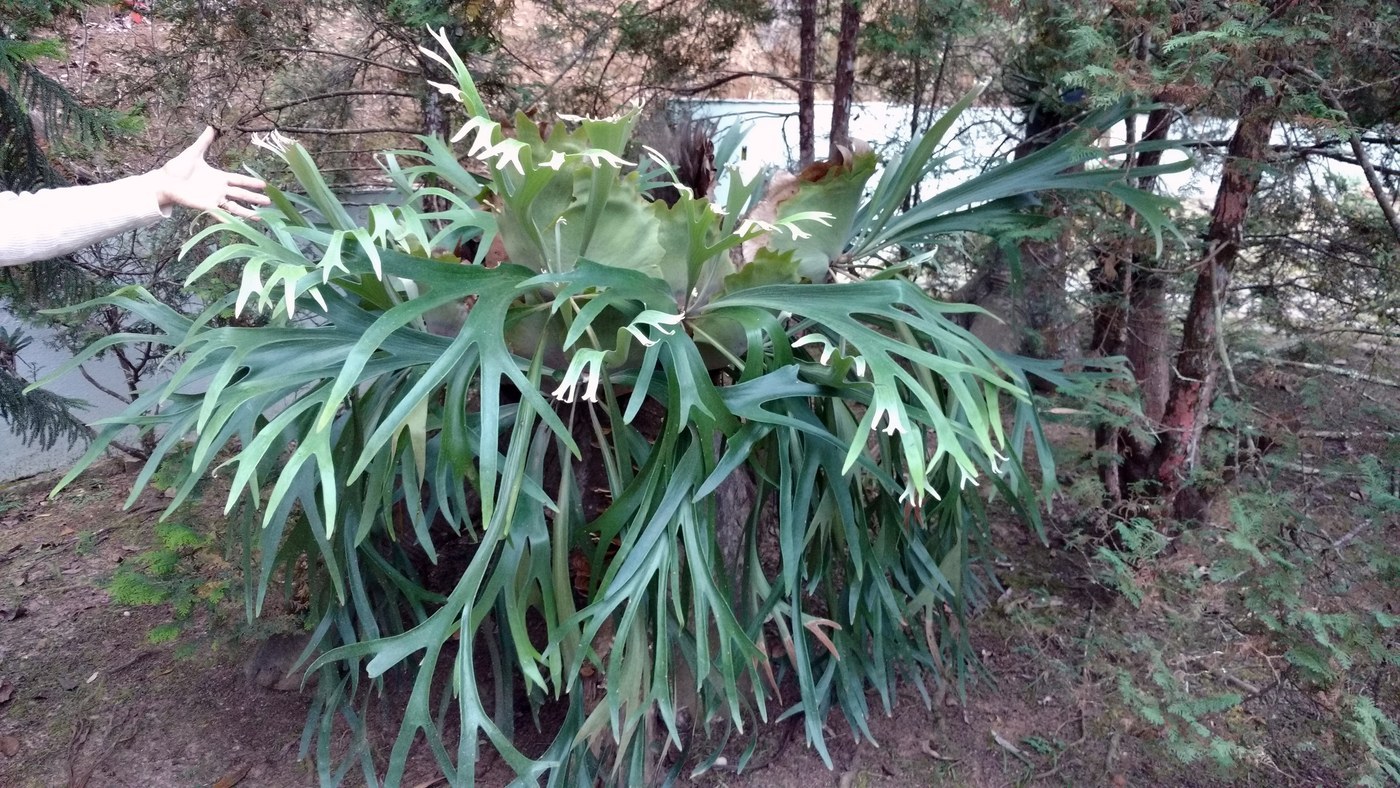
The Staghorn Fern (Platycerium bifurcatum) is a striking epiphytic fern with two frond types: flat, shield-like basal fronds that clasp its support, and forked, antler-shaped fertile fronds that give it its name. In the wild it grows on tree trunks, so it is most often mounted on a board or grown in a hanging basket rather than in an ordinary pot.
Light
Provide bright, indirect light. A spot near an east or north window, or a few feet from a brighter south or west window, suits it well. It tolerates some gentle morning sun but harsh direct midday sun burns the fronds. In too little light the plant grows slowly and produces few new antler fronds. Rotate a mounted fern occasionally so all sides get even light.
Water
Water by the soak-and-dry method: when the mount or moss feels dry and light, soak it. Submerge the root ball and moss in a basin of water (or drench it thoroughly) for a few minutes until saturated, let it drain fully, then rehang it. Between soakings, a light misting keeps humidity up. Frequency depends on conditions, often about once a week in warm months and every two weeks or so in cooler, dormant periods. Let it dry appreciably between waterings, since constant sogginess rots the base. A grey, wilting shield frond usually means it is thirsty.
Soil & Potting
Staghorns are epiphytes and do not want dense soil. Mount them on a wooden board with a pad of sphagnum moss around the root ball, or grow them in a basket with a loose, airy, bark-based orchid or epiphyte mix. Never bury the growing point or pack the roots in heavy soil, which traps moisture and causes rot. The papery brown basal fronds are a normal part of the plant and anchor it, so leave them intact.
Humidity & Temperature
This fern loves warmth and humidity. Keep temperatures between about 15-27 C (60-80 F) and protect it from frost and cold drafts. It thrives at 50-80 percent humidity; a bathroom, kitchen, or a room with a humidifier is ideal, and regular misting helps in dry indoor air. Good airflow prevents fungal issues on the moist fronds.
Feeding
Feed during the growing season, roughly monthly in spring and summer, with a balanced liquid fertilizer diluted to half strength, applied during a soak or misted onto the fronds and moss. Some growers tuck a banana peel or compost behind the shield fronds as a slow food source, but simple diluted liquid feed works reliably. Reduce or stop feeding in fall and winter when growth slows.
Propagation
Mature Staghorns produce offshoots called pups at the base. Once a pup has its own basal and antler fronds, carefully separate it with a bit of root and moss and mount it on its own board or pot it in epiphyte mix. Platyceriums can also be grown from spores found on the undersides of mature fertile fronds, but this is slow and demanding, so division of pups is the practical home method.
Repotting / Pruning
Staghorns rarely need repotting in the traditional sense. Instead, remount onto a larger board when the plant outgrows its current one or the moss has broken down, usually every few years, adding fresh sphagnum around the root ball. Pruning is minimal: never cut the shield fronds even as they brown, since that is natural and protective. You can trim only fully dead, mushy, or damaged antler fronds. Handle new fronds gently, as their fuzzy coating protects them.
Common Problems & Pests
Overwatering and poor drainage cause blackening, rotting fronds and a soft base, the most common killers, so err toward letting it dry out. Grey, wilted, drooping antler fronds signal underwatering. Brown scorched patches mean too much direct sun. Watch for scale, mealybugs, and spider mites; treat gently with insecticidal soap, and avoid oily sprays that can clog the fine hairs on the fronds. Do not wipe off the natural silvery fuzz, which people sometimes mistake for pests or mildew.
Seasonal Care Tips
In spring and summer, growth is active, so water more frequently, feed monthly, and enjoy new antler fronds unfurling. In fall and winter, cut back on watering and stop feeding as the plant rests, and protect it from cold windowsills and dry heater air by maintaining humidity and misting. Keep it away from frost at all times, moving outdoor plants indoors before temperatures drop.
Frequently asked questions
How do I water a mounted Staghorn Fern?
Soak the mount when it feels dry and light, either by submerging the root ball and moss in water for a few minutes or drenching it thoroughly, then let it drain and rehang. Mist between soakings for humidity.
Why are the flat brown fronds at the base dying?
The shield-like basal fronds naturally turn brown and papery as they mature; this is normal and they anchor the plant. Leave them in place and never cut them off.
How often should I water my Staghorn Fern?
Roughly once a week in warm months and every couple of weeks in cooler periods, adjusting to your conditions. Always let the mount dry appreciably between soakings to avoid rot.
What is the white fuzz on my Staghorn's fronds?
That silvery fuzz is a natural protective coating on the fronds, not pests or mildew. Leave it alone and avoid wiping it off, since it helps shield the plant and retain moisture.