Staghorn Fern
Platycerium bifurcatum
The staghorn fern is a dramatic epiphytic fern whose fertile fronds branch like antlers. It grows mounted on wood or in baskets rather than in ordinary soil.
- Light
- Bright indirect light
- Water
- Soak when mount dries; mist between
- Difficulty
- Moderate
Got a plant like this?
Identify any plant from a photo, free.
Overview
Platycerium bifurcatum is an epiphytic fern grown for its striking, antler-like fronds. In the wild it grows attached to trees, and indoors it is most often mounted on a wooden board, in a basket, or in a wall display rather than potted in soil.
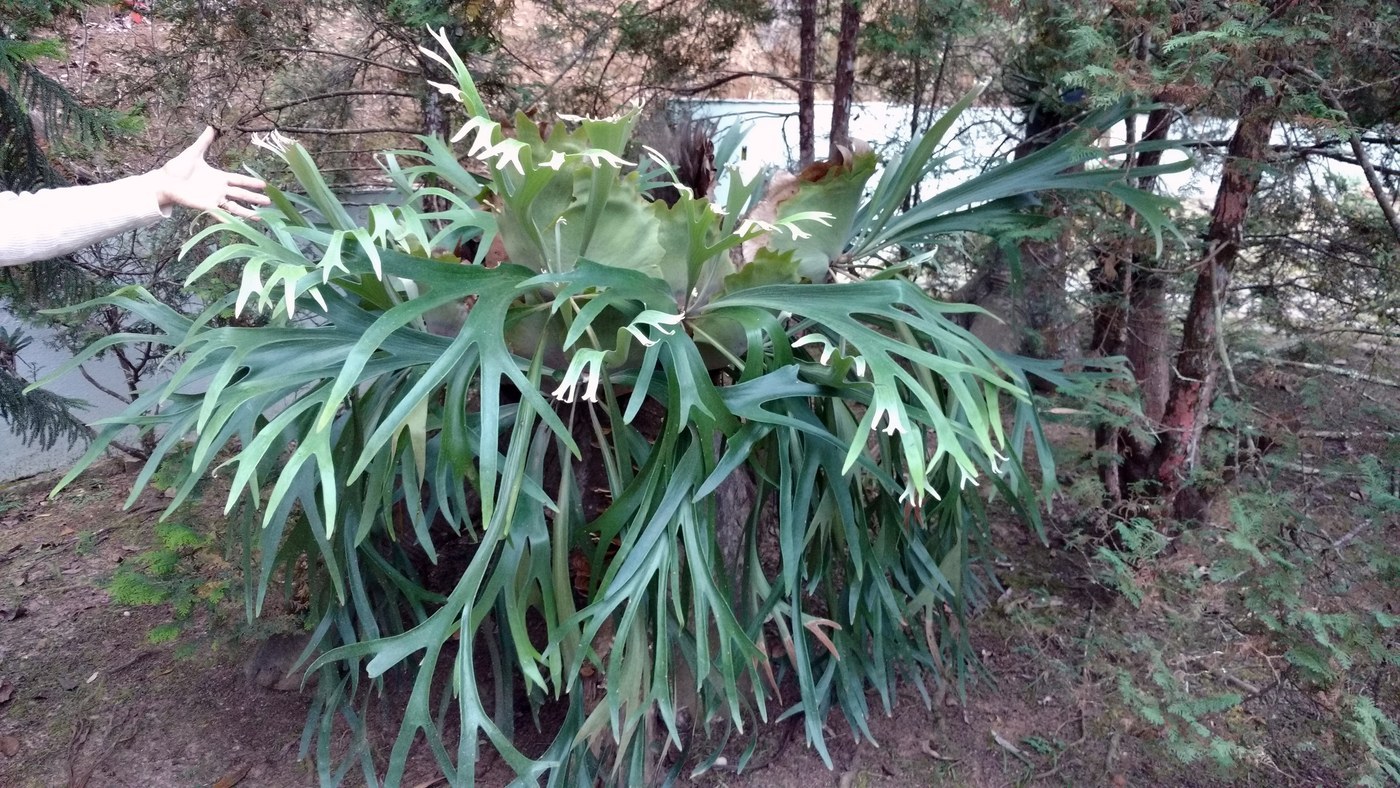
The plant produces two distinct frond types: flat, round shield fronds that clasp the mount and protect the roots, and the showy, branching fertile fronds that resemble a stag's antlers.
With good humidity and the right watering rhythm, it is a long-lived and spectacular living wall piece.
How to identify it
Recognize the staghorn fern by its two frond types:
- Shield (basal) fronds: flat, rounded, sterile fronds that clasp the mount and turn brown and papery with age (do not remove them)
- Foliar (fertile) fronds: green, forking, antler-like fronds that arch outward
- Spores: brown, felt-like patches form on the undersides of mature fertile fronds
- Growth: epiphytic, mounted rather than soil-grown
- No flowers: ferns reproduce by spores
Care & growing
- Light: bright, indirect light; avoid harsh direct sun
- Water: soak or thoroughly water the mount when it dries, then let it nearly dry before watering again; mist between soakings in dry air
- Humidity: high humidity is ideal
- Mounting medium: sphagnum moss on a board or in a basket; avoid standard potting soil
- Temperature: 60-80 degrees F; protect from frost
- Feeding: feed occasionally in the growing season with diluted fertilizer
- Propagation: separate offsets (pups) or grow from spores
- Tip: never remove the brown shield fronds, which protect the roots
Habitat & origin
Platycerium bifurcatum is native to the rainforests of eastern Australia, New Guinea, and Indonesia, where it grows as an epiphyte high on tree trunks and branches, gathering water and debris in its shield fronds.
It is the hardiest and most commonly grown staghorn species, popular worldwide as a mounted houseplant and, in mild climates, as an outdoor specimen on trees and walls.
Frequently asked questions
Should I cut off the brown shield fronds?
No. The flat brown basal fronds are a normal, healthy part of the plant that protect the roots and anchor it to the mount. Leave them in place.
How do I water a mounted staghorn fern?
Soak or thoroughly wet the mount and moss when it dries out, let it drain and nearly dry before the next watering, and mist the fronds between soakings if the air is dry.
Why are the fertile fronds turning black or brown at the base?
Blackening at the base usually signals overwatering and rot. Let the mount dry out more between waterings and ensure good air circulation.
Staghorn Fern guides
In-depth guides for identifying, growing, and caring for Staghorn Fern.
How to Care for Staghorn Fern
Grow a dramatic mounted Staghorn Fern (Platycerium bifurcatum) with bright indirect light, soak-and-dry watering, and humidity for antler-like fronds.
Staghorn Fern Identification Guide
Identify the Staghorn Fern (Platycerium) by its two distinct frond types: a round shield frond and forked, antler-like fertile fronds.