
Staghorn Fern Identification Guide
Identify the Staghorn Fern (Platycerium) by its two distinct frond types: a round shield frond and forked, antler-like fertile fronds.
Read the full Staghorn Fern encyclopedia entry →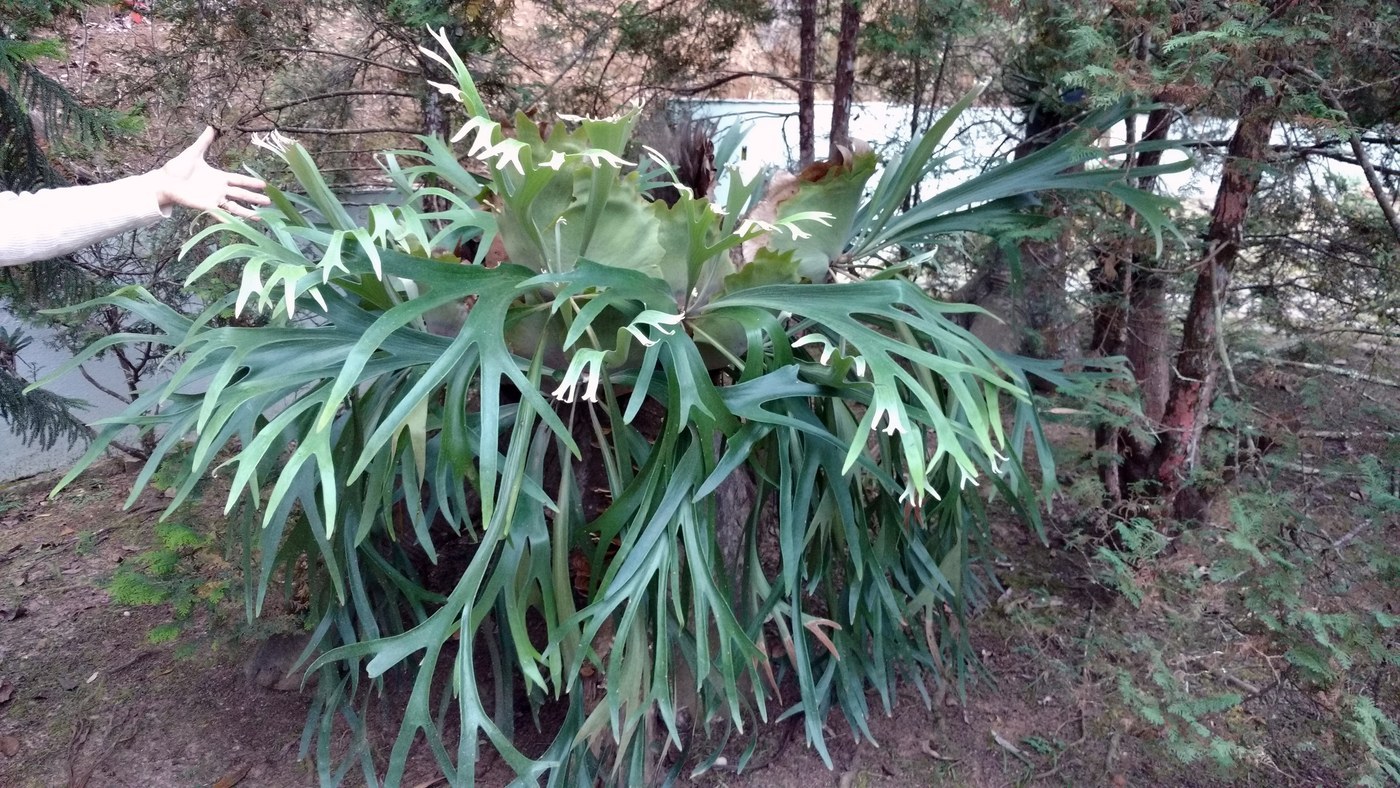
Key Identifying Features
The Staghorn Fern (Platycerium) is an unusual epiphytic fern named for its forked, antler-shaped fronds that jut outward like a stag's horns. Its most diagnostic trait is having two completely different kinds of fronds on one plant.
- Forked, antler-like 'foliar' fronds that arch outward
- Flat, round 'shield' (basal) fronds that clasp the mounting surface
- Grows mounted on bark or boards, not in soil
Leaves & Stems
The two frond types are the unmistakable ID:
- Fertile (foliar) fronds: gray-green, leathery, and repeatedly forked like deer antlers, arching out or hanging down; their undersides develop brown felt-like spore patches
- Shield (basal) fronds: flat, rounded, papery plates that grow at the base, pressing against the host; they start green and turn brown and papery with age, catching water and debris
- The whole plant is often covered in a fine white fuzz (trichomes) that can look like dust — do not wipe it off
- There is no woody stem; the fern grips its mount with roots hidden under the shield fronds
Flowers & Fruit
As a fern, it has no flowers, seeds, or fruit:
- Reproduces via spores borne in brown patches on the undersides of the antler frond tips
- The brown felt is a normal fertile structure, not disease
How to Tell It Apart from Look-Alikes
- Bird's nest fern (Asplenium): has simple, undivided strap leaves in a rosette — no antler forking.
- Elkhorn fern: is a closely related Platycerium with narrower, more finely divided fronds; both share the two-frond structure.
- Antlers (mounted leaf antlers): the combination of antler fronds + round shield fronds + soilless mounted growth is unique to staghorn ferns.
Where You'll Find It
Grown as a striking mounted houseplant or wall display, the Staghorn Fern is prized as living art. In the wild it grows as an epiphyte high on rainforest tree trunks and branches across Australia, Southeast Asia, Africa, and South America, anchoring itself with its shield fronds.
Quick ID Checklist
- Two frond types: antler-forked + round shield
- Forked, gray-green antler fronds
- Flat, papery shield fronds clasping the mount
- Grows mounted, not in soil
- No flowers; brown spore felt on frond undersides
Forked antler fronds rising from a round shield base on a mounted, soilless plant confirm a Platycerium staghorn fern.
Frequently asked questions
Why does my Staghorn Fern have two completely different kinds of leaves?
This is the fern's signature trait. The flat, round shield (basal) fronds anchor it and collect water and nutrients, while the forked, antler-shaped fertile fronds carry out photosynthesis and bear spores.
The flat brown disc at the base looks dead - should I remove it?
No. The brown, papery shield frond is a normal, functional part of the plant that protects the roots and traps moisture and debris. Removing it can harm the fern.
What are the brown patches on the undersides of the antler fronds?
Those are spore patches (sori), the fern's natural reproductive structures. They are a sign of a healthy, mature plant, not a pest or disease.
Why is my Staghorn Fern covered in white fuzz?
The fine white coating is made of trichomes that reduce water loss and protect the fronds. You should not wipe it off, and it helps confirm the plant is a Platycerium.