Horsetail
Equisetum arvense
An ancient, fern-related plant with jointed, hollow stems and whorls of needle-like branches that resemble a horse's tail. It is a persistent weed of damp ground, spreading by deep rhizomes and reproducing by spores.
- Light
- Full sun to part shade
- Water
- Moist soil; tolerates wet ground
- Difficulty
- Moderate
Got a plant like this?
Identify any plant from a photo, free.
Overview
Horsetail (Equisetum arvense, field horsetail) is a primitive, non-flowering plant in the genus Equisetum, the only surviving genus of an ancient lineage that dominated forests over 300 million years ago. It reproduces by spores rather than seeds.
It produces two kinds of stems: fertile, brownish spore-bearing stalks in early spring, followed by green, branched sterile stems through summer. Spreading by deep, persistent rhizomes, it is one of the hardest garden weeds to eradicate, but it is also valued historically for scouring.
How to identify it
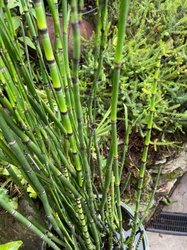
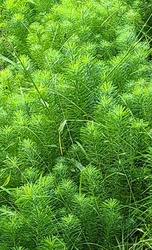
Identify horsetail by its jointed, hollow stems with whorls of thin branches.
- Green sterile stems with regular joints (nodes) and whorls of slender, needle-like branches, resembling a bottle brush or horse's tail
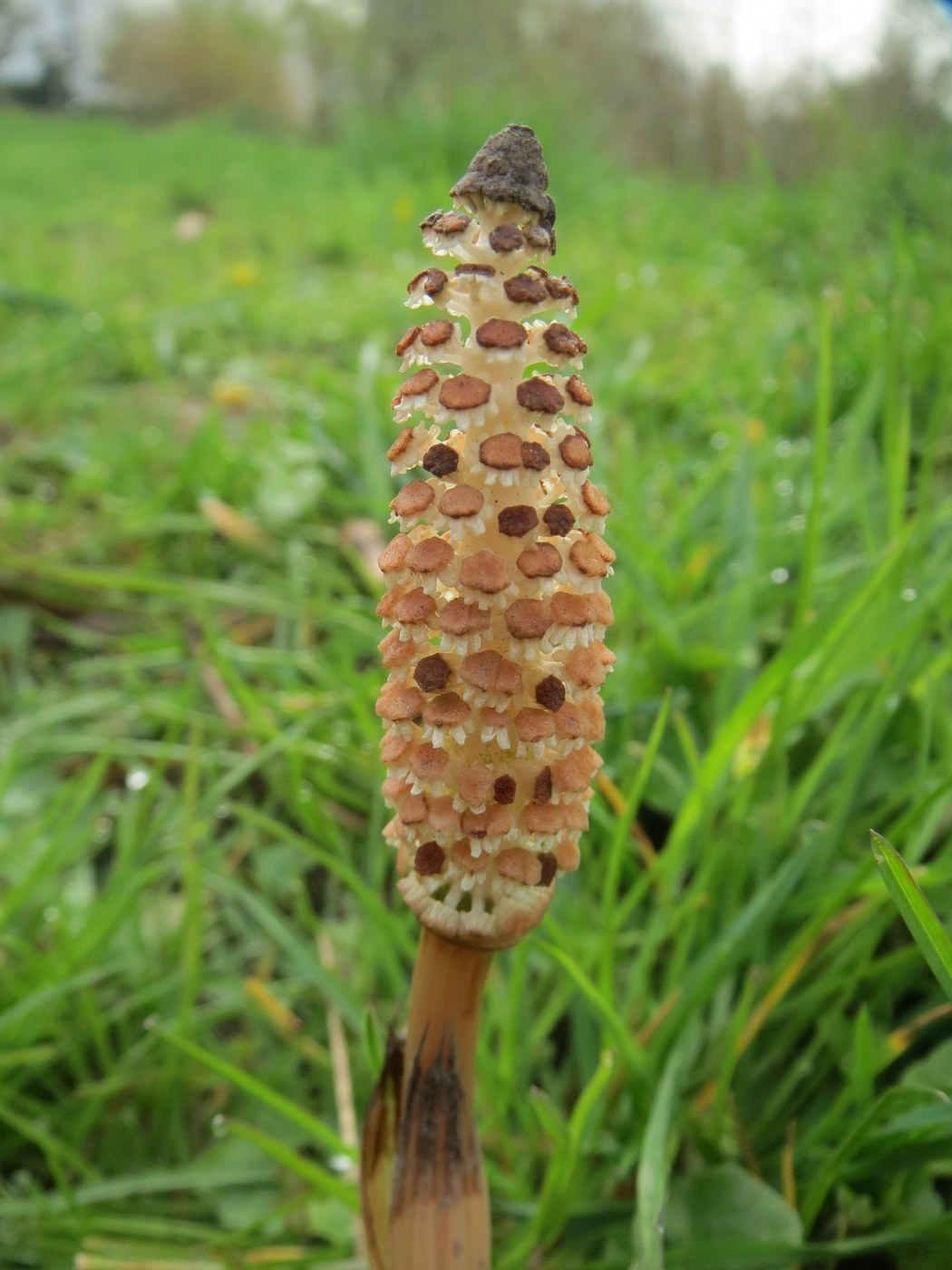
- Separate pale brown, unbranched fertile stems in early spring, each topped with a cone-like spore structure
- No true flowers or seeds; reproduces by spores
- Rough, silica-rich stems that feel gritty
- Spreads via deep, far-reaching black rhizomes
Care & growing
Horsetail is usually an unwanted, hard-to-remove weed.
- Light: Full sun to partial shade
- Water: Prefers moist to wet soils; common in poorly drained ground
- Soil: Tolerates poor, compacted, sandy or waterlogged soils
- Temperature: Very cold-hardy perennial
- Propagation: By spores and, mainly, by deep creeping rhizomes
- Control: Extremely difficult; rhizomes can reach several feet deep, so digging rarely fully removes it. Persistent removal, improving drainage and repeated treatment over years are needed; small fragments resprout
Habitat & origin
Field horsetail is native to the Northern Hemisphere and is widespread across North America, Europe and Asia.
It grows in moist, disturbed ground: ditches, roadsides, railway embankments, riverbanks, fields, gardens and damp waste places. It tolerates poor drainage and is often a sign of wet or compacted soil.
Frequently asked questions
Why is horsetail so hard to get rid of?
It spreads by deep, brittle rhizomes that can extend several feet underground, and any fragment left behind can regrow. Eradication usually takes persistent removal and improved drainage over multiple years.
Is horsetail a fern?
It is not a true fern but is a fern ally, a primitive spore-bearing plant in its own ancient lineage. Like ferns, it reproduces by spores rather than seeds and flowers.
What was horsetail used for historically?
Its silica-rich, abrasive stems were used to scour cookware and polish wood and metal, which is why it is also called scouring rush.
Horsetail guides
In-depth guides for identifying, growing, and caring for Horsetail.
How to Care for Horsetail
Grow Horsetail (Equisetum arvense): an architectural, primitive rush-like plant for wet ground and water features; contain its vigorous spread.
Horsetail Identification Guide
Identify horsetail by its jointed, hollow, ridged stems with whorls of needle-like branches, its lack of true flowers, and its spore-bearing cones. A living fossil.
Horsetail identified by the community
Real specimens identified with Plant Identifier.