Horsetail Identification Guide
Identify horsetail by its jointed, hollow, ridged stems with whorls of needle-like branches, its lack of true flowers, and its spore-bearing cones. A living fossil.
Read the full Horsetail encyclopedia entry →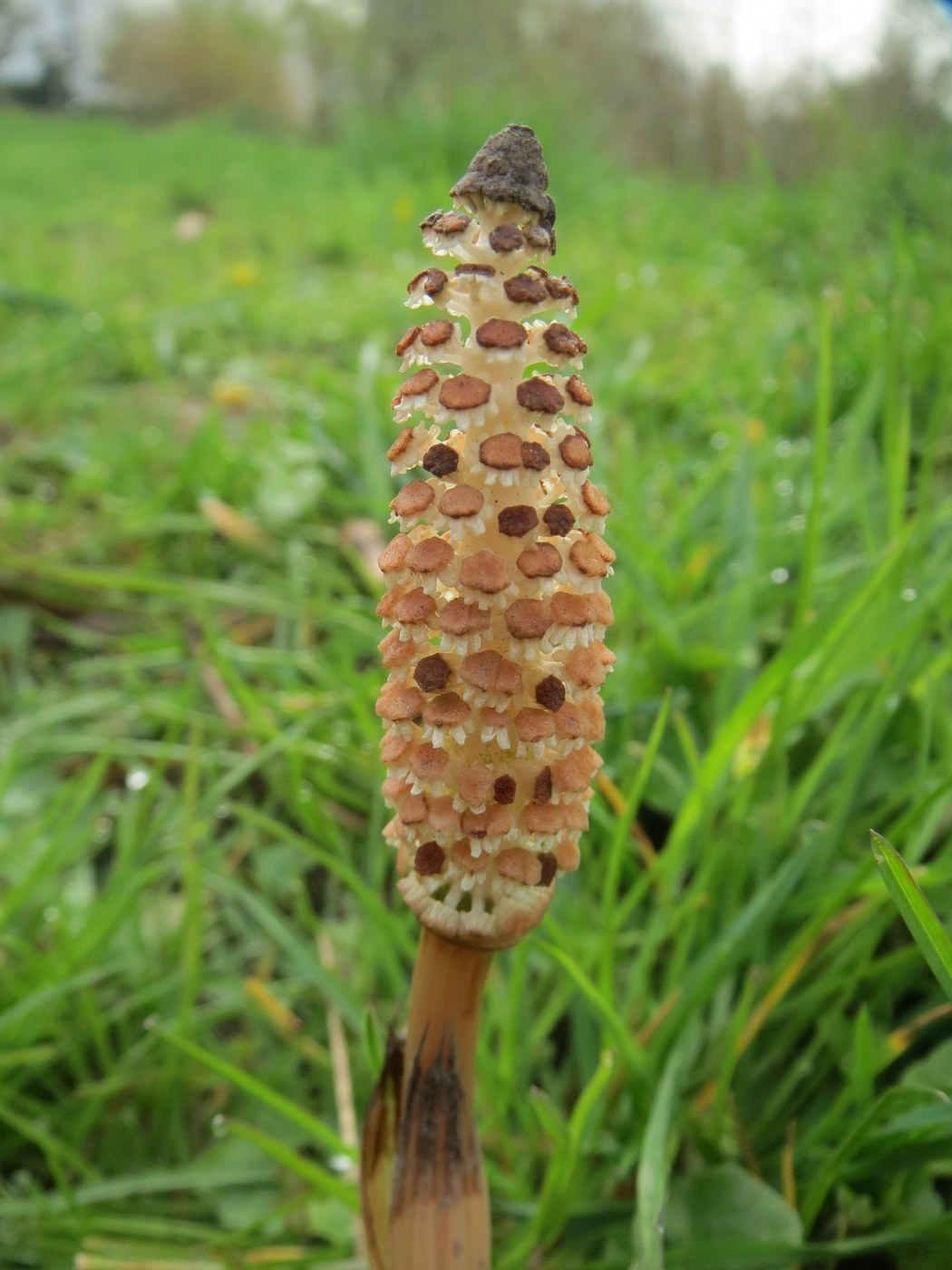
Key Identifying Features
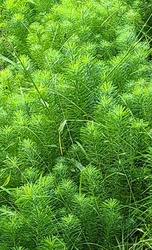
Horsetail (Equisetum species) is an ancient, non-flowering plant — a "living fossil" related to ferns that reproduces by spores, not seeds or flowers. It is instantly recognizable by its jointed, hollow, ridged stems that pull apart at the nodes, and by the whorls of slender needle-like branches radiating from each joint, giving common species a bottle-brush or horse-tail appearance. There are no true leaves or flowers.
- Jointed, hollow, vertically ridged stems that segment at nodes
- Whorls of thin branches at each joint (in field horsetail)
- No flowers, no broad leaves; reproduces by spores
- Gritty texture from silica in the stems
Leaves & Stems
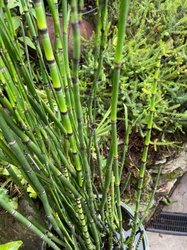
The stem is the whole plant. Stems are hollow, cylindrical, and grooved with vertical ridges, divided into segments that snap apart cleanly at each joint (a fun, diagnostic field test). At each node sits a small dark, toothed sheath (the reduced leaves) and, in field horsetail (E. arvense), a whorl of jointed green branches that themselves are ridged. Scouring rush (E. hyemale) instead has mostly unbranched rush-like stems. The stems feel rough and gritty due to silica.
Flowers & Fruit
Horsetail has no flowers or fruit. Instead it produces spores in a cone-like structure (strobilus) at the stem tip. In field horsetail, separate pale brown, leafless fertile stems appear early in spring bearing the cone, then wither, followed by the green sterile branched stems. Scouring rush bears its cone at the top of an evergreen green stem. Spotting the cone confirms it is a spore plant, not a seed plant.
How to Tell It Apart from Look-Alikes
- Grasses and sedges: Have flat or rounded leaves and produce flowers/seeds; horsetail has no leaves and segmented hollow stems that pull apart.
- Mare's tail (Hippuris): An unrelated flowering aquatic with a similar name and whorled leaves, but it has true leaves and flowers; horsetail does not.
- Field horsetail vs. scouring rush: Branched bottle-brush stems = field horsetail; mostly unbranched green reed-like stems = scouring rush.
Where You'll Find It
Horsetail favors moist, poorly drained soils — ditches, stream banks, wet fields, roadside seeps, marsh edges, and damp gardens — though it tolerates a range of conditions once its deep rhizomes establish. It spreads aggressively underground and is notoriously hard to remove. It is widespread across the Northern Hemisphere.
Quick ID Checklist
- Jointed hollow stems that pull apart at the nodes
- Vertical ridges and gritty silica texture
- Whorls of needle-like branches (field horsetail) or unbranched (scouring rush)
- No flowers; spore cone at stem tip
- Moist, disturbed, poorly drained ground
Segmented hollow ridged stems with whorled branches and no flowers confirm horsetail.
Frequently asked questions
Does horsetail have flowers?
No. Horsetail is an ancient spore-producing plant related to ferns, so it never produces flowers or seeds. Instead it forms a cone-like structure (strobilus) at the stem tip that releases spores.
Why are the stems segmented and gritty?
Horsetail stems are jointed and pull apart cleanly at each node, and they are reinforced with silica, which gives them a rough, gritty, sandpapery feel. Scouring rush was historically used to scrub pots because of this abrasiveness.
How do I tell field horsetail from scouring rush?
Field horsetail has whorls of thin branches radiating from each joint, giving a bottle-brush look, while scouring rush has mostly unbranched, evergreen, reed-like green stems. Both have the same jointed, ridged, hollow structure.
Why is horsetail so hard to get rid of?
It spreads through deep, extensive underground rhizomes and tubers that resprout even after the top growth is removed. The roots can reach several feet down, making it one of the most persistent garden weeds.
Horsetail identified by the community
Recent Horsetail specimens identified with Plant Identifier.