
Starfish Cactus Identification Guide
Identify the Starfish Cactus (Stapelia grandiflora) by its soft four-angled green stems and huge, hairy, star-shaped flowers that smell of carrion.
Read the full Starfish Cactus encyclopedia entry →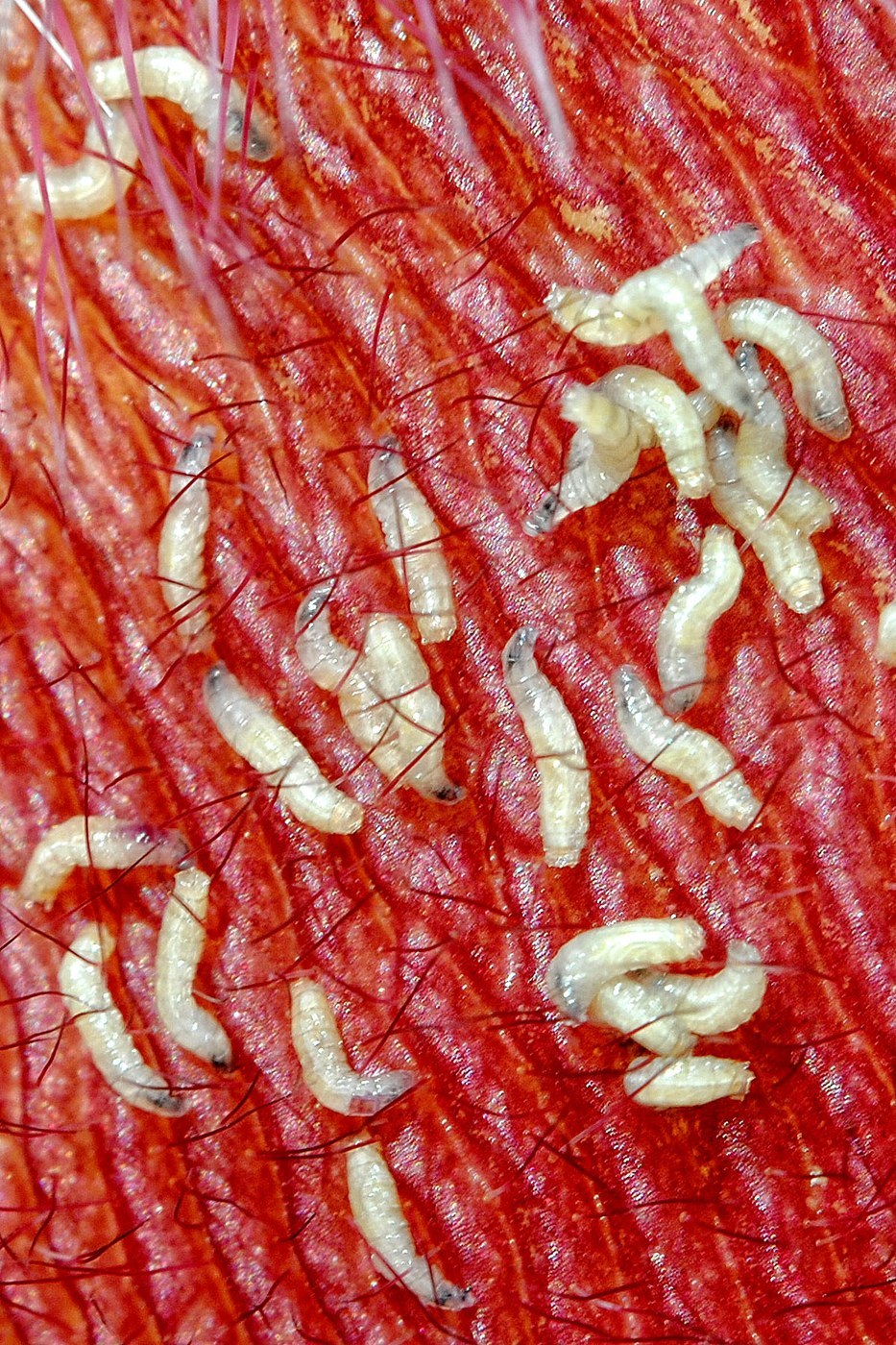
Key Identifying Features
Starfish Cactus (Stapelia grandiflora, also called Carrion Flower) is a stem succulent grown for its enormous, dramatic flowers. Look for:
- Soft, erect, four-angled green stems in clumps (no leaves).
- Very large, five-pointed star flowers up to 6 in (15 cm) or more across.
- Flowers covered in fine hairs and emitting a strong rotting-meat odor.
Stems & Leaves
Stems are fleshy, upright, 4-8 in (10-20 cm) tall, green to gray-green, square to four-angled in cross-section, with soft toothed edges along the angles. They are velvety-soft, not spiny, and branch at the base to form spreading clumps. There are no true leaves — the green stems do the photosynthesizing, similar to a cactus but in the milkweed family.
Flowers & Fruit
The flower is the definitive ID. It is a large five-lobed star, typically 5-6 in (12-16 cm) across, colored reddish-brown to purplish with fine cross-wrinkles (ridges) and fringed with long, silky purple-red hairs, especially along the petal margins. To attract pollinating flies it produces a strong carrion/rotten-flesh smell and often a fuzzy texture. Pollinated flowers form long, paired horn-like seed pods that split to release silky-tufted seeds.
How to Tell It Apart from Look-Alikes
- Huernia zebrina (Lifesaver Cactus): much smaller flowers (1-1.5 in) with a glossy red donut center and faint smell.
- Orbea variegata (Star Flower): flat star flowers heavily spotted with maroon and a raised central ring, only 2-3 in across.
- Stapelia gigantea: even larger flowers (up to 12-16 in); S. grandiflora is large but smaller and more hairy-fringed.
- True cacti: have areoles and spines; Stapelia has soft toothed angles, no areoles, and clear (not milky) sap.
Where You'll Find It
Native to southern Africa, it is a popular collector and windowsill oddity grown for its spectacular smelly blooms. Hardy in USDA 10-11; elsewhere a potted plant needing bright light, warmth, and a fast-draining gritty mix, kept nearly dry in winter to prevent rot.
Quick ID Checklist
- Soft, 4-angled green stems in clumps, no leaves
- Huge 5-pointed star flowers (~5-6 in)
- Flowers hairy, wrinkled, red-brown
- Strong carrion smell that attracts flies
- Paired horn-shaped seed pods
Frequently asked questions
Why does the Starfish Cactus smell so bad?
Stapelia grandiflora mimics rotting flesh in scent, color, and hairy texture to attract carrion flies, which pollinate the flowers. The smell is strongest when the flower is fresh and warm.
Is it actually a cactus?
No. It is a stem succulent in the milkweed family (Apocynaceae). It has soft toothed stem angles instead of cactus areoles and spines.
How do I distinguish it from Stapelia gigantea?
S. gigantea has even larger flowers, often 12-16 inches across, and is less densely fringed. S. grandiflora's flowers are large (5-6 in) and conspicuously hairy along the margins.
What are the long horns that grow after flowering?
Those are the paired seed pods (follicles). When ripe they split to release seeds carried on silky parachutes, much like milkweed.