
How to Care for String of Bananas
Grow String of Bananas (Senecio radicans), a fast-trailing succulent with glossy banana-shaped leaves perfect for hanging baskets.
Read the full String of Bananas encyclopedia entry →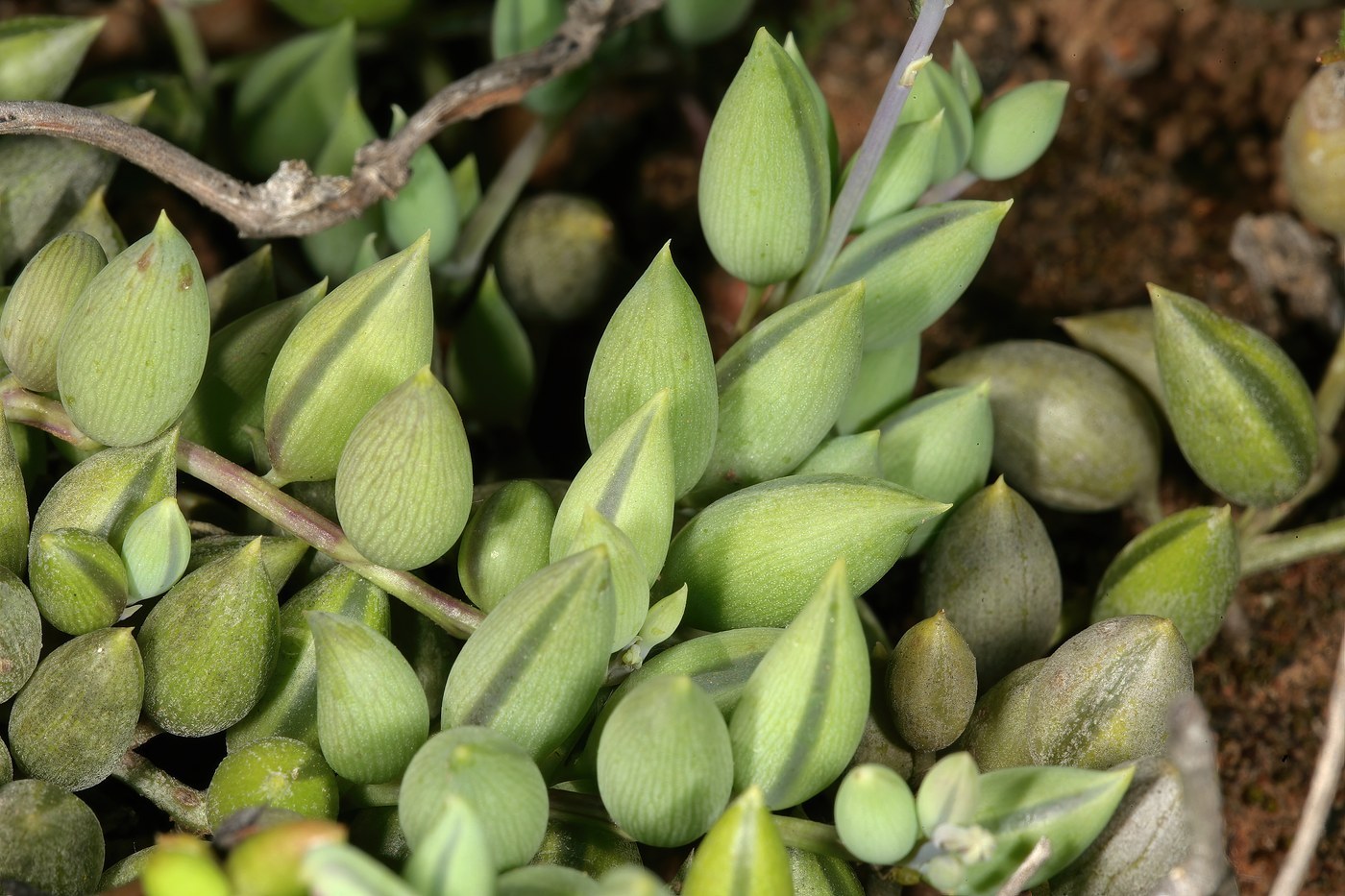
String of Bananas (Senecio radicans, also sold as Curio radicans) is a fast-growing trailing succulent with glossy, curved banana-shaped leaves cascading along slender stems. It is an easy, forgiving plant ideal for hanging baskets and high shelves.
Light
Give bright indirect light with some direct sun. A few hours of gentle morning sun keeps growth compact and the leaves plump, while an east or west window is ideal. Too little light causes leggy, sparse strands with widely spaced leaves. Protect from intense, unfiltered afternoon sun through glass, which can scorch the leaves.
Water
Water every 2-3 weeks, letting the soil dry out completely between waterings. This is a drought-adapted succulent that stores moisture in its bean-shaped leaves, so err on the dry side. Water thoroughly until it drains, then wait. Overwatering is the most common cause of failure; shriveled, flattening leaves signal it is thirsty, while mushy, translucent leaves signal too much water.
Soil & Potting
Use a fast-draining cactus or succulent mix, ideally amended with extra perlite, pumice, or coarse sand. Excellent drainage is essential. Plant in a container with drainage holes; unglazed terracotta helps excess moisture escape. Shallow, wide pots or hanging baskets suit the trailing, shallow-rooted habit.
Humidity & Temperature
String of Bananas thrives in normal, dry household humidity and dislikes damp, stuffy air. Comfortable temperatures range from about 60-80F. Protect it from frost and keep it above 50F in winter. Avoid cold drafts and sudden temperature swings.
Feeding
Feed lightly. Apply a diluted, balanced succulent fertilizer once in spring and again in mid-summer. Do not feed in fall and winter when growth slows. Over-fertilizing produces weak, floppy growth.
Propagation
Extremely easy from stem cuttings. Snip a healthy strand a few inches long, let the cut end callus for a day or two, then lay it on or press it lightly into moist succulent mix. Roots form quickly at the nodes. You can also coil a strand around the top of the pot to fill in a fuller basket.
Repotting / Pruning
Repot every couple of years or when roots crowd the pot, ideally in spring. Handle the delicate strands gently. Trim any leggy or bare strands to encourage bushier growth, and use the trimmings as cuttings. Pinching back tips keeps the plant full rather than stringy.
Common Problems & Pests
Root rot from overwatering is the main threat; ensure fast drainage and let the soil dry fully. Watch for mealybugs nestled in leaf joints and the occasional aphid or spider mite in dry indoor air. Treat pests by wiping with a cotton swab dipped in diluted rubbing alcohol or rinsing gently. Leggy growth means it needs more light.
Seasonal Care Tips
- Spring: Resume regular watering, feed lightly, and repot or propagate as growth resumes.
- Summer: Peak growing season; water when the soil dries and give bright light.
- Fall: Reduce watering as growth slows and stop feeding.
- Winter: Water sparingly, keep in bright light, and protect from cold windows and drafts.
Frequently asked questions
Why are my String of Bananas leaves shriveling?
Flat, shriveled leaves usually mean the plant is underwatered. Give it a thorough drink and the leaves should plump back up within a day or two. If leaves are instead mushy and translucent, that is overwatering.
How often should I water String of Bananas?
About every 2-3 weeks, always letting the soil dry out completely first. As a succulent it prefers to stay on the dry side, so water less in winter.
Why is my String of Bananas growing leggy?
Sparse strands with widely spaced leaves indicate too little light. Move it to a brighter spot with some direct morning sun and pinch back tips to encourage fuller growth.
How do I propagate String of Bananas?
Take a few-inch stem cutting, let it callus for a day or two, then lay it on moist succulent mix. Roots form quickly at the nodes.