
Subalpine Fir Identification Guide
How to identify Subalpine Fir (Abies lasiocarpa) by its narrow spire-like crown, upswept silvery needles, and purple upright cones. Covers high-elevation habitat and look-alike firs.
Read the full Subalpine Fir encyclopedia entry →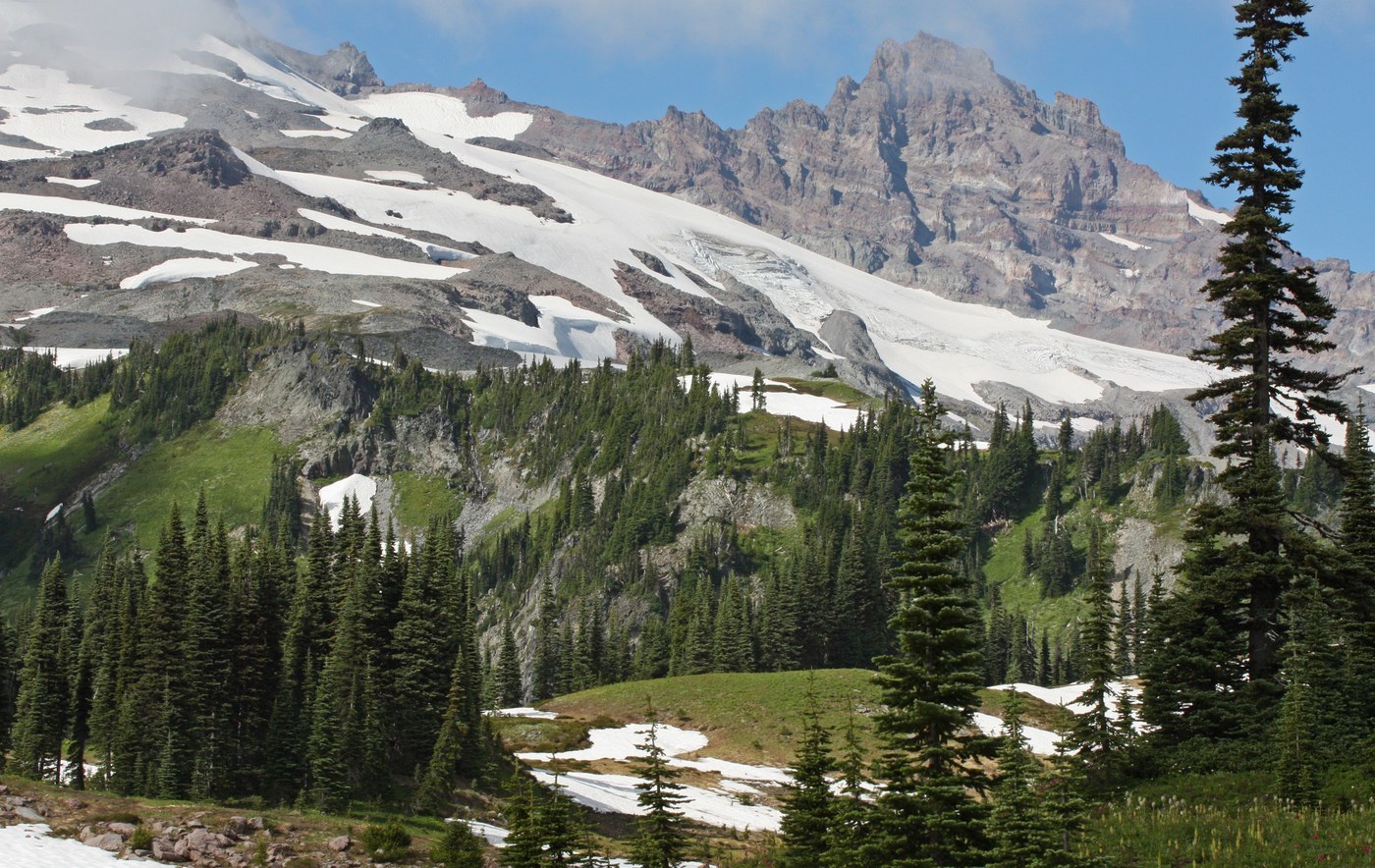
Key Identifying Features
Subalpine Fir (Abies lasiocarpa) is the slender, spire-topped fir of high western mountains, famous for its extremely narrow, steeple-like crown that sheds snow. Its needles sweep upward and forward over the top of the twig, are silvery-blue-green, and its upright cones are dark purple. The dense, narrow form is visible from a distance on alpine ridges.
Leaves & Stems
- Needles flat, soft, blunt or notched, 1 to 1.75 inches, with white stomatal lines on both surfaces giving a silvery-blue cast.
- Needles curve up and forward, crowding the upper side of the twig and leaving the underside relatively bare — a key separator from the flat two-ranked Grand Fir.
- Bark thin, smooth, gray, dotted with resin blisters when young; becomes scaly with age.
- Crown distinctly narrow and conical to spire-like, with a dense, often skirt-like base.
Flowers & Fruit
- Seed cones upright (erect) on the topmost branches, 2.5 to 4 inches long, deep purple when young.
- Cones disintegrate on the tree, releasing seeds and leaving an upright central spike.
- The purple, erect cones near the very top are a useful long-range clue.
How to Tell It Apart from Look-Alikes
- Engelmann spruce, its frequent companion, has sharp square needles on pegs and hanging cones; Subalpine Fir has soft flat needles and upright cones.
- Grand Fir has needles in two flat rows and lives at lower, moister elevations.
- Corkbark fir is a variety of Subalpine Fir with thick corky white bark, found in the southern Rockies.
- Noble and red fir are stouter, larger trees of the Pacific ranges with bigger cones.
- The narrow spire crown plus upswept silvery needles at high elevation says Subalpine Fir.
Where You'll Find It
High elevations of the western mountains — the Rockies, Cascades, and ranges of the interior West and into Alaska — often right up to timberline, where it may grow stunted and shrubby (krummholz). Cold, snowy subalpine forests, frequently mixed with Engelmann spruce.
Quick ID Checklist
- Very narrow, spire-like crown
- Soft flat needles sweeping up and forward over the twig
- Silvery-blue cast (white lines on both surfaces)
- Upright purple cones near the treetop
- High-elevation/timberline western mountains
Frequently asked questions
What is the most distinctive feature of Subalpine Fir?
Its extremely narrow, spire-like crown built to shed heavy snow, combined with soft needles that sweep upward over the twig and dark purple upright cones.
How do I separate Subalpine Fir from Engelmann spruce?
They often grow together. The fir has soft, flat, blunt needles and upright cones; the spruce has sharp, square, rolling needles on woody pegs and cones that hang down.
What color are Subalpine Fir cones?
Young upright cones are deep purple. Like all true firs they break apart on the tree rather than falling whole.
Where does Subalpine Fir grow?
In cold, snowy high-elevation forests of the western mountains, often right up to timberline where it can be stunted into shrubby krummholz.