
How to Care for Sugar Pine
Grow the majestic sugar pine (Pinus lambertiana) with full sun, deep well-drained soil, and patient, low-maintenance care in cool mountain climates.
Read the full Sugar Pine encyclopedia entry →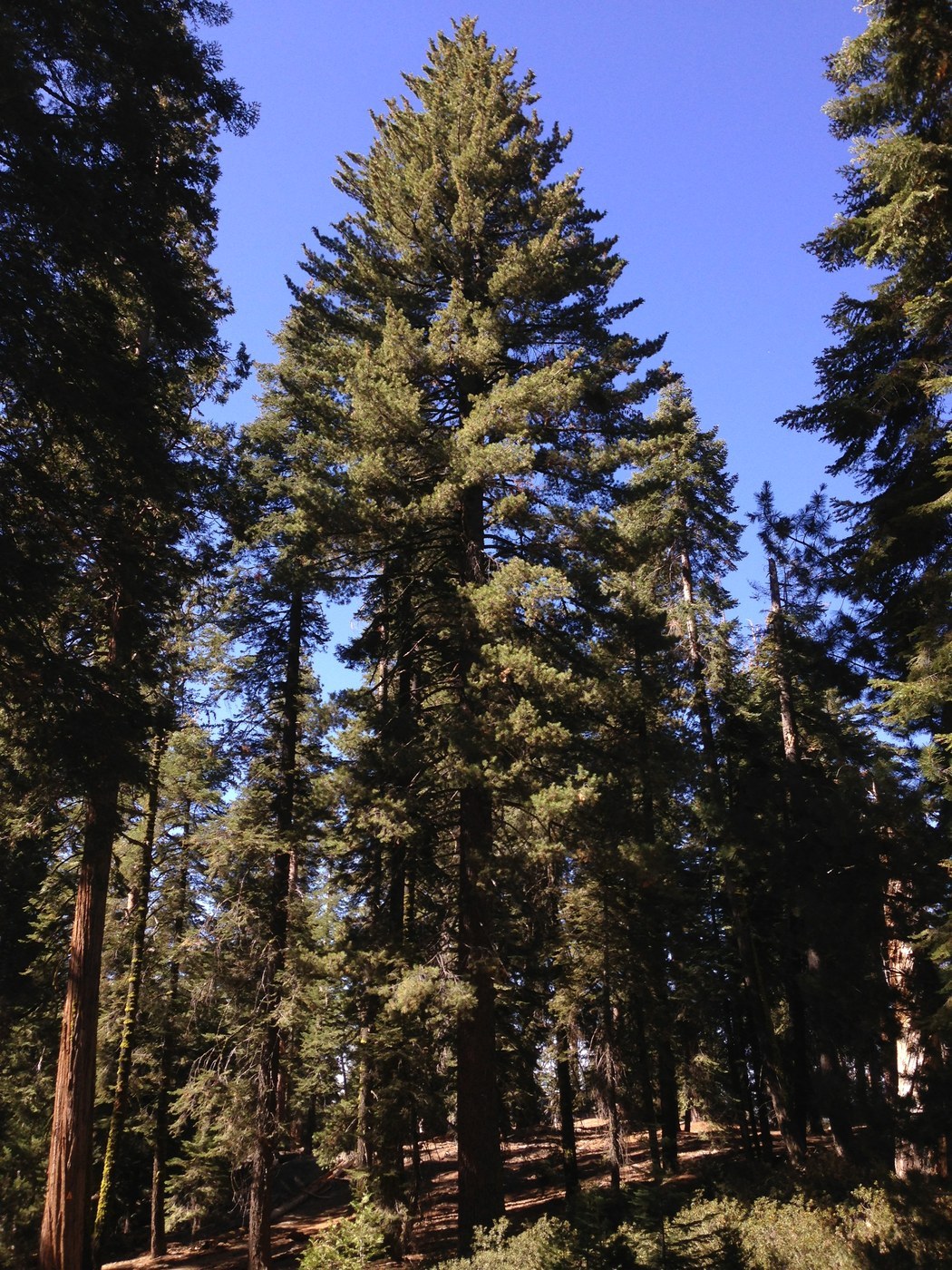
The sugar pine (Pinus lambertiana) is the tallest and largest of the pines, a five-needled conifer prized for its towering habit and dramatically long, pendulous cones. It is a long-lived landscape and forest tree best suited to spacious sites with cool summers and cold winters.
Light
Sugar pine demands full sun for strong, symmetrical growth. Give it an open position with all-day exposure; seedlings tolerate a little side shade but quickly need overhead light to develop a straight leader. Crowding or heavy shade produces thin, leggy trees.
Water
Provide moderate water in well-drained soil. Young trees benefit from deep, infrequent soaking during the first several dry seasons to establish roots; water to wet the full root zone, then allow the surface to dry before the next irrigation. Established trees are quite drought-tolerant and generally rely on natural rainfall in their montane range. Avoid constantly soggy ground.
Soil & Potting
Plant in deep, coarse, well-drained soil. Sugar pine thrives in gravelly or sandy loams typical of mountain slopes and tolerates a slightly acidic to neutral pH. Good drainage is essential; heavy, waterlogged clay leads to root decline. On a landscape scale, choose a site where the extensive root system and eventual great height have room to develop.
Humidity & Temperature
This is a cool-climate mountain species adapted to cold winters and mild, dry summers. It handles hard frost and snow load well and prefers regions with a pronounced seasonal chill. It performs poorly in hot, humid lowlands. Ample air circulation around the canopy helps keep foliage healthy.
Feeding
Sugar pine needs little feeding in reasonable soil. If growth is weak on poor ground, apply a light dose of a balanced or conifer-formulated slow-release fertilizer in early spring. Avoid heavy nitrogen, which forces soft growth prone to breakage. A mulch of pine needles or bark over the root zone recycles nutrients and conserves moisture.
Propagation
Propagation is almost always from seed. Collect seed from mature cones, then give it a period of cold, moist stratification for one to two months to break dormancy before sowing in deep containers or a prepared bed. Germination and early growth are slow, and seedlings resent root disturbance, so start them in tall pots and transplant while young.
Repotting / Pruning
Container-grown seedlings should move up promptly to deep pots to accommodate the taproot, then be planted out before becoming pot-bound. Sugar pine has a naturally strong central leader and needs minimal pruning; simply remove dead, damaged, or crossing branches. Prune sparingly and in the dormant season, and never top the tree, which spoils its form.
Common Problems & Pests
The most significant threat is white pine blister rust, a fungal disease of five-needle pines; choose rust-resistant stock where available and avoid planting near alternate hosts. Bark beetles can attack stressed or drought-weakened trees, so keeping trees vigorous is the best defense. Watch also for needle cast fungi in damp conditions. Good drainage, sun, and airflow prevent most trouble.
Seasonal Care Tips
Plant in autumn or early spring while the soil is cool and moist. Water young trees through their first summers, mulch to buffer roots, and inspect in late spring for signs of rust or beetle activity. Little intervention is needed once established; simply monitor for storm-damaged limbs and clear them in winter.
Frequently asked questions
How big does a sugar pine get?
It is the largest pine species, capable of reaching well over 150 feet tall with a broad crown, so give it a very open, spacious site far from structures.
Can I grow sugar pine in a hot lowland climate?
It is poorly suited to hot, humid regions. Sugar pine is a mountain species that needs cool summers, cold winters, and sharply drained soil to thrive.
Why is my young sugar pine growing so slowly?
Slow early growth is normal. Seedlings invest in a deep taproot first. Ensure full sun, good drainage, and deep occasional watering, and growth speeds up once established.
Does sugar pine need much pruning?
No. It forms a strong central leader on its own. Only remove dead, broken, or crossing branches in the dormant season and never top the tree.