
Summersweet Identification Guide
How to identify summersweet (clethra) by its upright spikes of intensely fragrant white flowers in mid-to-late summer.
Read the full Summersweet encyclopedia entry →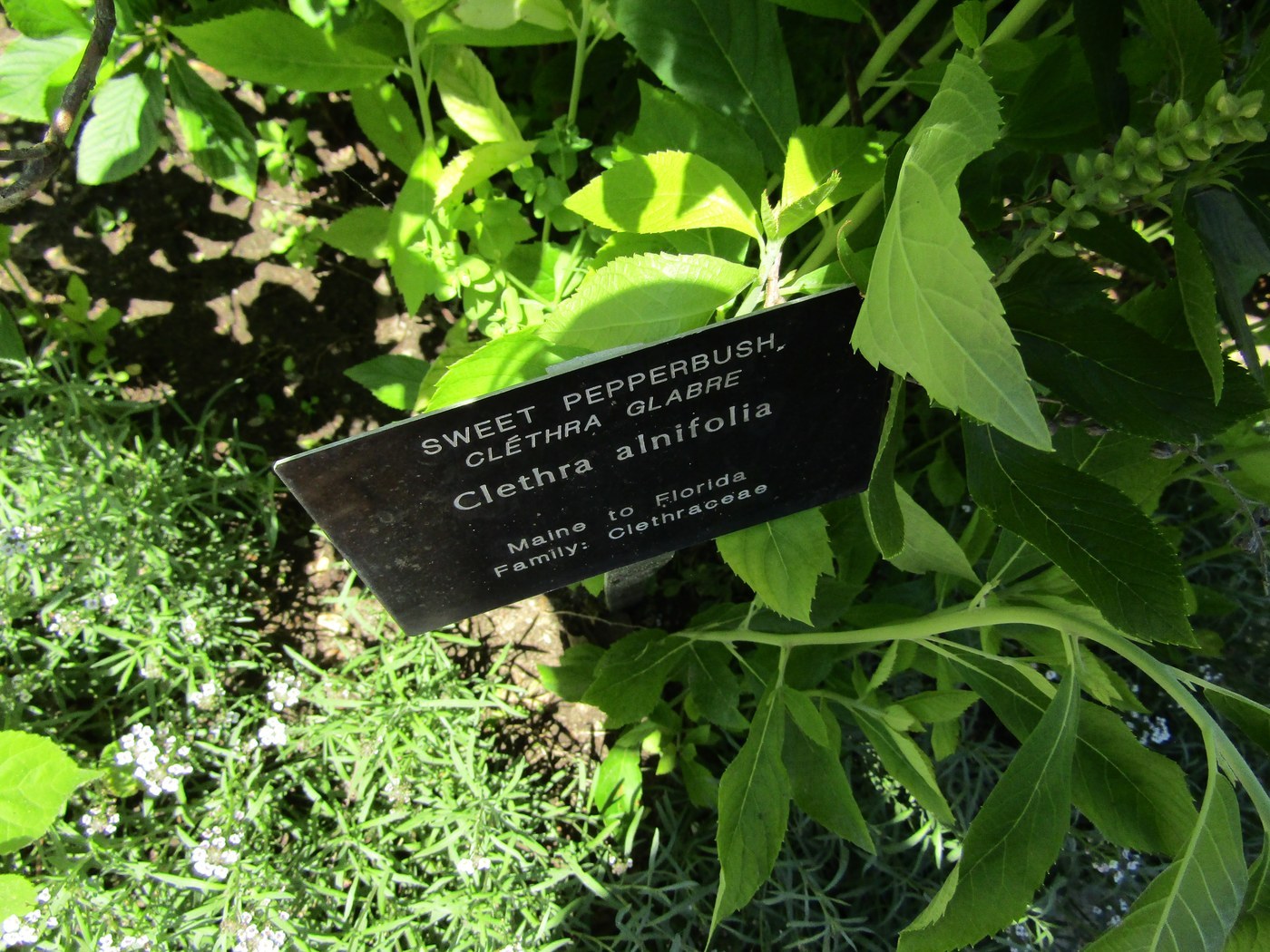
Key Identifying Features
Summersweet (Clethra alnifolia), also called sweet pepperbush, is an upright, suckering deciduous shrub famous for its upright bottlebrush spikes of intensely fragrant white (or pink) flowers in mid-to-late summer, when few other shrubs bloom. It grows 3-8 feet tall in rounded, colony-forming clumps and is a magnet for bees and butterflies.
- Upright, narrow spikes (racemes) of small fragrant white flowers in July-August
- Powerful spicy-sweet fragrance
- Alternate, toothed, oval leaves with a wedge base
- Persistent dark pepper-corn-like seed capsules in fall/winter
Leaves & Stems
Leaves are alternate, simple, obovate to oval, 2-4 inches long, broadest above the middle with a tapered (wedge) base, sharply toothed upper margins, and prominent straight veins. They are glossy dark green in summer, turning clear yellow to golden-brown in fall. Stems are upright, forming dense suckering colonies; bark is gray-brown. The combination of toothed obovate leaves on a clump-forming upright shrub helps when out of bloom.
Flowers & Fruit
The flowers are diagnostic: borne in mid-to-late summer (often July-August) as erect, slender, cylindrical spikes 2-6 inches long packed with small, five-petaled, creamy-white flowers (pink in cultivars like 'Ruby Spice') with long protruding stamens that give a fuzzy look. The fragrance is strong, spicy, and sweet, drawing many pollinators. After bloom, the spikes turn into persistent strings of small, dark, round seed capsules resembling peppercorns (hence 'sweet pepperbush') that remain through winter, aiding cold-season ID.
How to Tell It Apart from Look-Alikes
- Virginia sweetspire (Itea virginica): similar white flower spires but blooms late spring, with drooping racemes and red-purple fall color (vs. summersweet's later upright spikes and yellow fall color).
- Fothergilla: white bottlebrush flowers in spring before leaves, with witch-hazel-like foliage.
- Buttonbush (Cephalanthus): white flowers in round balls, not spikes; wet sites.
- Lysimachia / Veronica: herbaceous spikes, not woody.
The late-summer upright fragrant white spikes + obovate toothed leaves + peppercorn seed capsules confirm summersweet.
Where You'll Find It
Summersweet is native to the eastern United States, growing in moist to wet woods, swamp edges, pond margins, and coastal areas. It tolerates wet soil, shade, and salt, making it popular for rain gardens, shady borders, and seaside plantings. It thrives in part shade to full sun in moist, acidic soil.
Quick ID Checklist
- Upright suckering deciduous shrub, 3-8 ft
- Erect spikes of fragrant white/pink flowers in mid-late summer
- Strong spicy-sweet scent, many bees
- Alternate, toothed, wedge-based obovate leaves, yellow in fall
- Persistent dark peppercorn-like seed capsules
- Often in moist/wet ground
Frequently asked questions
When does summersweet bloom?
It blooms in mid-to-late summer, typically July into August, which is unusual for a flowering shrub and a key ID feature. Few other fragrant white-flowered shrubs bloom at that time.
Why is it also called sweet pepperbush?
After flowering, the spikes hold small, round, dark seed capsules that look like clusters of peppercorns and persist through winter. Combined with the sweet fragrance, this gives the name sweet pepperbush.
How do I tell summersweet from sweetspire?
Summersweet (Clethra) blooms in mid-to-late summer with upright spikes and yellow fall color, while sweetspire (Itea) blooms in late spring with drooping racemes and red-purple fall color. Bloom timing and flower posture are the quickest tells.
Is summersweet good for wet areas?
Yes. It is native to swamp edges and wet woods and tolerates wet, acidic soils, shade, and salt, which is why it is widely used in rain gardens and seaside plantings.