
Swamp Milkweed Identification Guide
Identify Swamp Milkweed by its flat-topped clusters of small pink star flowers, narrow lance leaves, milky sap, and wetland habitat.
Read the full Swamp Milkweed encyclopedia entry →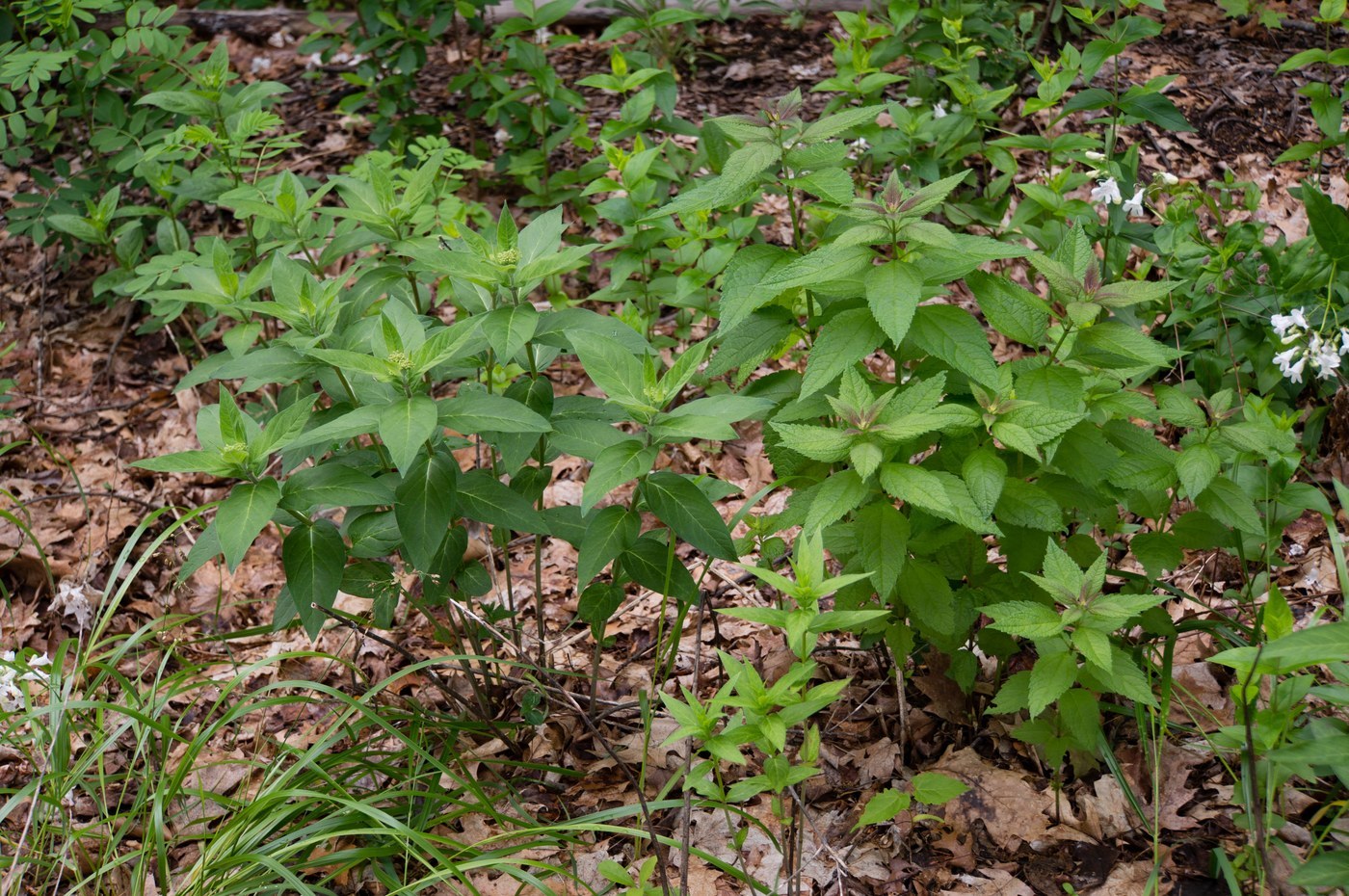
Key Identifying Features
Swamp Milkweed (Asclepias incarnata) is a graceful wetland milkweed and a key monarch butterfly host. Key identifying traits:
- Flat-topped to rounded clusters (umbels) of small pink-to-mauve flowers at the stem tips.
- The intricate milkweed flower structure: five reflexed petals below a crown of five upright hoods and horns.
- Narrow, lance-shaped leaves (slimmer than Common Milkweed).
- Milky white sap that bleeds from broken stems and leaves.
Leaves & Stems
Stems are smooth, upright, and branched at the top, growing 0.9–1.5 m (3–5 ft) tall, and exude milky latex when cut. Leaves are opposite, narrow, lance-shaped, 7–15 cm long, with smooth edges and pointed tips — notably slimmer and smoother than the broad fuzzy leaves of Common Milkweed. Unlike many milkweeds, the sap is less copious but still clearly milky.
Flowers & Fruit
Flowering occurs in mid to late summer (June–August). Each flower is small (~6 mm) and rose-pink, mauve, or occasionally white, fragrant, and grouped into showy umbel clusters 5–8 cm wide. The fruit is a slender, smooth, upright seed pod (follicle) 6–10 cm long that splits to release flat brown seeds with silky white parachutes carried by wind — a classic milkweed feature.
How to Tell It Apart from Look-Alikes
- Common Milkweed (A. syriaca) has broad, fuzzy leaves, dusty pink drooping clusters, and warty/spiny pods; Swamp Milkweed has narrow smooth leaves and smooth pods.
- Butterfly Weed (A. tuberosa) has orange flowers and watery (non-milky) sap and grows in dry ground.
- Joe-Pye Weed has whorled leaves and fuzzy pinkish heads but no milky sap or milkweed pods.
The combo of pink umbels + narrow lance leaves + milky sap + smooth upright pods in wet ground confirms Swamp Milkweed.
Where You'll Find It
As the name says, it grows in wet meadows, marshes, swamps, ditches, pond and stream margins, and other moist sunny spots across central and eastern North America. It prefers full sun and consistently moist to wet soil and is widely planted in rain gardens and pollinator gardens to support monarchs.
Quick ID Checklist
- Flat-topped pink umbel clusters of star-like flowers
- Milkweed hood-and-horn flower crown
- Narrow, smooth, lance-shaped opposite leaves
- Milky sap when broken
- Slender, smooth, upright pods with silky seeds
- Wet, sunny marshes, ditches, stream banks
Frequently asked questions
How is Swamp Milkweed different from Common Milkweed?
Swamp Milkweed has narrow, smooth lance-shaped leaves and slender smooth seed pods, while Common Milkweed has broad fuzzy leaves and warty, spiny pods. Swamp Milkweed also favors wet ground.
Does Swamp Milkweed really have milky sap?
Yes — like other true milkweeds, broken stems and leaves ooze a milky white latex, which helps distinguish it from orange Butterfly Weed, which has clear sap.
Is Swamp Milkweed good for monarch butterflies?
Very. It is an important host plant whose leaves feed monarch caterpillars, and its nectar-rich pink flowers attract many adult butterflies and other pollinators.
Where should I look for it?
Search sunny wet places — marshes, wet meadows, ditches, and the edges of ponds and streams — across central and eastern North America.