
Swedish Ivy Identification Guide
A practical guide to recognizing Swedish Ivy (Plectranthus verticillatus), a trailing houseplant in the mint family despite its common name.
Read the full Swedish Ivy encyclopedia entry →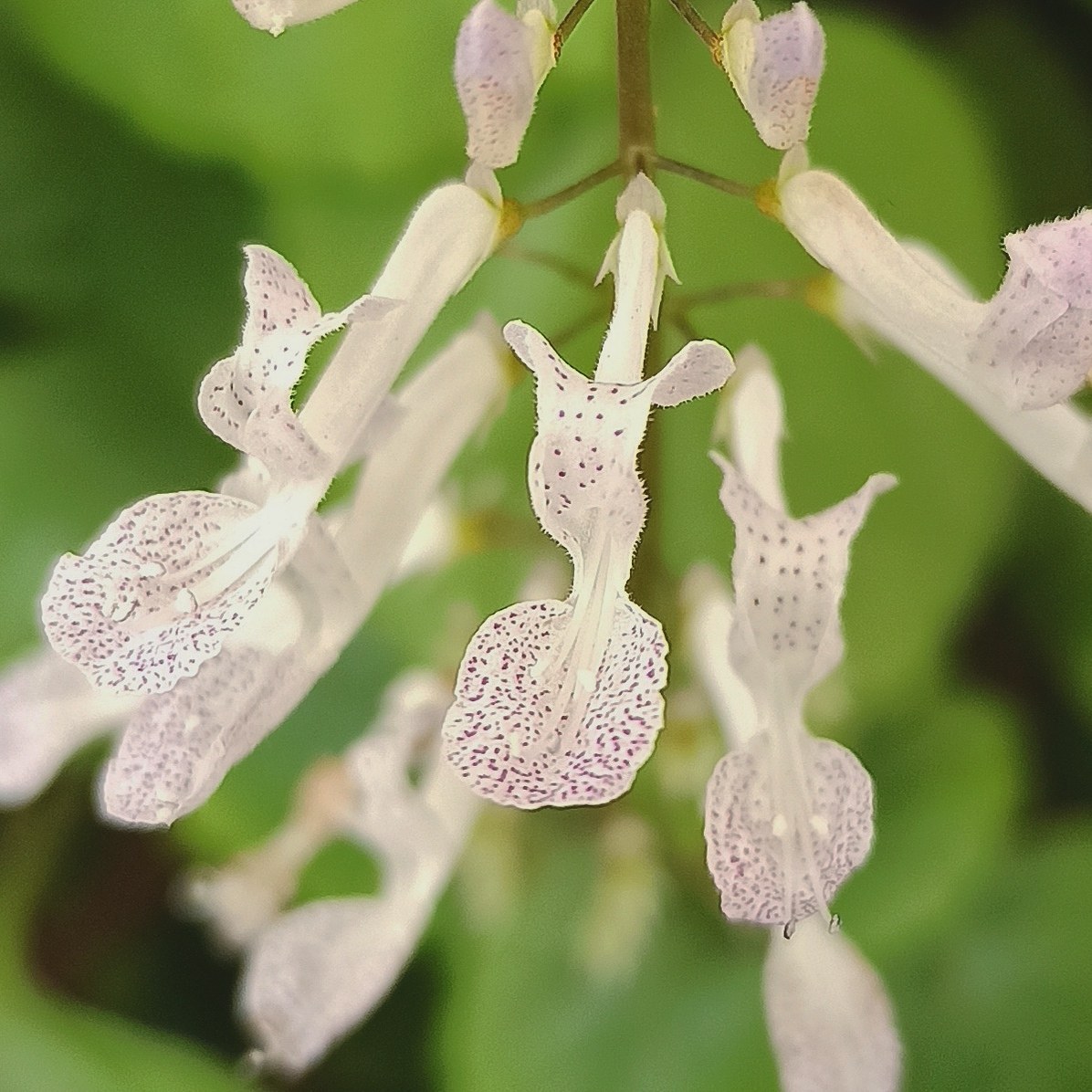
Key Identifying Features
Despite its name, Swedish Ivy is neither Swedish nor a true ivy. It is Plectranthus verticillatus (sometimes sold as P. australis), a member of the mint family (Lamiaceae). The quickest tells are its scalloped, glossy, almost succulent rounded leaves, square stems typical of mints, and a faint herbal scent when leaves are crushed.
- Trailing or cascading habit, ideal for hanging baskets
- Rounded to broadly oval leaves with shallow, rounded (crenate) teeth
- Square stems, often tinged purple
- Mild minty/earthy aroma when bruised
Leaves & Stems
Leaves are 1-1.5 inches across, thick and waxy with a bright green, slightly shiny upper surface. The undersides are paler and sometimes purplish. Look closely at the leaf edge: it is lined with broad, evenly spaced rounded scallops, never sharp serrations. Leaves grow in opposite pairs along the stem, each pair rotated 90 degrees from the last.
The stems are distinctly four-sided (square) to the touch, a hallmark of the mint family, and they trail readily, rooting at nodes where they touch soil. Young stems are green; older ones turn woody and may show purple coloring.
Flowers & Fruit
When happy, mature plants send up slender spikes of small tubular flowers, typically white to pale lilac, arranged in whorls (verticillasters) around the stem, hence the species name verticillatus. Flowers are small and not showy, often appearing in late winter or spring on indoor plants.
How to Tell It Apart from Look-Alikes
- True ivy (Hedera): Has lobed, pointed leaves, aerial rootlets, round (not square) woody stems, and no minty scent. Swedish Ivy has rounded scalloped leaves and square stems.
- Creeping Charlie / ground ivy (Glechoma): Also a square-stemmed mint relative, but its leaves are thinner, more kidney-shaped, and it is a low ground creeper, not a glossy trailing houseplant.
- Other Plectranthus (e.g., 'Mona Lavender', P. ciliatus): May have larger or purple-backed leaves; Swedish Ivy is distinguished by its small, very glossy, succulent rounded leaves.
- Swedish Begonia confusion: Begonias have asymmetrical leaf bases and fleshy non-square stems.
Where You'll Find It
Indoors it is one of the most common hanging-basket and windowsill trailers, prized for fast, forgiving growth. In frost-free climates it is grown as a ground cover or spilling container plant. Native to southern Africa, it thrives in bright, indirect light and tolerates neglect.
Quick ID Checklist
- Square stems (roll between fingers)
- Glossy, thick, rounded leaves with scalloped edges
- Leaves in opposite pairs, faint mint scent
- Trailing/cascading growth, roots at nodes
- Small white-to-lilac tubular flowers in whorls
If you see a glossy, scallop-edged trailing plant with square stems and a faint herbal smell, you almost certainly have Swedish Ivy rather than a true ivy.
Frequently asked questions
Is Swedish Ivy a real ivy?
No. It is Plectranthus verticillatus, a member of the mint family (Lamiaceae). True ivies belong to the genus Hedera and look quite different, with lobed pointed leaves and round woody stems.
How can I confirm it is in the mint family?
Roll the stem between your fingers. Mint-family plants like Swedish Ivy have distinctly square (four-sided) stems, and the leaves give off a faint herbal scent when crushed.
What do the leaf edges look like?
The edges are scalloped with broad, evenly spaced rounded teeth (crenate), never sharply serrated or lobed. The leaves themselves are thick, glossy, and almost succulent.
Does Swedish Ivy flower?
Yes, mature plants produce slender spikes of small tubular white-to-pale-lilac flowers arranged in whorls around the stem, usually in late winter or spring, though the blooms are modest.