
Sweet Potato Identification Guide
Identify the sweet potato plant (Ipomoea batatas) by its trailing vines, heart-shaped or lobed leaves, milky sap, morning-glory flowers, and tuberous roots.
Read the full Sweet Potato encyclopedia entry →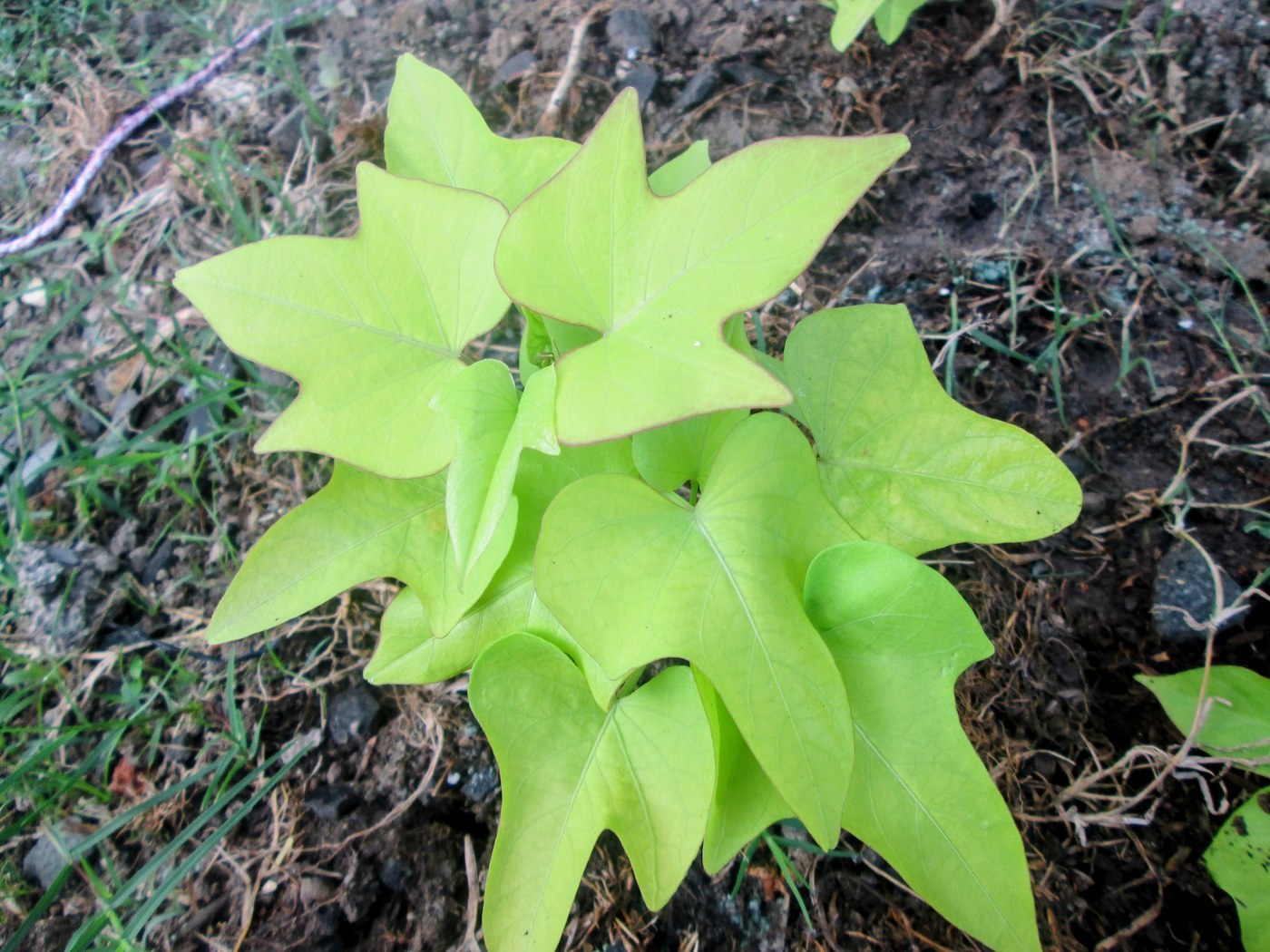
Key Identifying Features
The sweet potato (Ipomoea batatas) is a warm-season trailing perennial vine in the morning-glory family (Convolvulaceae) — not related to the true potato. Identify it by long sprawling vines, heart-shaped or palmately lobed leaves, milky sap in the stems, occasional funnel-shaped morning-glory flowers, and the swollen, tapered storage roots (tubers) underground.
Leaves & Stems
- Stems are long, trailing or climbing vines that root at the nodes where they touch soil; they can spread several meters.
- Leaves are alternate, heart-shaped (cordate) or deeply 3–7 lobed (palmate), often with purple or reddish tints on stems and veins.
- Cut stems and leaf stalks exude a milky white sap (latex), a useful family clue.
- Vines can be green, bronze, purple, or variegated, especially in ornamental "sweet potato vine" cultivars.
Flowers & Roots
- When it blooms (more common in warm climates), flowers are funnel/trumpet-shaped, pink to lavender with a darker purple throat — clearly the morning-glory form, 3–5 cm across.
- The enlarged tuberous root is tapered and smooth-skinned, in orange, red, purple, white, or yellow, with orange, white, or purple flesh.
- These tubers form on the roots, not on stems (distinguishing them from true potato tubers).
How to Tell It Apart from Look-Alikes
- True potato (Solanum tuberosum): an upright nightshade bush with compound leaves and star-shaped white/purple flowers; tubers form on stems and have eyes. Sweet potato is a trailing morning-glory vine with milky sap.
- Bindweed/morning glory (Ipomoea, Convolvulus): very similar vines and flowers, but they lack the large tuberous storage root.
- Yam (Dioscorea): a different family with heart-shaped leaves but twining stems and large rough tubers; not the same as sweet potato despite the name confusion.
Where You'll Find It
Sweet potato is a tropical/warm-season crop and ornamental grown in garden rows, mounds, and containers, and as a trailing groundcover or basket plant. It needs warmth and a long frost-free season. Look for dense trailing vines of heart-shaped or lobed leaves, sometimes purple-tinged, spreading over the ground.
Quick ID Checklist
- Long trailing/climbing vines rooting at nodes
- Heart-shaped or palmately lobed leaves
- Milky sap from cut stems
- Pink-lavender funnel-shaped morning-glory flowers
- Tapered, smooth tuberous storage roots (orange/purple/white)
- Frequent purple/reddish tints on stems and veins
Frequently asked questions
Is a sweet potato related to a regular potato?
No. The sweet potato is a morning-glory (Ipomoea batatas) with trailing vines and milky sap, while the true potato is a nightshade (Solanum tuberosum) that grows as an upright bush. They are entirely different plant families.
How do I identify a sweet potato plant by its flowers?
When it blooms, it produces classic morning-glory flowers — funnel-shaped, pink to lavender with a deeper purple throat. Combined with heart-shaped leaves and trailing vines, this confirms the identification.
Why does my sweet potato vine bleed white sap?
Milky white latex is a normal trait of the morning-glory family. Seeing this sap from cut stems or leaf stalks is a helpful way to distinguish sweet potato from look-alike vines and from the true potato.
Are ornamental sweet potato vines the same plant?
Yes. Decorative trailing 'sweet potato vines' in chartreuse, bronze, or purple are cultivars of the same species, Ipomoea batatas. They form the same tuberous roots and share the heart-shaped or lobed leaves and milky sap.