Sweet Potato
Ipomoea batatas
Sweet potato is a warm-season trailing vine grown as a crop for its swollen storage roots. Unrelated to the common potato, it belongs to the morning glory family and thrives in long, hot summers.
- Light
- Full sun
- Water
- Moderate; even moisture
- Difficulty
- Easy
Got a plant like this?
Identify any plant from a photo, free.
Overview
Sweet potato (Ipomoea batatas) is a tender perennial vine in the Convolvulaceae (morning glory) family, grown as an annual crop for its enlarged storage roots. Despite the name, it is botanically unrelated to the true potato.
It is a heat-loving plant that produces long, trailing vines and needs a long, warm growing season. The harvested part is the swollen root, not a tuber, with flesh in colors of orange, white, purple, or yellow.
Sweet potatoes are propagated from rooted shoots called slips rather than seed.
How to identify it
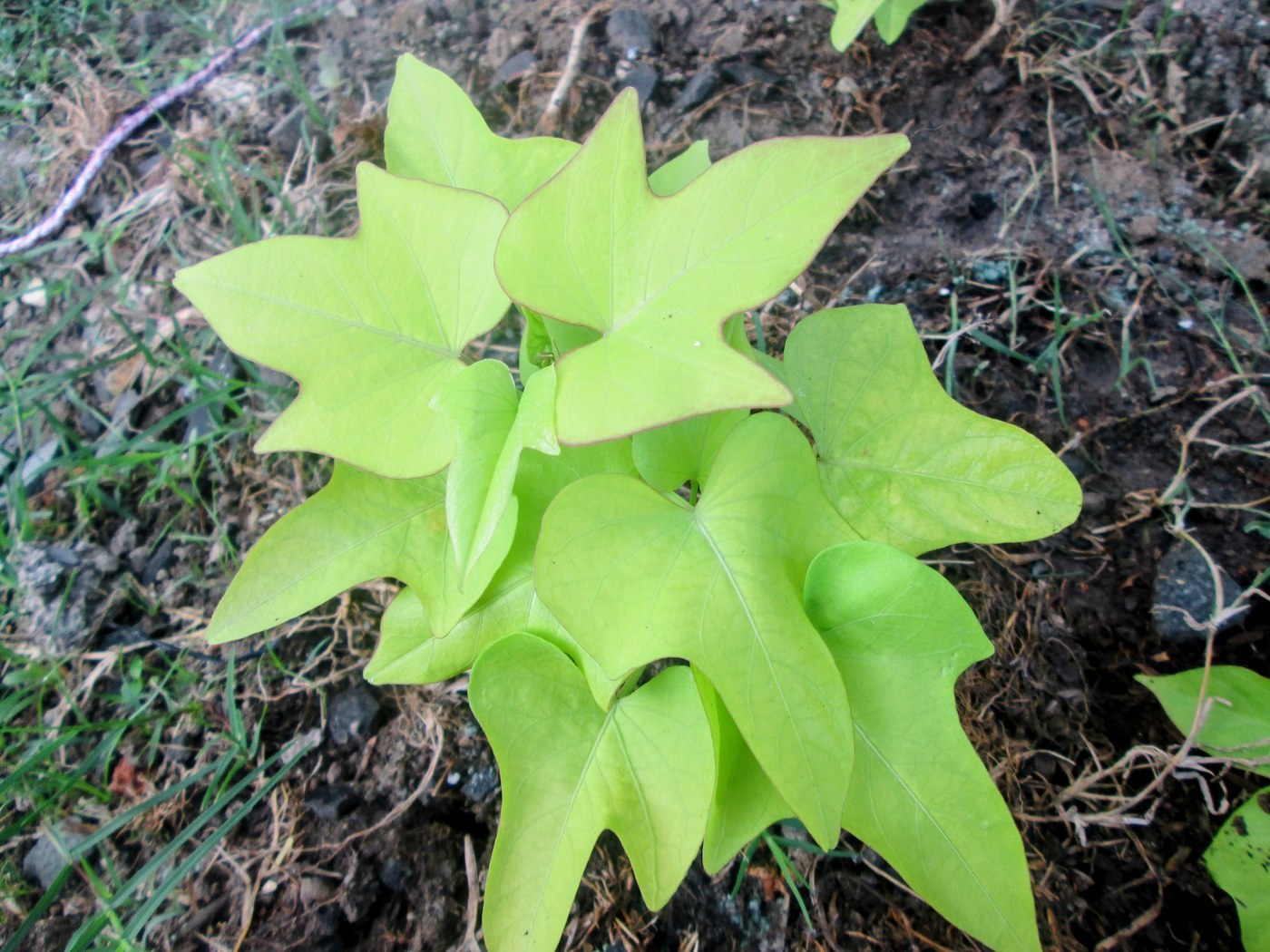
Sweet potato is a vigorous trailing vine with heart-shaped or lobed leaves.
- Leaves: Heart-shaped or deeply lobed, green to purple, on long trailing stems
- Habit: Sprawling groundcover vine, several feet long, rooting at nodes
- Flowers: Funnel-shaped, pale pink to lavender, like a morning glory (often sparse)
- Roots: Swollen storage roots with smooth skin in orange, red, purple, or tan
- Propagation unit: Slips, the sprouts grown from a parent root
Care & growing
Sweet potato is easy where summers are warm and long.
- Light: Full sun
- Water: Moderate and even; reduce watering late in the season as roots mature
- Soil: Loose, sandy, well-draining soil; rich but not heavily nitrogen-fed; pH 5.5 to 6.5
- Temperature: Warm-season; loves 75 to 90 F and is very frost-sensitive
- Feeding: Light; excess nitrogen grows vines at the expense of roots
- Propagation: Plant slips after the soil warms. Harvest before frost, then cure the roots in warmth and humidity to toughen the skin for storage.
Habitat & origin
Sweet potato is native to tropical Central and South America, where it was domesticated thousands of years ago. Remarkably, it spread across the Pacific to Polynesia in pre-Columbian times.
It is now a widely grown crop throughout the tropics, subtropics, and warm-temperate regions, with large production in Asia, Africa, and the Americas. It is grown both in fields and in home gardens with long, hot summers.
Frequently asked questions
Is a sweet potato the same as a yam?
No. True yams are a different tropical plant (genus Dioscorea). In some markets soft orange sweet potatoes are loosely labeled yams, but they are sweet potatoes.
How do I grow sweet potatoes from a root?
Sprout a sweet potato in water or moist soil to produce leafy shoots, then detach these rooted slips and plant them out once the weather is warm.
Why are my sweet potatoes all vine and no root?
Excess nitrogen, too much shade, or a too-short or cool season favors foliage. Give full sun, lean soil, and a long, hot growing season for good roots.
Why should I cure sweet potatoes after harvest?
Curing in warm, humid conditions for about a week heals the skin and improves storage life.
Sweet Potato guides
In-depth guides for identifying, growing, and caring for Sweet Potato.
How to Care for Sweet Potato
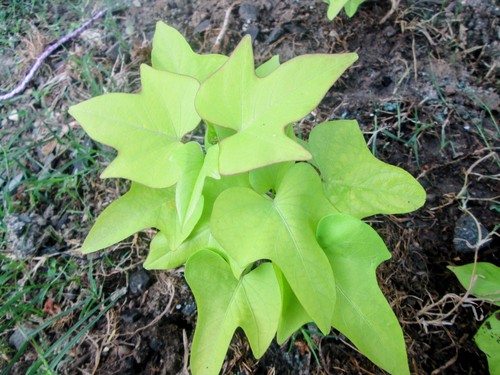
Grow Sweet Potato (Ipomoea batatas) as a fast, trailing vine with heart- or lobe-shaped leaves in full sun and warm, well-drained soil.
Sweet Potato Identification Guide
Identify the sweet potato plant (Ipomoea batatas) by its trailing vines, heart-shaped or lobed leaves, milky sap, morning-glory flowers, and tuberous roots.