
How to Care for Sweet Woodruff
Grow Sweet Woodruff (Galium odoratum) as an easy shade groundcover with whorled leaves and starry white spring flowers in moist soil.
Read the full Sweet Woodruff encyclopedia entry →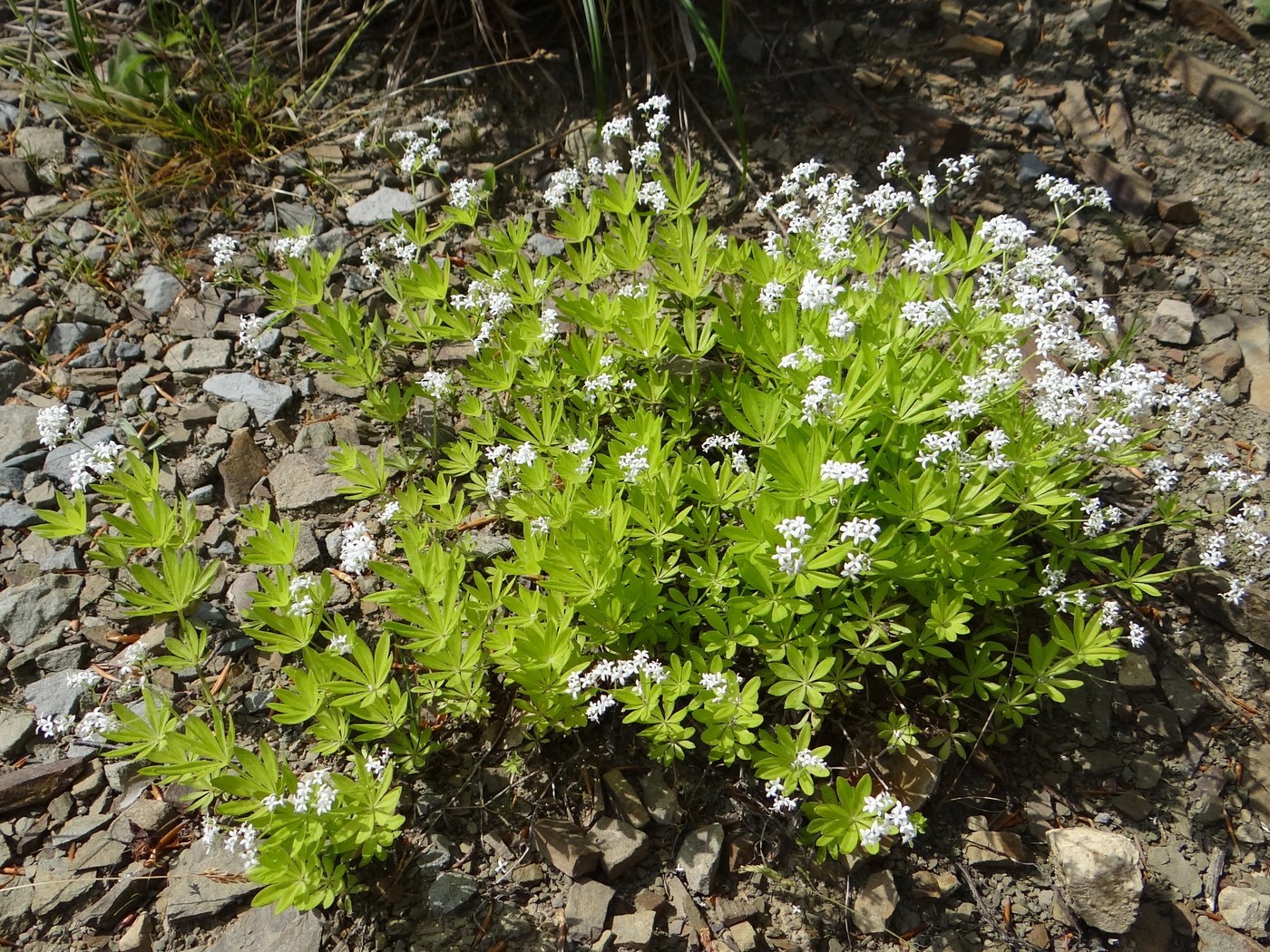
Sweet Woodruff (Galium odoratum) is a low, spreading perennial groundcover with delicate whorls of bright green leaves and clouds of tiny star-shaped white flowers in spring. It thrives in the shade where little else will, forming a soft carpet, and is an easy, forgiving plant for woodland-style plantings.
Light
This is a shade lover — give it part to full shade. It grows best under trees and shrubs or on the north side of buildings where it receives dappled or indirect light. Too much direct sun, especially hot afternoon sun, scorches the foliage and dries it out. Deep shade is tolerated, though flowering may be lighter there.
Water
Keep the soil evenly moist with regular watering. Sweet Woodruff dislikes drying out and will wilt or brown at the edges in drought. Consistent moisture in a cool, shaded position is the key to a lush carpet. In deep shade with rich soil it needs less frequent watering, but never let it bake dry, particularly during hot, dry spells.
Soil & Potting
Plant in cool, humus-rich, moisture-retentive but well-drained soil. It naturally grows in leafy woodland ground, so amending with compost or leaf mold suits it perfectly. It tolerates a range of soil pH. A layer of organic mulch helps conserve moisture and keep roots cool, encouraging the vigorous spread that makes it such a useful groundcover.
Humidity & Temperature
Sweet Woodruff favors cool, moist, temperate conditions and appreciates the natural humidity of a shaded, sheltered spot. It is quite cold-hardy and dies back or goes semi-dormant in winter in colder regions, returning in spring. It can struggle in hot, dry, humid summers, where a cool, moist, shaded position becomes essential for survival.
Feeding
This is a low-feed plant. In decent, compost-enriched soil it rarely needs fertilizing. If growth is weak, a light topdressing of compost or a single application of balanced fertilizer in spring is sufficient. Rich soil and organic mulch generally provide all the nutrients it needs, and over-feeding is unnecessary for this modest groundcover.
Propagation
Sweet Woodruff spreads readily by underground runners, making division the easiest propagation method. Lift and divide clumps in spring or fall, replanting sections with roots attached — they establish quickly in moist, shaded soil. It can also be grown from seed, though seed can be slow and erratic to germinate, so division is the reliable choice.
Repotting / Pruning
Grown as a groundcover it needs little pruning, but because it spreads enthusiastically you may need to trim back or dig out the edges to keep it within bounds. Shearing lightly after flowering tidies the planting and can encourage fresh foliage. Divide crowded patches every few years to maintain vigor. In containers, refresh the soil and divide when the pot fills.
Common Problems & Pests
Sweet Woodruff is largely trouble-free. Its main weakness is drought and heat — in dry sun the leaves scorch and brown, so relocate struggling plants to cooler shade and improve moisture. In poorly drained, waterlogged soil, rot can occur. It has few pest problems, though occasional fungal leaf issues appear in stagnant, overly wet conditions; improve air circulation if so. Its vigorous spread can itself become a nuisance in ideal conditions, so site it where it can roam.
Seasonal Care Tips
In spring, divide and replant, and enjoy the flush of white flowers. Through summer, keep the soil consistently moist and shaded, especially during heat. In fall, it is a good time to divide and it may begin dying back. In winter, the plant rests and needs no attention in cold climates, reemerging when the weather warms.
Frequently asked questions
Will Sweet Woodruff grow in full shade?
Yes — it is one of the best groundcovers for shade and thrives in part to full shade under trees and shrubs. It grows even in deep shade, though flowering may be a little lighter there than in dappled light.
Why are the leaves turning brown?
Browning usually means the plant is too dry or getting too much sun. Move it to a cooler, shadier spot and keep the soil evenly moist — Sweet Woodruff scorches quickly in heat and drought.
Does Sweet Woodruff spread aggressively?
In cool, moist, shaded soil it spreads vigorously by underground runners to form a dense carpet. Plant it where it can roam, or trim and dig out the edges periodically to keep it contained.
How do I propagate Sweet Woodruff?
The easiest way is division — lift a clump in spring or fall and separate rooted sections, then replant them in moist, shaded soil where they establish quickly.