Sweet Woodruff
Galium odoratum
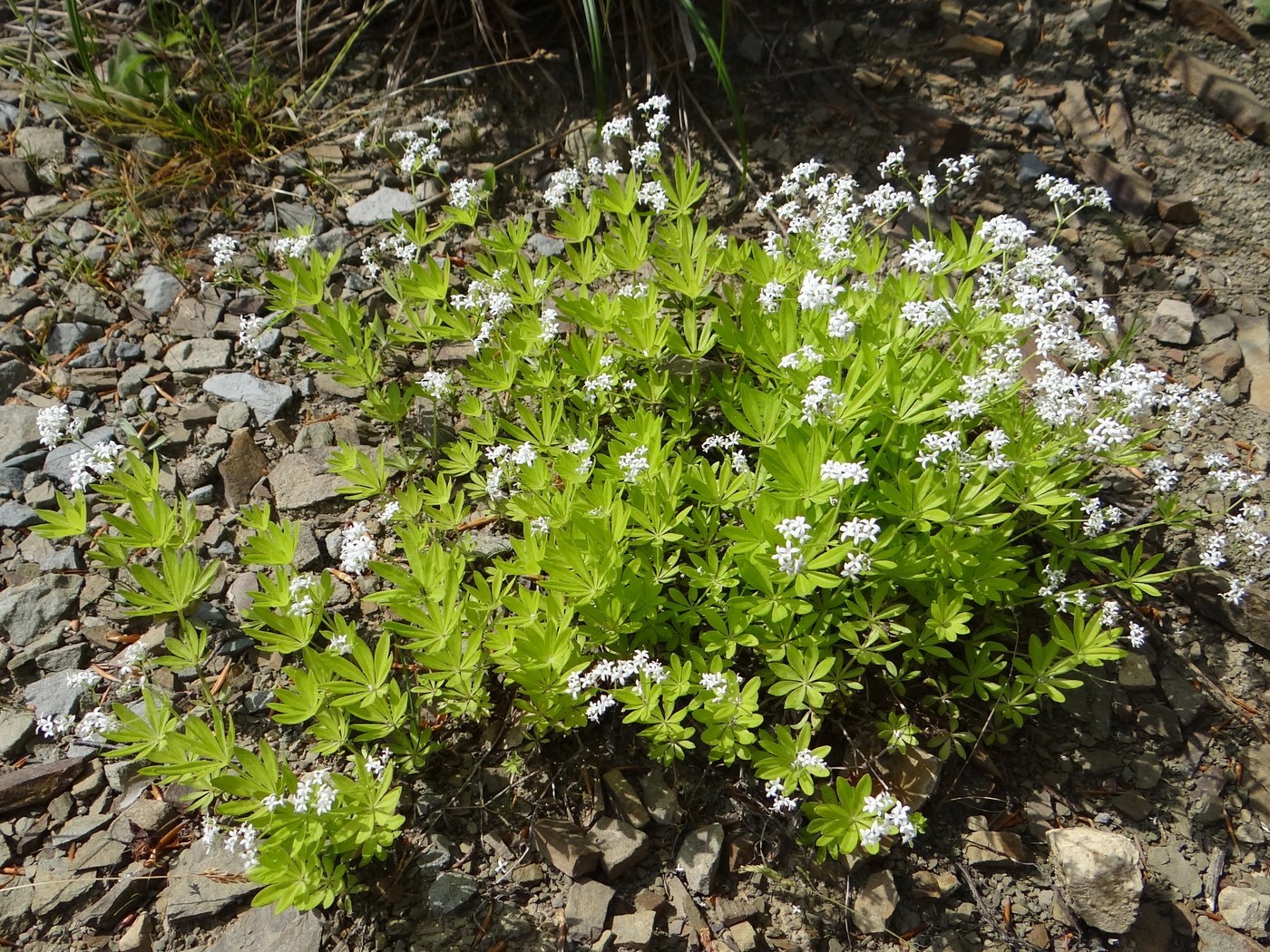
Sweet woodruff is a low, spreading groundcover herb with whorls of slender green leaves and clusters of tiny white star-shaped flowers in spring. When dried, its foliage releases a sweet, hay-and-vanilla scent and it carpets shady ground beautifully.
- Light
- Part to full shade
- Water
- Regular; keep evenly moist
- Difficulty
- Easy
Got a plant like this?
Identify any plant from a photo, free.
Overview
Sweet woodruff (Galium odoratum) is a creeping perennial herb in the bedstraw family, prized as a fragrant groundcover for shade. Its whorled leaves circle the square stems in neat ruffs, giving the plant a delicate, lacy texture.
When the foliage is dried or wilted, it develops a sweet scent of fresh hay and vanilla, thanks to a compound called coumarin. This fragrance has made it a traditional ingredient in potpourri and scented sachets.
It spreads by creeping rhizomes to form a dense, weed-suppressing carpet in cool, moist, shaded sites.
How to identify it
Whorled leaves and starry white flowers identify it.
- Leaves: Narrow, lance-shaped, arranged in star-like whorls of 6-8 around square stems
- Flowers: Tiny, white, four-petaled, star-shaped blooms in loose clusters
- Habit: Low, spreading mat usually 6-12 in tall, spreading by rhizomes
- Scent: Sweet hay-vanilla aroma when dried or crushed
- Bloom time: Late spring
Care & growing
Easy and spreading in shade.
- Light: Partial to full shade; tolerates deep shade
- Water: Regular; prefers consistently moist soil
- Soil: Rich, humus-rich, moist, well-drained woodland soil
- Temperature: Hardy in USDA zones 4-8
- Feeding: Minimal; leaf-mold mulch suits it well
- Propagation: Easy by division of the spreading rhizomes
- Tip: Can spread vigorously; give it room or contain it, as it may overtake delicate neighbors
Habitat & origin
Sweet woodruff is native to much of Europe, North Africa, and western Asia, where it grows on the floor of cool, moist deciduous woodlands, especially beech forests.
It is widely grown as a shade groundcover in woodland and cottage gardens across temperate climates and has naturalized in parts of North America.
Frequently asked questions
Why does sweet woodruff smell so good when dried?
As the leaves dry, they release coumarin, producing a sweet aroma of fresh-cut hay and vanilla that intensifies compared to the fresh plant.
Is sweet woodruff invasive?
It can spread vigorously by rhizomes in moist shade, forming a dense carpet. Give it space or contain it to keep it from crowding delicate plants.
Where does sweet woodruff grow best?
In cool, moist, shaded spots with humus-rich soil, mimicking its native woodland floor habitat. It's ideal under trees and shrubs.
Sweet Woodruff guides
In-depth guides for identifying, growing, and caring for Sweet Woodruff.
How to Care for Sweet Woodruff
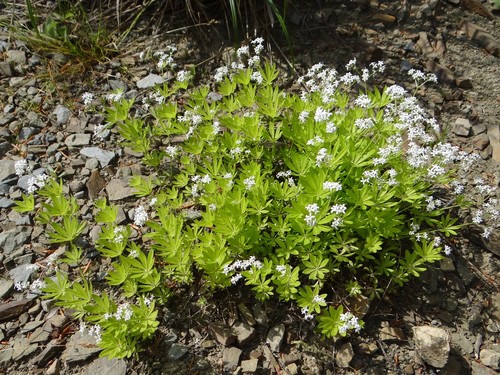
Grow Sweet Woodruff (Galium odoratum) as an easy shade groundcover with whorled leaves and starry white spring flowers in moist soil.
Sweet Woodruff Identification Guide
How to identify sweet woodruff (Galium odoratum) by its whorls of narrow leaves arranged like wheel spokes, tiny four-petaled white star flowers, and hay-like vanilla scent when dried.