
Sweetbay Magnolia Identification Guide
Recognize Magnolia virginiana by its lemon-scented creamy white summer flowers, leaves that are silvery-white underneath, and its love of wet, swampy ground.
Read the full Sweetbay Magnolia encyclopedia entry →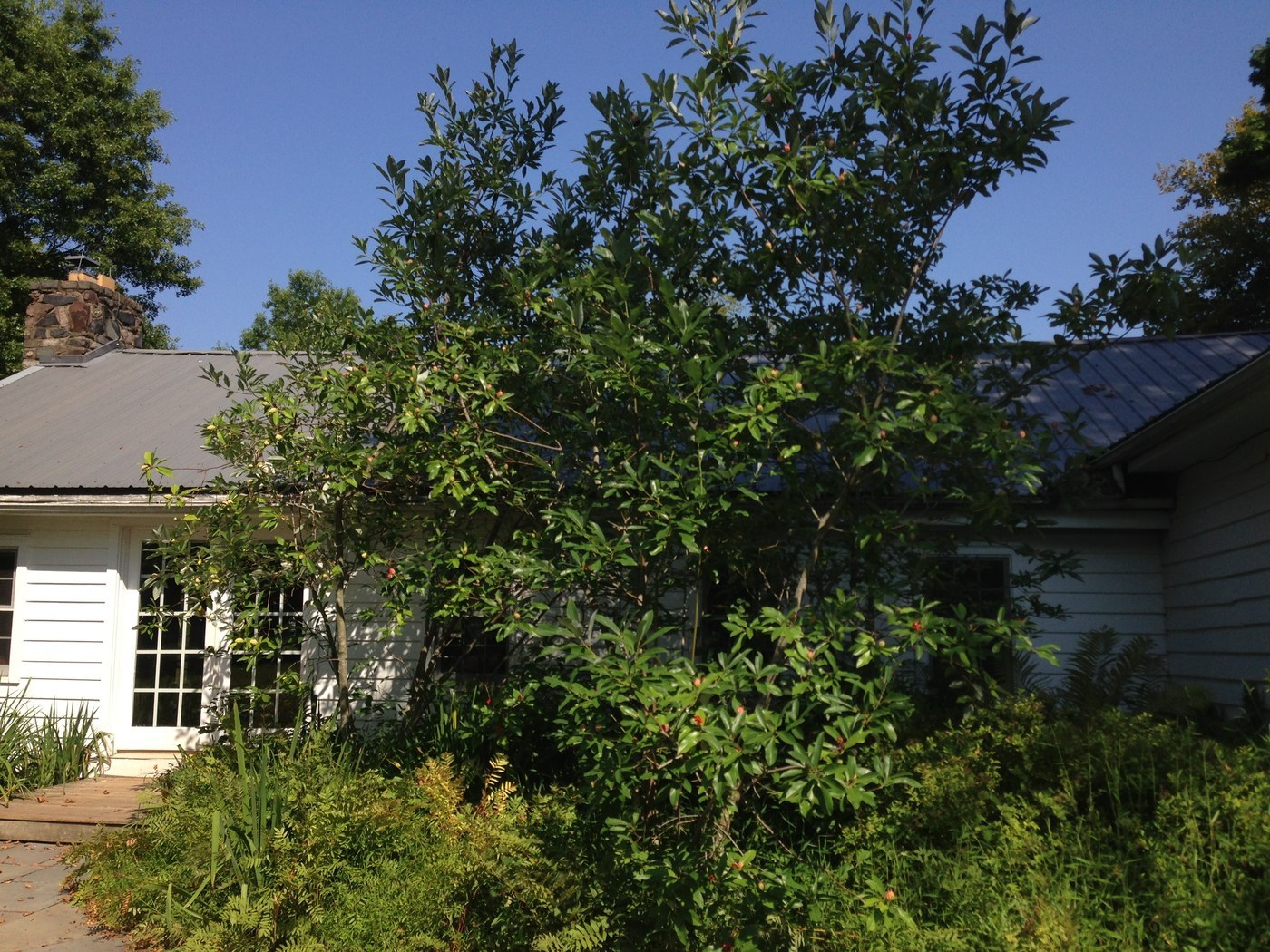
Key Identifying Features
Sweetbay magnolia (Magnolia virginiana) is a graceful native of eastern North American wetlands. Unlike the big spring magnolias, it blooms in early summer with smaller, intensely fragrant flowers. Identify it by:
- Leaves bright green above and strikingly silvery-white beneath — flashing white when wind flips them
- Creamy white, cup-shaped flowers, 2-3 inches wide, with a strong lemon/vanilla scent, opening in late spring into summer
- A slender, often multi-stemmed small tree or large shrub, 10-35 ft
- Semi-evergreen to evergreen in the South, deciduous in the North
- A strong association with wet, swampy, or streamside ground
Leaves & Stems
The leaves are the single best ID feature. They are alternate, simple, elliptical to oblong, 3-5 inches long, with smooth margins, a glossy green top, and a vivid silvery-white (glaucous) underside. A breeze that turns the foliage makes the whole tree shimmer pale. Leaves are aromatic when crushed, with a spicy-bay scent (hence "sweetbay").
Twigs are slender and bright green, often with a bluish bloom, and the buds are covered in silky hairs. Bark is smooth and gray. In the North leaves drop in fall; from the mid-Atlantic south they persist through winter.
Flowers & Fruit
Flowers appear after the spring magnolias, from late May into July, and may bloom sporadically for weeks. Each is a rounded creamy-white cup about 2-3 inches across with 9-12 tepals and a powerful, sweet lemony fragrance that carries on warm evenings.
The fruit is a small, knobby aggregate cone that ripens to dark red and splits to reveal bright red seeds dangling on thin threads in fall — a striking detail and good confirmation.
How to Tell It Apart from Look-Alikes
- Southern magnolia (Magnolia grandiflora): much larger leathery evergreen leaves with rusty-brown (not silvery) undersides and huge 8-12 inch flowers. Sweetbay's leaves are smaller and silver-backed.
- Star/saucer magnolias: bloom on bare spring branches and are shrubby; sweetbay blooms in summer with foliage present.
- Bay laurel or redbay: lack the magnolia's large solitary white flowers and red-seeded cone fruit.
The pairing of silver-white leaf undersides + summer lemon-scented white cups + wet habitat is diagnostic.
Where You'll Find It
Sweetbay is native to the coastal plain and lowlands of the eastern U.S., from Massachusetts to Florida and Texas, growing wild in swamps, bogs, wet woods, and stream margins — it even tolerates standing water. It is also widely planted as a refined landscape tree in USDA zones 5-10. Seeing a slender magnolia thriving in soggy ground with flickering silver leaves strongly points to sweetbay.
Quick ID Checklist
- Slender small tree/large shrub, often multi-stemmed
- Leaves green above, silvery-white below (flash white in wind)
- Aromatic, bay-scented foliage; bright green twigs
- Creamy white lemon-scented cups, 2-3 in, in early summer
- Knobby red cone fruit with bright red dangling seeds in fall
- Growing in or near wet, swampy ground
A willowy magnolia shimmering silver in a damp spot, perfuming the summer air with lemon, is sweetbay.
Frequently asked questions
What is the easiest way to identify sweetbay magnolia?
Flip a leaf over. The underside is silvery-white and the top is glossy green, so the whole tree flashes pale in a breeze. Combined with summer-blooming lemon-scented white flowers and a wet habitat, this is conclusive.
Is sweetbay magnolia evergreen?
It depends on climate. In the warm South it is evergreen or semi-evergreen, holding its leaves through winter, while in colder northern zones it behaves as a deciduous tree and drops its foliage in fall.
How is it different from southern magnolia?
Southern magnolia has large, thick, leathery evergreen leaves with rusty-brown undersides and enormous flowers. Sweetbay has smaller, thinner leaves with silvery-white undersides and much smaller flowers, and tolerates wet soil far better.
Do the flowers really smell like lemon?
Yes. The creamy white summer flowers have a strong sweet, lemony-vanilla fragrance that is one of the plant's most charming and recognizable traits, especially noticeable on warm evenings.