
Sweetspire Identification Guide
How to identify Virginia sweetspire by its arching stems, drooping spires of fragrant white flowers, and rich red-purple fall color.
Read the full Sweetspire encyclopedia entry →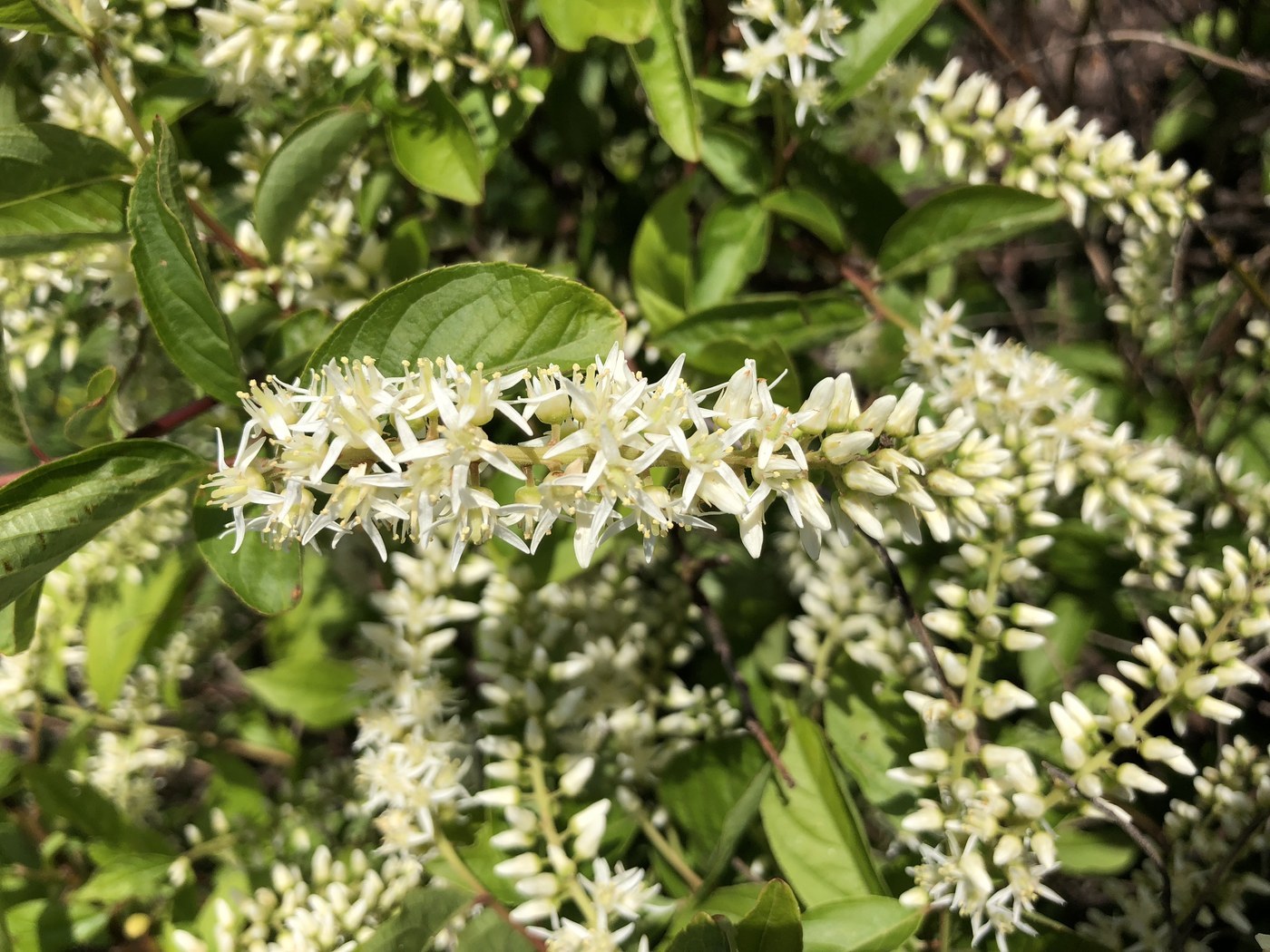
Key Identifying Features
Virginia sweetspire (Itea virginica) is a graceful, suckering deciduous (semi-evergreen in the south) shrub identified by its long, drooping, bottlebrush-like spires of tiny fragrant white flowers in late spring and its outstanding red-to-burgundy fall foliage that lingers into early winter. It forms arching, colony-spreading mounds 3-5 feet tall.
- Pendulous, cylindrical white flower spires (racemes)
- Arching stems forming spreading colonies
- Alternate, finely toothed oval leaves
- Brilliant red-purple fall color, often long-lasting
Leaves & Stems
Leaves are alternate, simple, oval to elliptical, 1.5-4 inches long, with finely toothed margins and a pointed tip, medium green and somewhat glossy in summer. In fall they turn rich shades of scarlet, crimson, and purple, often persisting well into late autumn or early winter—a standout ID feature. Stems are slender, arching, and spread by suckers and arching tip-rooting to form broad colonies. Young stems are greenish to reddish; the pith is solid.
Flowers & Fruit
In late spring to early summer, sweetspire bears its trademark flowers: slender, drooping to upright cylindrical clusters (racemes) 3-6 inches long, packed with tiny, fragrant, creamy-white, five-petaled flowers. The narrow 'spire' shape and sweet fragrance give the plant its name and are highly diagnostic. The flowers attract bees and butterflies. Fruit is an inconspicuous small dry capsule—there are no showy berries.
How to Tell It Apart from Look-Alikes
- Summersweet (Clethra alnifolia): also has fragrant white flower spikes, but blooms in mid-to-late summer, has more upright bottlebrush spikes, and coarser leaves; sweetspire blooms earlier with drooping racemes.
- Fothergilla: white bottlebrush flowers but they appear before/with the leaves in spring as honey-scented puffs, and leaves are witch-hazel-like.
- Chokecherry / Prunus: drooping white racemes but a tree/large shrub with cherry fruit.
- Lysimachia / loosestrifes: herbaceous, not woody.
The drooping white flower spires in late spring + arching colony habit + long-lasting red-purple fall color confirm Virginia sweetspire.
Where You'll Find It
Native to the southeastern and eastern United States, sweetspire grows naturally in wet woods, swamp margins, and along streams, tolerating wet soils and periodic flooding. In gardens it's planted in rain gardens, borders, and naturalized areas in sun to part shade; popular compact cultivars include 'Henry's Garnet' and 'Little Henry'.
Quick ID Checklist
- Arching, suckering deciduous shrub, 3-5 ft
- Drooping cylindrical spires of tiny white flowers in late spring
- Sweet fragrance
- Alternate, finely toothed oval leaves
- Brilliant long-lasting red-purple fall color
- Often in moist/wet ground
Frequently asked questions
How is sweetspire different from summersweet?
Both have fragrant white flower spikes, but sweetspire (Itea virginica) blooms in late spring with drooping racemes and has alternate finely toothed leaves, while summersweet (Clethra) blooms in mid-to-late summer with more upright spikes. Their bloom times and flower posture are the easiest tells.
Does sweetspire have berries?
No showy fruit. It produces small, dry seed capsules. The plant is grown for its flower spires and exceptional red-purple fall foliage rather than fruit.
Why is my sweetspire spreading so much?
Virginia sweetspire naturally suckers and roots where arching stems touch the ground, forming broad colonies. This spreading, mounding habit is a normal ID trait and makes it useful for erosion control and rain gardens.
Is sweetspire evergreen?
It is deciduous in cold climates with brilliant fall color, but in the warm southern parts of its range it can be semi-evergreen, holding some red-purple leaves through winter.