
Texas Bluebonnet Identification Guide
Identify Texas bluebonnet (Lupinus texensis), the Texas state flower, by its palmately compound leaves and dense spikes of blue pea flowers tipped with a white (aging to wine-red) crown. Includes look-alike notes.
Read the full Texas Bluebonnet encyclopedia entry →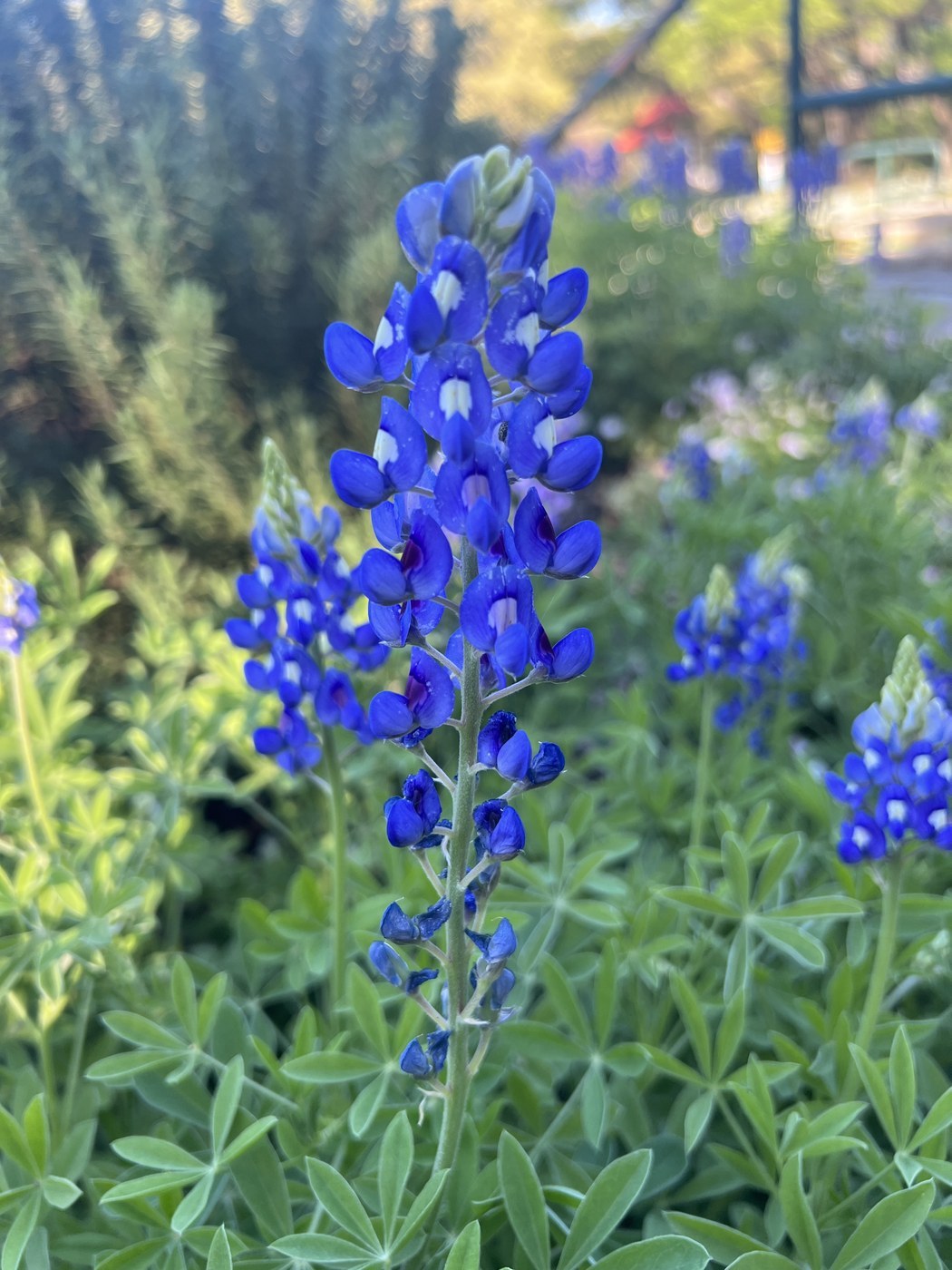
Key Identifying Features
Texas bluebonnet (Lupinus texensis) is a low, spring-blooming annual lupine and the state flower of Texas. Identify it by its palmately compound leaves (leaflets radiating like fingers from one point) and its dense spike of deep-blue pea-shaped flowers topped by a conspicuous white tip that turns reddish or wine-purple with age.
- Low bushy annual, 6 to 18 inches tall
- Palmately compound leaves, usually 5 leaflets
- Dense, conical spike of blue pea flowers
- White flower tip (the terminal cluster), aging rose-red
- Silky-hairy foliage; spring bloomer
Leaves & Stems
The leaves are palmately compound, with (typically) five (sometimes up to seven) narrow leaflets spreading like the fingers of a hand from the tip of a long stalk. Each leaflet is oblong, broadest toward the rounded or pointed tip, and clothed in fine silvery hairs, often with a tiny bristle point. The foliage has a soft, slightly silvery green look. Stems are branched at the base, forming a low mound, and are also softly hairy.
Flowers & Fruit
The flowers are classic pea (legume) flowers with a banner, wings, and keel, packed into a dense, upright, cone-shaped spike (raceme). Most flowers are a rich deep blue, each with a white spot on the banner that ages to magenta or wine-red after pollination, while the whole top of the spike is capped with unopened white-tipped buds, giving the bonnet-like silhouette. Bloom peaks in March and April. Fruits are hairy, flattened pea pods that twist open to fling out the hard seeds.
How to Tell It Apart from Look-Alikes
- Texas bluebonnet (L. texensis) vs. sandyland bluebonnet (L. subcarnosus): L. texensis has a pointed white-tipped spike and is the common roadside species; L. subcarnosus is paler, smaller, and rounder-tipped.
- Other lupines: Many western lupines are taller perennials; the annual habit, white-tipped blue spike, and Texas range mark L. texensis.
- Vetches: Have feather-like (pinnately compound) leaves and climbing tendrils, not the radiating palmate leaflets of bluebonnet.
The palmate leaves plus a blue, white-capped flower spike on a low spring annual in Texas is unmistakable.
Where You'll Find It
Texas bluebonnet blankets roadsides, prairies, pastures, fields, and open hillsides across central and eastern Texas each spring, often in spectacular mass displays. It favors well-drained, alkaline to gravelly soils in full sun and is widely sown along highways. As a legume it fixes nitrogen and reseeds prolifically.
Quick ID Checklist
- Low spring annual, 6 to 18 in, silvery-hairy
- Palmately compound leaves, ~5 fingered leaflets
- Dense spike of deep-blue pea flowers
- White-tipped crown aging to rose/wine-red
- White banner spot turning magenta after pollination
- Texas roadsides and prairies in March-April
Frequently asked questions
Why are the tops of bluebonnet spikes white?
The cluster of unopened buds at the top of each spike is white-tipped, forming the bonnet-like crown. Individual flowers also carry a white spot on the banner that turns magenta or wine-red after they are pollinated.
How can I tell a bluebonnet from a vetch?
Bluebonnets have palmately compound leaves with leaflets radiating like fingers from a single point, while vetches have feather-like pinnate leaves and climbing tendrils.
How many leaflets does a Texas bluebonnet leaf have?
Usually five narrow leaflets spreading palmately from the tip of the leaf stalk, though some leaves may have up to seven.
When and where do Texas bluebonnets bloom?
They bloom in spring, peaking in March and April, carpeting roadsides, prairies, and open fields across central and eastern Texas in well-drained sunny soils.