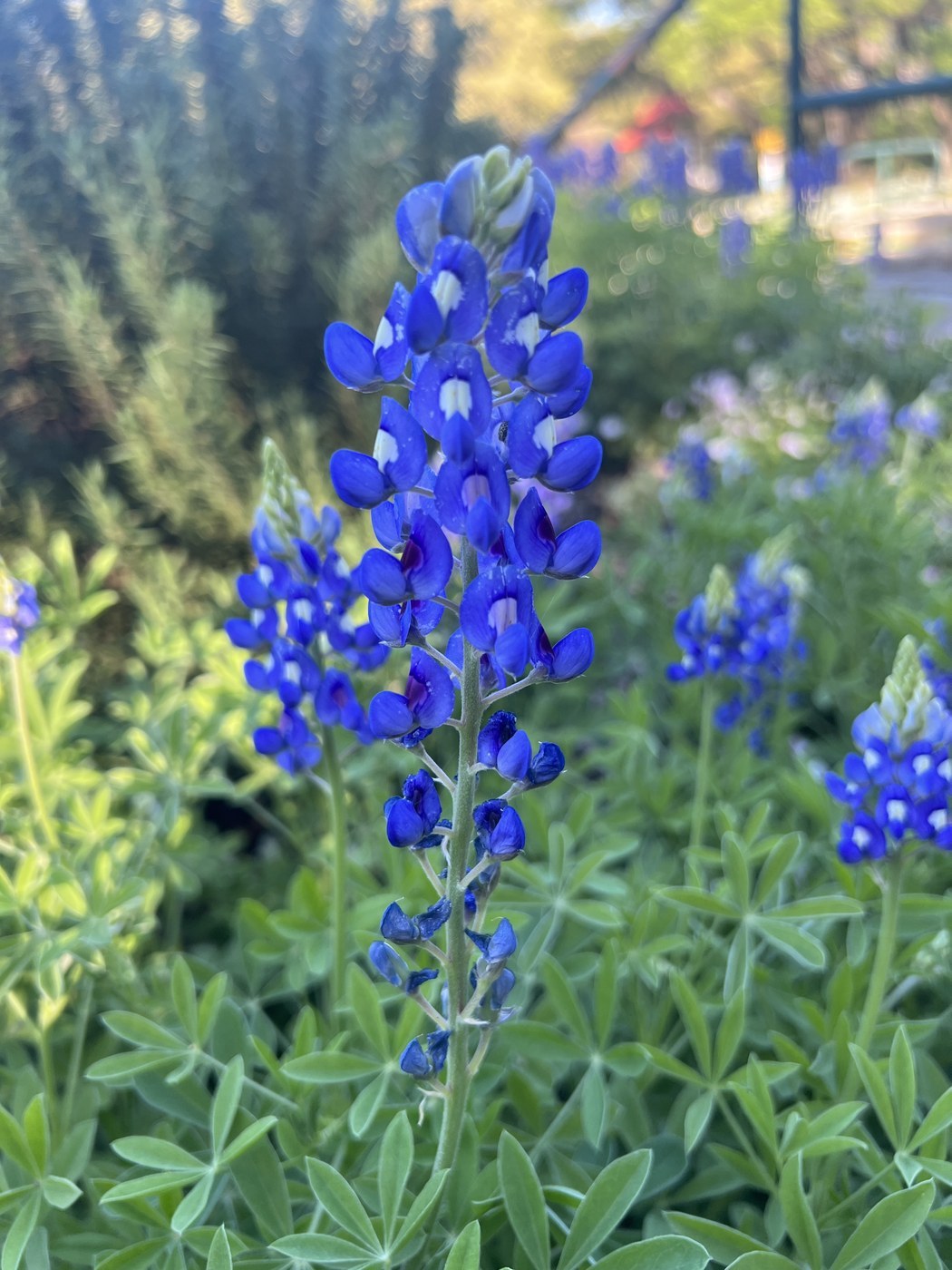
Texas Bluebonnet
Lupinus texensis
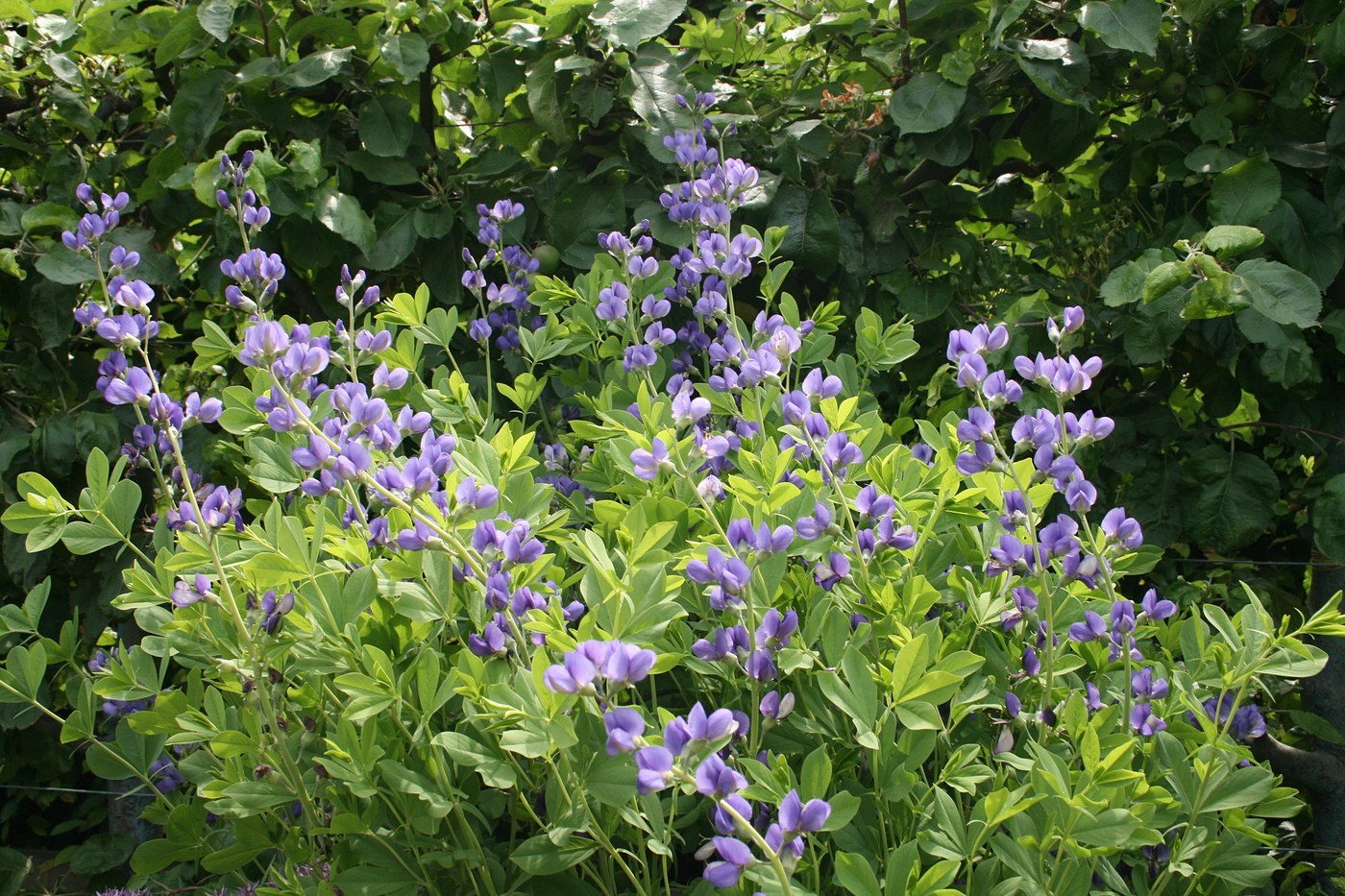
The Texas bluebonnet is the iconic state flower of Texas, a spring-blooming wildflower lupine that carpets roadsides and fields in sweeps of deep blue with white-tipped flower spikes.
- Light
- Full sun
- Water
- Low; well-drained soil
- Difficulty
- Moderate
Got a plant like this?
Identify any plant from a photo, free.
Overview
The Texas bluebonnet (Lupinus texensis) is an annual lupine in the pea family and the celebrated state flower of Texas. Each spring it transforms highways, fields and pastures into rolling seas of blue, drawing crowds to photograph the bloom.
Like other legumes it fixes nitrogen in the soil through root bacteria. The flower spikes are deep blue with a distinctive white (aging to reddish) tip, and the plant grows in a low rosette before sending up its showy bloom stalks in March and April.
How to identify it
A low annual usually 20–40 cm tall, branching from the base.
- Leaves: palmately compound, with usually five leaflets radiating from a central point, often silky-haired
- Flowers: dense terminal spikes of pea-type flowers, deep blue with a white tip that turns reddish-purple with age
- Habit: clumping rosette sending up multiple flowering stems in spring
- Seeds: borne in small hairy pods that pop open to scatter hard seeds
Care & growing
Best established from seed in fall for spring bloom.
- Light: full sun — essential for good flowering
- Water: low; needs excellent drainage and dislikes wet feet
- Soil: well-drained, alkaline, gravelly or sandy soils; avoid rich, heavy ground
- Temperature: cool-season annual; seedlings overwinter and bloom in early spring
- Sowing: scatter scarified seed in fall; germination improves with seed coat scratching and an inoculant
- Propagation: by seed only; let plants set seed to naturalize
Habitat & origin
Native to Texas, Lupinus texensis grows naturally across the central and southern parts of the state, with several other Lupinus species also recognized collectively as the state flower. It favors open prairies, roadsides, fields and disturbed sunny ground with good drainage.
It is widely sown along Texas highways, a tradition tied to the state's roadside beautification efforts.
Frequently asked questions
Is it illegal to pick Texas bluebonnets?
There is no statewide law against picking them, but it's discouraged and trespassing or damaging roadside plantings can bring penalties; most people simply photograph them and leave the flowers to reseed.
When do Texas bluebonnets bloom?
They peak in spring, typically from mid-March through April depending on the year's rainfall and temperatures.
How do I grow bluebonnets from seed?
Sow scarified, inoculated seed in fall into well-drained, sunny ground; seedlings overwinter as rosettes and bloom the following spring.
How do I recognize a Texas bluebonnet?
Look for low rosettes with palmately compound leaves of about five leaflets and dense spikes of deep-blue pea-type flowers tipped in white that ages to reddish-purple.
Texas Bluebonnet guides
In-depth guides for identifying, growing, and caring for Texas Bluebonnet.
How to Care for Texas Bluebonnet
Grow Texas Bluebonnet (Lupinus texensis) from fall-sown seed in full sun and lean, well-drained soil for iconic blue spring wildflower displays.
Texas Bluebonnet Identification Guide
Identify Texas bluebonnet (Lupinus texensis), the Texas state flower, by its palmately compound leaves and dense spikes of blue pea flowers tipped with a white (aging to wine-red) crown. Includes look-alike notes.