
Texas Sage Identification Guide
Identify Texas Sage (Leucophyllum) by its silvery-gray fuzzy leaves, bell-shaped purple flowers that burst out after rain, and compact desert-shrub form.
Read the full Texas Sage encyclopedia entry →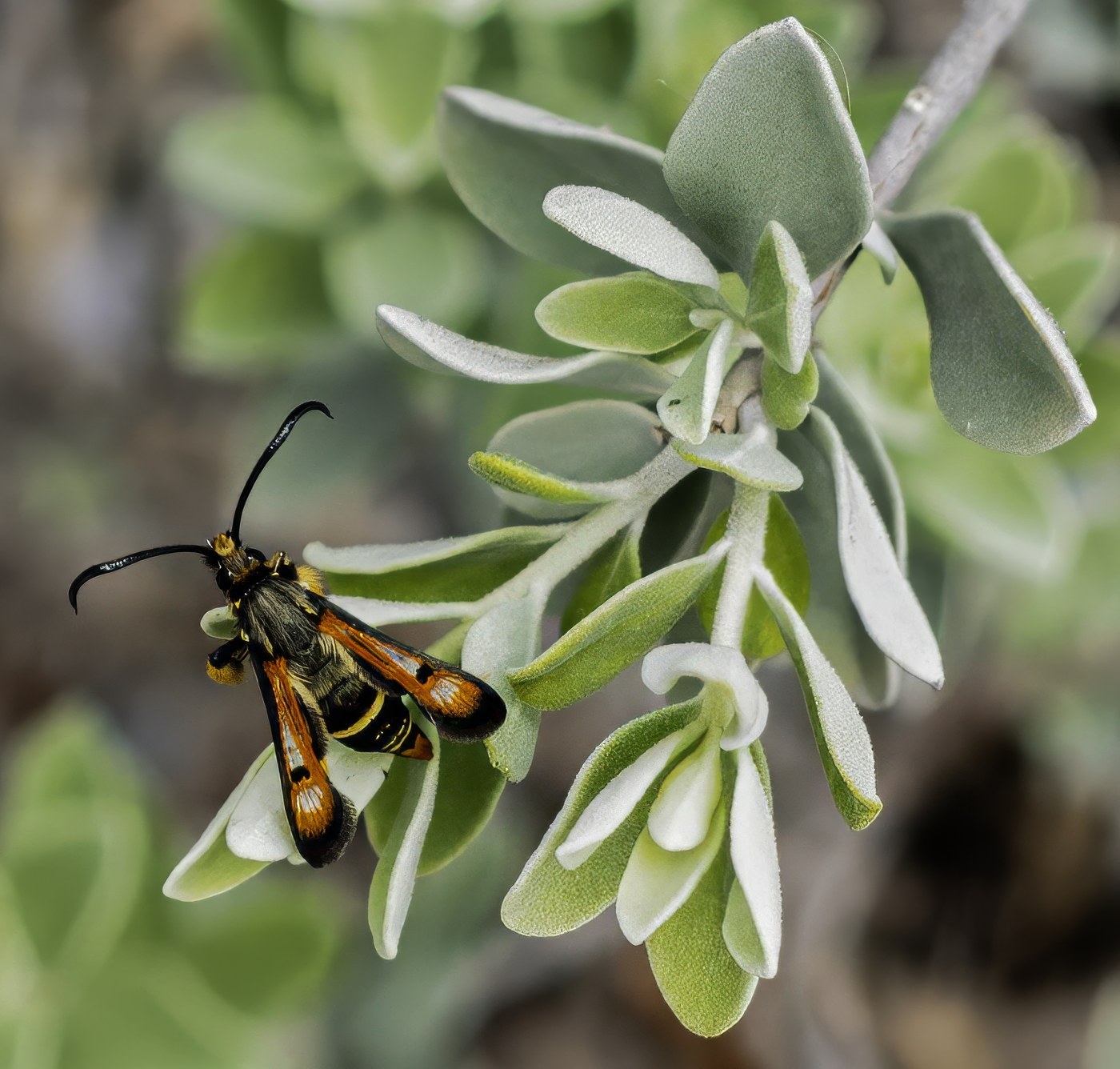
Key Identifying Features
Texas Sage (Leucophyllum frutescens) — also called Texas ranger, cenizo, barometer bush, or silverleaf — is an evergreen desert shrub in the figwort family (Scrophulariaceae). Note it is not a true sage (Salvia). Identify it by its soft, silvery-gray, woolly leaves, bell-shaped purple to magenta flowers that erupt suddenly after rains or humidity, and a dense, compact, mounded habit suited to hot, dry climates.
- Compact, rounded evergreen shrub, usually 3–6 ft (to 8 ft) tall and wide
- Silvery-gray to silver-green felted leaves
- Purple/lavender/magenta bell-shaped flowers
- Blooms in flushes triggered by rain/humidity (hence 'barometer bush')
Leaves & Stems
Leaves are small (about ½–1 in), oval to spoon-shaped (obovate), alternate or clustered, and covered in dense fine silvery hairs that give them a soft, felted, gray-white appearance and help reflect intense sun. The silvery foliage is a year-round identifying trait. Stems are densely branched and also somewhat woolly when young, forming a tight, twiggy mound.
Flowers & Fruit
Flowers are bell- to funnel-shaped, about 1 in across, five-lobed and two-lipped, typically violet-purple, lavender, pink, or magenta (some cultivars white), often with a spotted or fuzzy throat. The defining behavior is sudden, profuse blooming a few days after rainfall or a rise in humidity, then fading — giving rise to names like barometer bush and the Spanish 'cenizo.' Bloom flushes occur mainly summer to fall. Fruit is a small dry capsule.
How to Tell It Apart from Look-Alikes
- True sage (Salvia): Has square stems and aromatic leaves; Texas Sage has rounded stems, non-aromatic silvery foliage, and is unrelated.
- Russian sage / lavender: Have aromatic, narrow leaves and flower spikes; Texas Sage has fuzzy oval gray leaves and axillary bell flowers.
- Brittlebush (Encelia): Also silvery desert foliage, but bears yellow daisy flowers, not purple bells.
The soft silvery felted oval leaves + purple bell flowers flushing after rain + compact desert form combination is diagnostic.
Where You'll Find It
Native to the Chihuahuan Desert of Texas and northern Mexico; extremely common in xeriscape and arid-region landscaping (USDA zones 8–11) as informal hedges, foundation shrubs, and mass plantings. It thrives in full sun, heat, alkaline soil, and drought and dislikes overwatering.
Quick ID Checklist
- Compact, rounded evergreen desert shrub
- Soft, silvery-gray, woolly oval leaves year-round
- Purple/magenta bell-shaped flowers with a fuzzy throat
- Blooms suddenly after rain or humidity ('barometer bush')
- Not a true sage; non-aromatic foliage
- Thrives in heat, sun, and dry alkaline soil
Frequently asked questions
Is Texas Sage a true sage?
No. Despite the name, Leucophyllum is in the figwort family, not the mint family, and is unrelated to true sages (Salvia); its silvery foliage is not aromatic.
Why does Texas Sage suddenly burst into bloom?
It flowers in flushes triggered by rainfall or a rise in humidity, which earned it nicknames like barometer bush and cenizo.
What color are the leaves?
The small oval leaves are covered in fine silvery hairs, giving them a soft, felted, gray-white or silver-green color that persists year-round.
Where does Texas Sage grow best?
It is a Chihuahuan Desert native that thrives in full sun, heat, drought, and alkaline soil, and tends to decline with overwatering or poor drainage.