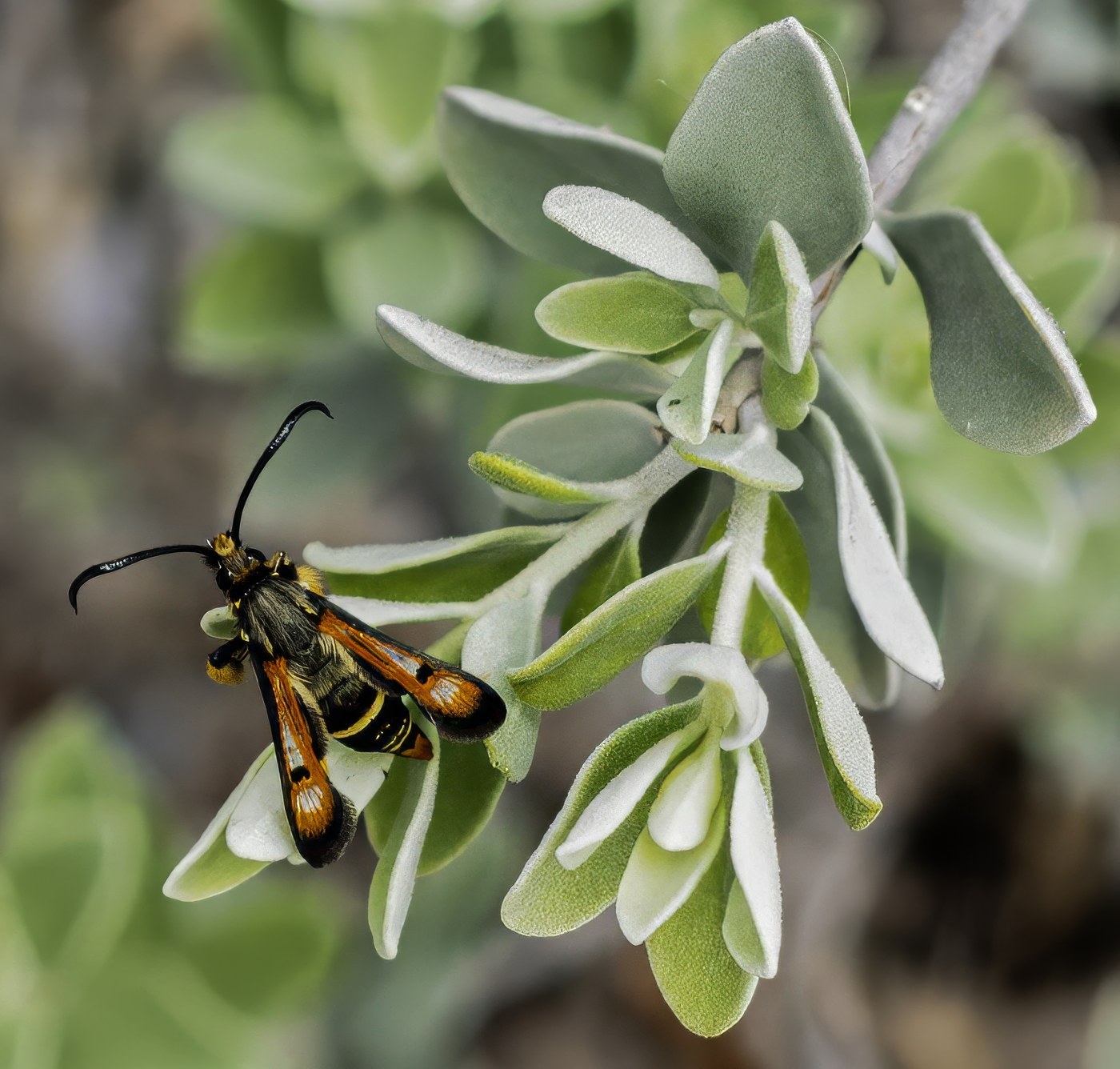
Texas Sage
Leucophyllum frutescens
Texas sage is a silvery-leaved desert shrub that erupts in purple flowers after rain or humidity—earning the nickname barometer bush. It thrives on heat, sun, and minimal water.
- Light
- Full sun
- Water
- Very low; highly drought-tolerant
- Difficulty
- Easy
Got a plant like this?
Identify any plant from a photo, free.
Overview
Texas sage (Leucophyllum frutescens), also called Texas ranger, cenizo, or barometer bush, is a heat-loving evergreen shrub native to the southwestern U.S. and Mexico. Despite the common name, it is not a true sage (Salvia) but a member of the figwort family.
Its standout features are soft silvery-gray foliage and bursts of bell-shaped purple to magenta flowers that appear in flushes, often triggered by rising humidity or rain—hence 'barometer bush'. The cool foliage and bright blooms make a striking combination.
Supremely tolerant of heat, drought, alkaline soil, and salt, it is a cornerstone of xeriscape and low-water landscapes in arid regions.
How to identify it
A compact, mounded, silvery evergreen shrub.
- Leaves: small, oval, densely covered in fine silvery-gray hairs
- Flowers: bell- or trumpet-shaped, ½–1 in, purple to magenta (sometimes pink or white), appearing in flushes after humidity or rain
- Habit: rounded, dense, typically 3–8 ft tall and wide
- Bloom pattern: irregular flushes through warm months rather than continuous bloom
- Texture: soft, felted foliage overall
Care & growing
Thrives on heat and neglect; overwatering is the main danger.
- Light: full sun is essential
- Water: very drought-tolerant—water deeply but infrequently; soggy soil causes root rot
- Soil: needs excellent drainage; tolerates poor, rocky, alkaline, and salty soils
- Temperature: hardy in USDA zones 8–11
- Feeding: none needed; it prefers lean soil
- Pruning: light shaping only—heavy shearing spoils its natural form and reduces bloom
- Propagation: semi-hardwood cuttings
Habitat & origin
Leucophyllum frutescens is native to the Chihuahuan Desert region of Texas and northern Mexico, where it grows on rocky, calcareous (limestone) slopes and arid scrublands.
That origin explains its love of heat, sun, alkaline soil, and minimal water. It is widely planted in xeriscapes, desert gardens, and low-water landscapes across the southwestern U.S. and similar arid climates.
Frequently asked questions
Why is Texas sage called barometer bush?
It tends to burst into bloom in response to rising humidity or rainfall, so a sudden flush of purple flowers often signals incoming weather.
Is Texas sage a true sage?
No. Despite the name, it is not a Salvia; it belongs to the figwort family (Scrophulariaceae) and is also called cenizo.
Why is my Texas sage dying?
Overwatering and poor drainage are the usual culprits. It is a desert plant that needs lean, well-drained soil and infrequent watering.
Should I prune Texas sage?
Only lightly. Hard shearing ruins its naturally graceful mound and reduces flowering—occasional light shaping is best.
Texas Sage guides
In-depth guides for identifying, growing, and caring for Texas Sage.
How to Care for Texas Sage
Grow Leucophyllum frutescens, the silvery, drought-loving Texas Sage shrub, with full sun, lean soil, and minimal watering for waves of purple bloom.
Texas Sage Identification Guide
Identify Texas Sage (Leucophyllum) by its silvery-gray fuzzy leaves, bell-shaped purple flowers that burst out after rain, and compact desert-shrub form.