
Thanksgiving Cactus Identification Guide
How to distinguish the Thanksgiving cactus from Christmas cactus by its sharply toothed stem segments and fall bloom time.
Read the full Thanksgiving Cactus encyclopedia entry →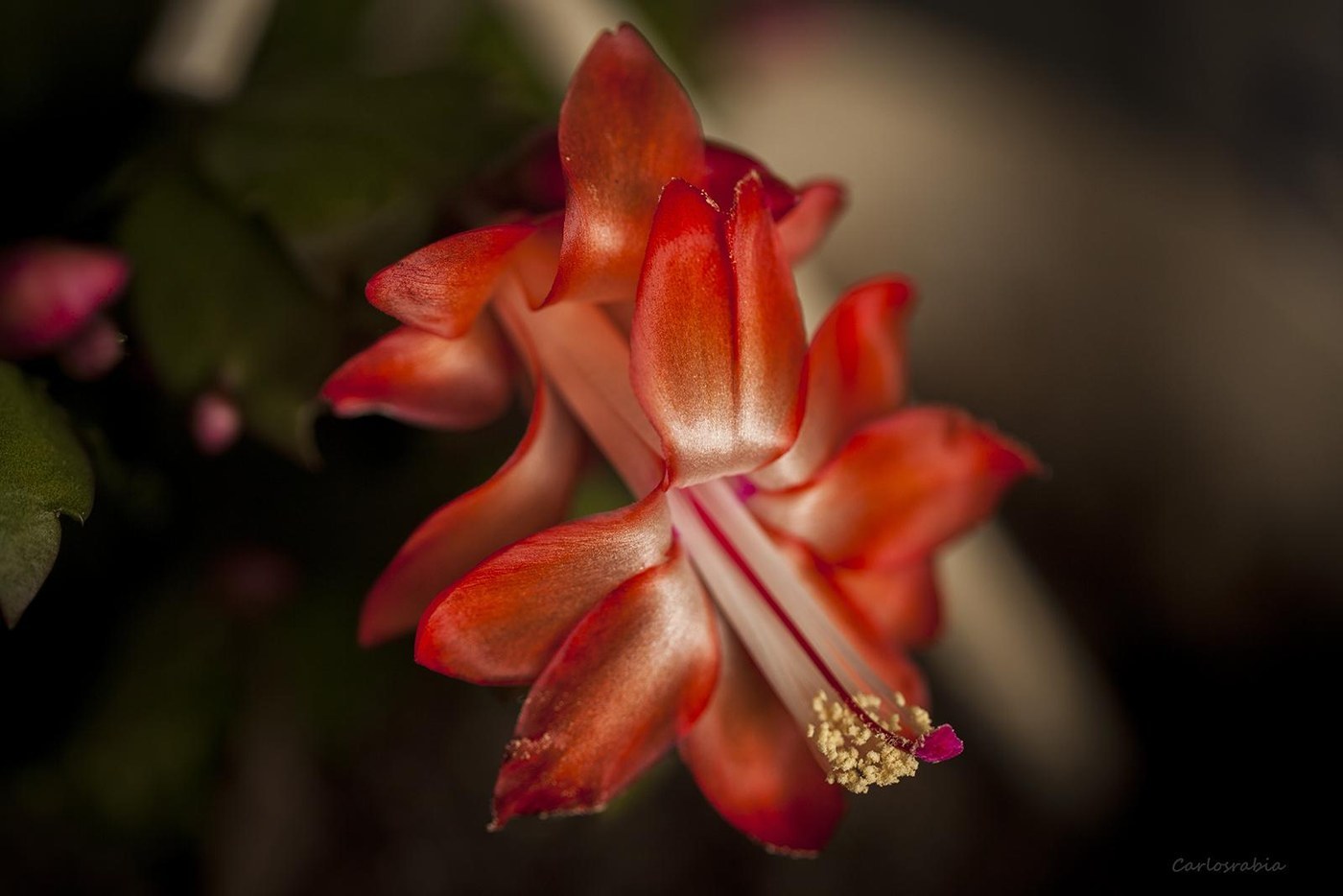
Key Identifying Features
The Thanksgiving Cactus (Schlumbergera truncata) is a Brazilian forest cactus grown as a houseplant, blooming in late November. The key to ID is the shape of its flattened stem segments.
- Flat, segmented green stems (no leaves)
- Segments with 2–4 pointed, claw-like teeth on each side
- Blooms in late autumn (Thanksgiving)
- Tubular, asymmetrical flowers held horizontally
Stems (Segments)
The plant has no true leaves; instead it builds arching, flattened jointed stems made of stacked segments (cladodes). On the Thanksgiving cactus, each segment has sharp, pointed projections ("claws") along the margins — this is the single most reliable identifier. The segments are glossy green and may flush reddish in bright light or cool temperatures. Stems arch and trail, making the plant ideal for hanging baskets.
Flowers & Fruit
Flowers appear at the tips of the segments in shades of pink, red, white, orange, salmon, or purple. The blooms are long, tubular, and strongly asymmetrical (zygomorphic), appearing to lean forward horizontally rather than hanging straight down. A protruding cluster of stamens and a pollen-bearing style extends from the throat. Bloom time is late November, a few weeks before the true Christmas cactus. Pollinated flowers may form small reddish berry-like fruit.
How to Tell It Apart from Look-Alikes
- Christmas Cactus (Schlumbergera × buckleyi): segments have rounded, scalloped edges, flowers hang down more symmetrically, and it blooms late December.
- Easter Cactus (Rhipsalidopsis): segments have rounded edges with tiny bristles; star-shaped symmetrical flowers in spring.
Remember: pointed claws = Thanksgiving; rounded scallops = Christmas.
Where You'll Find It
A popular indoor houseplant worldwide, especially around the holidays. In the wild it's an epiphyte growing on trees and rocks in the humid Atlantic coastal forests of southeastern Brazil. Indoors it wants bright indirect light, well-drained soil, and cool nights with long darkness to trigger blooming.
Quick ID Checklist
- Flat, jointed, leafless green stems
- Segment margins with 2–4 sharp pointed teeth
- Asymmetrical tubular flowers held horizontally
- Blooms around Thanksgiving (late November)
- Arching, trailing habit
- Flower colors from white to red, pink, orange, purple
Frequently asked questions
How do I tell a Thanksgiving cactus from a Christmas cactus?
Look at the stem segments. Thanksgiving cactus has sharp, claw-like pointed teeth on the edges, while Christmas cactus has smooth, rounded scalloped edges.
Why does mine bloom in November instead of December?
Because it's actually a Thanksgiving cactus (Schlumbergera truncata), which naturally flowers several weeks earlier than the true Christmas cactus.
Are these cacti spiny?
No. Despite being true cacti, holiday cacti have no sharp spines, only the soft pointed teeth on the segment margins.
What triggers it to flower?
Long nights of uninterrupted darkness and cooler temperatures in autumn signal it to set buds, which is why they bloom on a seasonal schedule.