
Thimble Cactus Identification Guide
Recognize the Thimble Cactus (Mammillaria gracilis) by its tiny thimble-sized stems with neat white spines that detach and root easily.
Read the full Thimble Cactus encyclopedia entry →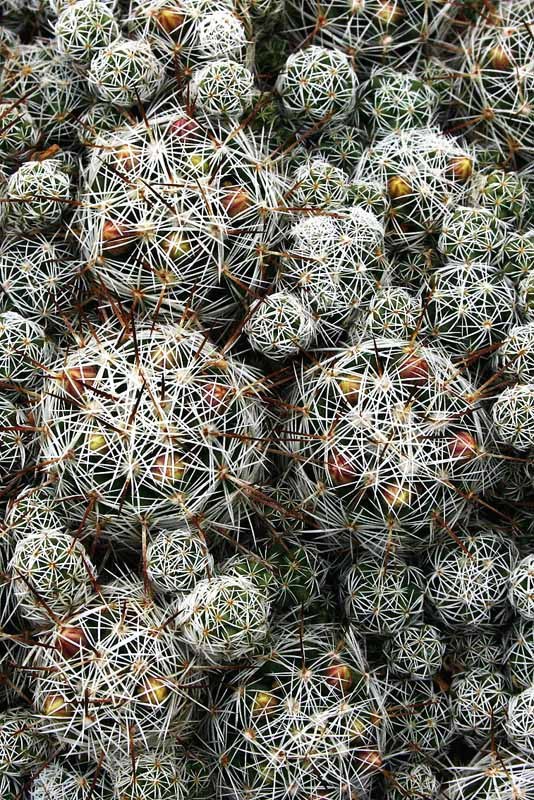
Key Identifying Features
Thimble Cactus (Mammillaria gracilis, syn. M. vetula subsp. gracilis) is a miniature clustering cactus named for its thimble-sized stems. Look for:
- Small, finger- or thimble-shaped green stems, only ~0.5-1 in (1-2.5 cm) thick.
- Dense, mat-forming clusters of many little stems.
- Neat, star-like rosettes of short white spines flat against each stem.
Stems & Spines
Each stem is a short cylinder, about 1-2 in (3-5 cm) long, green, and built from small tubercles (no ribs). The areoles bear 15-20 short, white, bristly radial spines pressed flat in a tidy star, sometimes with a few pale, slightly longer central spines. The overall look is crisp and white-dotted against green.
A hallmark behavior: the small offset stems detach at the lightest touch and roll away to root where they land, so the plant spreads into low, crowded cushions. This easy-shedding habit is itself a useful ID trait (and why the plant is sometimes nicknamed 'jumping' for how readily heads fall off).
Flowers & Fruit
Mature stems produce small, funnel-shaped flowers in creamy white to pale yellow, often with a faint pink or brownish midstripe, near the crown in winter to spring. These may be followed by small reddish fruits, though potted plants flower less freely than they offset.
How to Tell It Apart from Look-Alikes
- Mammillaria bocasana (Powder Puff): woolly with hair-like spines and hidden hooks; Thimble has firm, bristly white spines and no hooks.
- Mammillaria plumosa (Feather Cactus): soft feathery spines hiding the body; Thimble spines are stiffer and the green body shows.
- Mammillaria elongata (Lady Finger): longer, more elongated finger stems with yellow-to-brown spines; Thimble stays shorter and whiter.
- Echinopsis offsets: larger, sharply ribbed, not tubercled thimbles.
Where You'll Find It
Native to central Mexico, it is one of the easiest and most common beginner cacti, sold in tiny pots and dish gardens. Hardy in USDA 9-11; elsewhere a windowsill plant wanting bright light, gritty soil, and dry winters. Its dropped stems sprout so readily it can carpet a pot quickly.
Quick ID Checklist
- Tiny thimble-sized green stems, ~1 in thick
- Dense clustering cushions of many heads
- Short, white, star-arranged bristly spines
- Stems detach and root at a touch
- Small cream/yellow flowers near the crown
Frequently asked questions
Why do bits of my Thimble Cactus keep falling off?
Mammillaria gracilis offsets detach very easily so they can root and spread where they land. It is a natural propagation strategy, not a sign of poor health.
Are the spines sharp?
The short white radial spines are firm and bristly but pressed flat, so they are less hazardous than hooked-spine cacti. The detached stems can still stick to skin and clothing.
How do I tell it from a Powder Puff Cactus?
Powder Puff (M. bocasana) is woolly with soft hairs hiding sharp hooks. Thimble Cactus has crisp, flat, hookless white spines and a visible green body.
How do I propagate it?
Simply set a detached thimble stem on dry gritty soil. It roots on its own within a few weeks, which is why it spreads so fast in a pot.