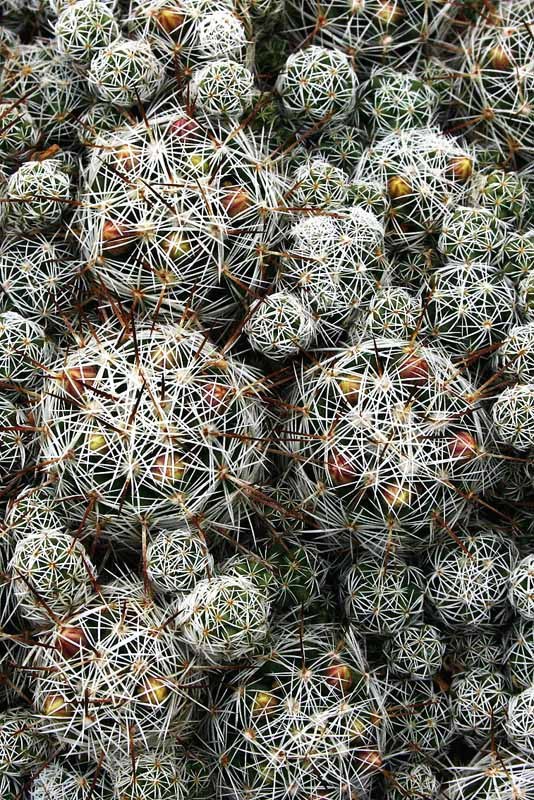
Thimble Cactus
Mammillaria gracilis
A tiny clustering cactus that produces masses of little thimble-sized offsets which detach at the slightest touch. The pale spines give the cluster a soft, frosty look.
- Light
- Bright light to some direct sun
- Water
- Sparingly; dry out fully between
- Difficulty
- Easy
Got a plant like this?
Identify any plant from a photo, free.
Overview
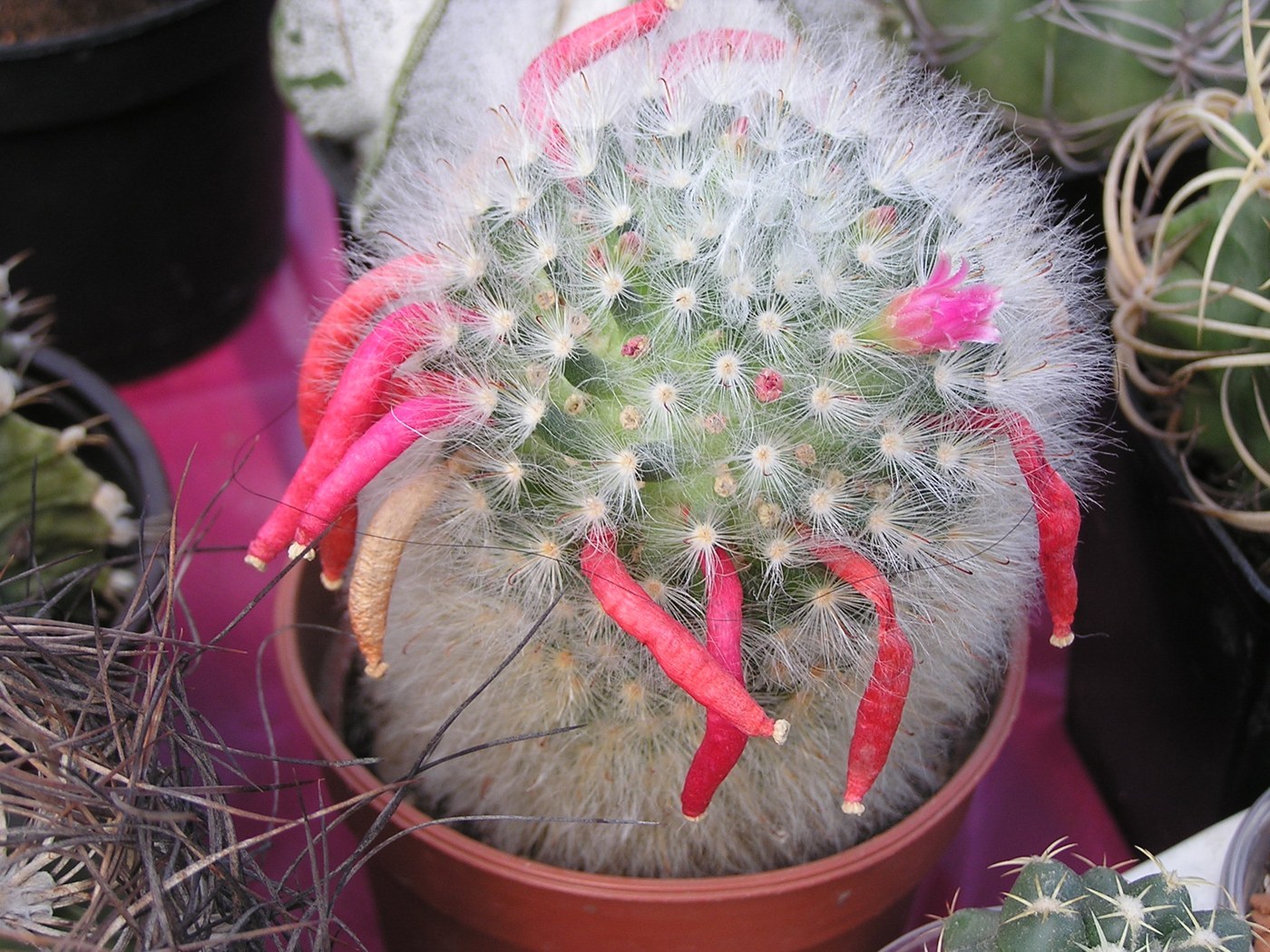
Thimble Cactus is a diminutive, prolifically clustering Mammillaria whose small cylindrical heads are each about the size of a thimble. It quickly forms a dense mound of dozens of little green bodies clothed in short, pale, star-patterned spines.
Its most famous trait is how readily the small offsets drop off — even a light brush sends them tumbling, which is how it self-propagates in the wild and why it's sometimes called the fragile cactus. Each dropped piece roots almost anywhere it lands.
Small white-to-yellow flowers may appear at the crowns. It is one of the easiest, most forgiving cacti for beginners.
How to identify it
- Small, thimble-shaped cylindrical heads, roughly 1-2 in (2.5-5 cm) long
- Densely clustering, forming low mounds of many easily-detached offsets
- Short, white-to-cream spines arranged in neat star patterns, giving a frosty look
- Offsets drop at the slightest touch and root readily
- Small, pale cream to yellowish flowers near the tips of the heads
Care & growing
Light: Bright light with some direct sun keeps it compact and well-colored.
Water: Water sparingly and let the soil dry completely; keep nearly dry in winter.
Soil: Gritty, fast-draining cactus mix.
Temperature: Warm in growth with a cool, dry winter rest; protect from frost.
Feeding: Occasional dilute cactus fertilizer during the growing season.
Propagation: Effortless — simply set a detached offset on dry mix and it roots on its own.
Habitat & origin
Native to central Mexico (Hidalgo and Querétaro), where it grows on rocky slopes and limestone outcrops in arid, well-drained terrain.
The self-detaching offsets are a survival strategy, letting it colonize new ground easily. It is among the most common cacti in cultivation worldwide, popular as a windowsill and beginner plant.
Frequently asked questions
Why do pieces keep falling off my Thimble Cactus?
That's completely normal — its offsets detach very easily as a natural means of spreading. Each fallen piece can be potted up to grow a new plant.
How do I propagate it?
It practically propagates itself. Just place a detached thimble-shaped offset on dry, gritty mix and it will root with little effort.
Why is mine stretching and pale?
It needs more light. In a brighter spot it stays compact, mounded, and well-spined.
Does it flower?
Yes, it produces small cream-to-yellow flowers near the crowns, especially after a cool, dry winter rest.
Thimble Cactus guides
In-depth guides for identifying, growing, and caring for Thimble Cactus.
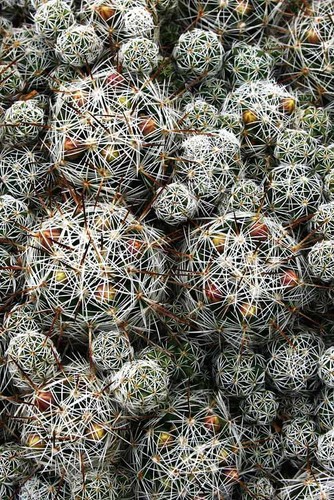
How to Care for Thimble Cactus
Grow thimble cactus, a fast-clustering miniature Mammillaria that forms mounds of tiny finger-like stems in bright light.
Thimble Cactus Identification Guide
Recognize the Thimble Cactus (Mammillaria gracilis) by its tiny thimble-sized stems with neat white spines that detach and root easily.