
Toad Lily Identification Guide
How to identify Toad Lily (Tricyrtis) by its small, orchid-like, heavily purple-spotted star flowers along arching leafy stems in autumn shade gardens.
Read the full Toad Lily encyclopedia entry →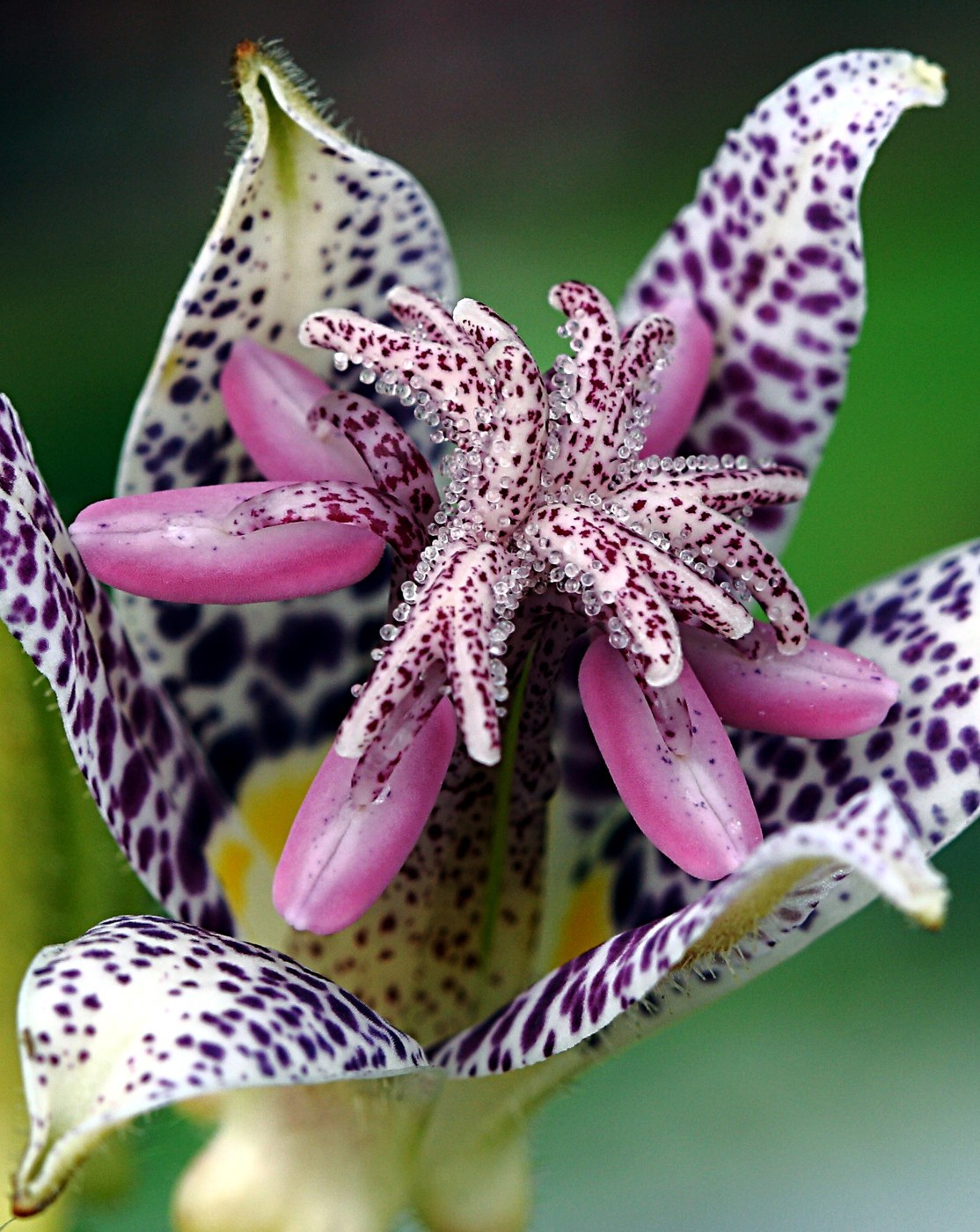
Key Identifying Features
Toad Lily (Tricyrtis) is a shade-garden perennial prized for intricate, orchid-like flowers heavily speckled with purple spots, opening in late summer and fall when most woodland plants have finished. The dense freckling on the flowers gives the plant its "toad" name.
- Star-shaped, six-tepaled flowers spotted purple on white/pink
- Flowers along arching, leafy stems
- Blooms in late summer through autumn
- A shade and woodland plant
Leaves & Stems
Stems are arching to upright, leafy, and often slightly hairy, 1-3 feet long. Leaves are arranged alternately in two rows and clasp the stem at their base; they are oval to lance-shaped with parallel veins and pointed tips, somewhat resembling Solomon's seal foliage. Some species have softly hairy stems and leaves.
Flowers & Fruit
The flowers are the showpiece. Each is about 1 inch across with six tepals (three petals plus three petal-like sepals) forming a star or upward-facing cup, usually white to pale lilac and densely covered in maroon-purple spots. At the center rises an elaborate, almost orchid-like structure of upright stamens and a column with branched, often fringed styles, sometimes with raised glandular bumps at the tepal bases. Flowers appear in clusters in the leaf axils and at the stem tips, opening a few at a time over a long autumn season. Fruit is a slender capsule.
How to Tell It Apart from Look-Alikes
- True lilies (Lilium): far larger, trumpet or recurved flowers on tall single stems, not the small, spotted, axillary star flowers of toad lily.
- Orchids: toad lily flowers can look orchid-like, but the plant grows from a rhizome in ordinary garden soil with lily-like leaves, and has six similar tepals rather than orchid lip structure.
- Solomon's seal (Polygonatum): similar arching, parallel-veined leafy stems, but its flowers are plain greenish-white dangling bells, not spotted upward stars.
The small, six-tepal, heavily purple-spotted star flowers blooming in fall shade are unique to Toad Lily.
Where You'll Find It
Toad Lily is grown in shade and woodland gardens, where it likes part to full shade and moist, humus-rich soil. It works well at the front of shady borders and along paths where the detailed flowers can be seen up close. Look for it flowering from late August into October, often the last perennial blooming in the shade.
Quick ID Checklist
- Small star/cup flowers densely spotted purple
- Six tepals with an ornate central stamen-style column
- Flowers in leaf axils along arching leafy stems
- Alternate, clasping, parallel-veined leaves
- Blooms in fall, in shade
If you find heavily purple-freckled, orchid-like star flowers along an arching stem in autumn shade, it's a Toad Lily.
Frequently asked questions
Why is it called toad lily?
The flowers are densely covered in dark purple spots resembling a toad's mottled skin, and the plant has lily-like foliage, giving rise to the name toad lily.
When do toad lilies bloom?
They flower in late summer and fall, often from late August into October, making them valuable for late-season color in shade gardens when little else is blooming.
How is a toad lily different from a true lily?
True lilies have large trumpet or recurved flowers on tall stems, while toad lilies have small, heavily spotted, star-shaped flowers clustered in the leaf axils along arching stems.
Where should toad lily be grown?
It prefers part to full shade with moist, rich, humusy soil, so it is ideal for woodland and shade gardens, especially near paths where its intricate flowers can be seen closely.