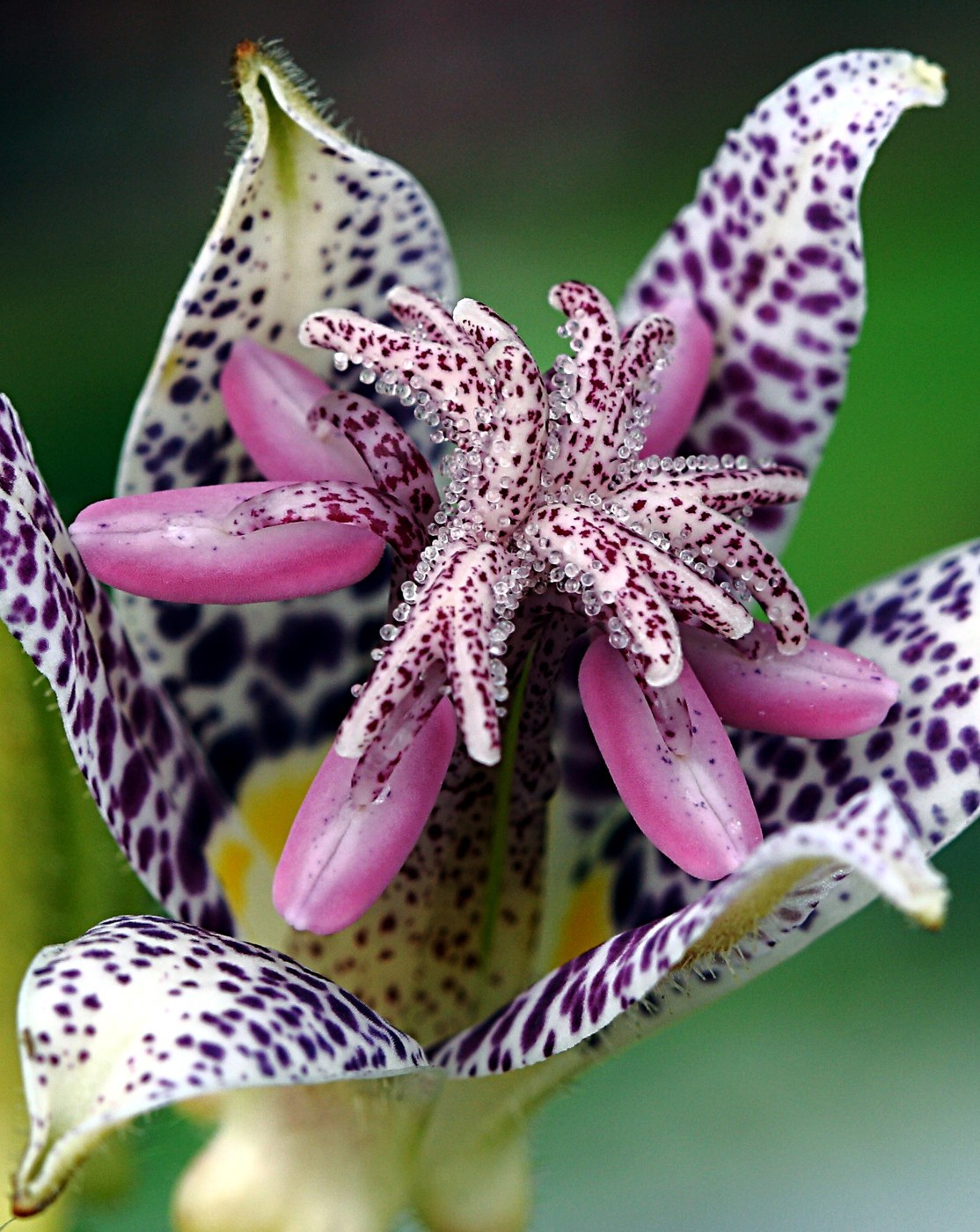
Toad Lily
Tricyrtis hirta
Toad lily is a shade perennial bearing exotic, orchid-like flowers heavily speckled with purple in late summer and fall. Its intricate blooms reward a close look in the woodland garden.
- Light
- Part to full shade
- Water
- Moderate to high; keep moist
- Difficulty
- Moderate
Got a plant like this?
Identify any plant from a photo, free.
Overview
Toad lily (Tricyrtis) is a clump-forming woodland perennial from Asia, grown for its surprisingly exotic, orchid-like flowers that appear in late summer and autumn when most shade plants have finished.
The star- or bell-shaped blooms are typically white to lilac and densely freckled with purple spots, carried along arching, leafy stems. Up close they are intricate and unusual, making toad lily a connoisseur's shade plant.
It brings late-season interest to woodland borders and shady corners, blooming right up to frost.
How to identify it
- Flowers: Upward-facing, star- or funnel-shaped, about 1 in across, white to pale lilac heavily spotted with purple, with prominent central column; late summer into fall
- Stems: Arching, leafy stems 1-3 ft tall
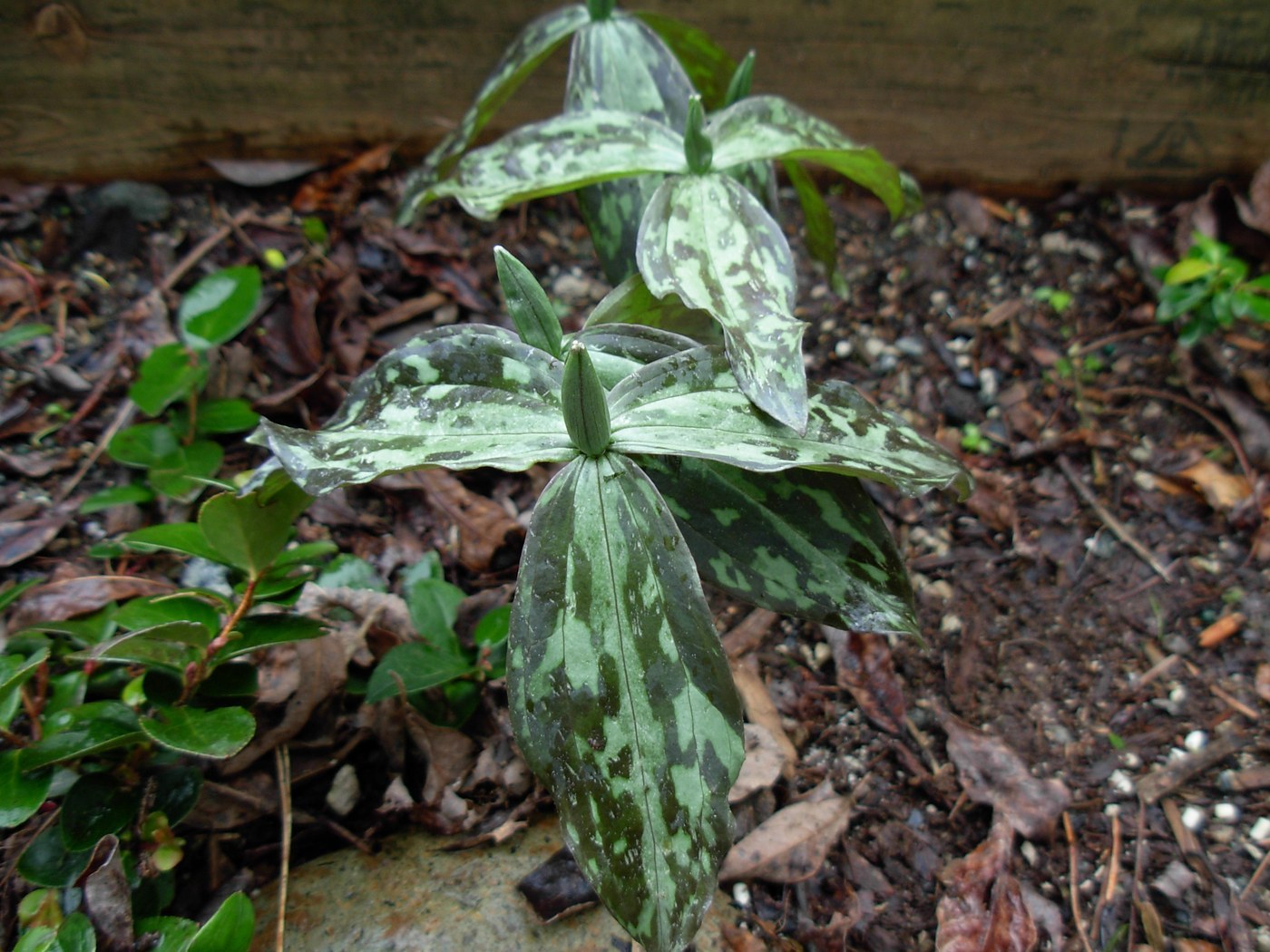
- Leaves: Oval to lance-shaped leaves clasping the stem, sometimes hairy (in Tricyrtis hirta)
- Habit: Slowly spreading clump from rhizomes
- Bloom position: Flowers borne in the leaf axils and stem tips along the arching stems
Care & growing
- Light: Part to full shade; protect from hot afternoon sun, which scorches the leaves
- Water: Keep consistently moist; toad lily resents drying out and may brown at the leaf edges
- Soil: Rich, humusy, moisture-retentive but well-drained soil
- Temperature: Hardy roughly USDA zones 4-8 depending on species
- Feeding: Topdress with compost or leaf mold in spring
- Propagation: By division in spring, stem cuttings, or seed
Habitat & origin
Toad lilies are native to East Asia, including Japan, China, Taiwan, and the Himalayas, where they grow on shaded, moist forest floors, cliffs, and streambanks.
In gardens they are prized for shady, woodland-style borders and are best sited where their late-season flowers can be admired up close, such as along a path.
Frequently asked questions
Why are my toad lily leaves turning brown at the edges?
Browning usually means the soil dried out or the plant got too much sun. Keep it in shade with consistently moist, humus-rich soil and mulch to retain moisture.
When does toad lily bloom?
It flowers in late summer and into fall, often continuing until the first frost, which makes it valuable for extending the shade-garden season.
Does toad lily need shade?
Yes. It is a woodland plant that performs best in part to full shade and dislikes hot, dry, sunny exposures.
How do I propagate toad lily?
The easiest method is dividing established clumps in spring. You can also take stem cuttings or grow it from seed.
Toad Lily guides
In-depth guides for identifying, growing, and caring for Toad Lily.
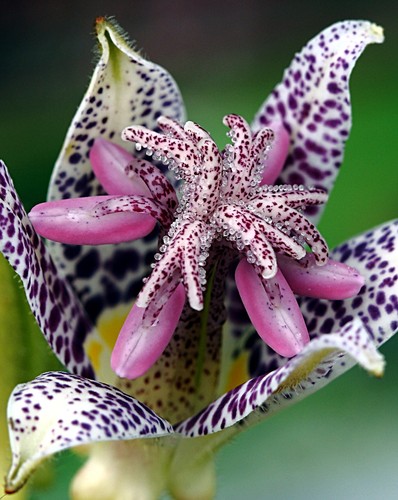
How to Care for Toad Lily
Grow Toad Lily (Tricyrtis hirta), a shade-loving perennial with orchid-like speckled flowers that bloom in late summer and fall.
Toad Lily Identification Guide
How to identify Toad Lily (Tricyrtis) by its small, orchid-like, heavily purple-spotted star flowers along arching leafy stems in autumn shade gardens.