
Tree Ivy Identification Guide
Identify Tree Ivy (Fatshedera lizei), the hybrid of fatsia and ivy, by its glossy five-lobed leaves on a semi-upright stem. Covers leaf shape, habit, and look-alikes.
Read the full Tree Ivy encyclopedia entry →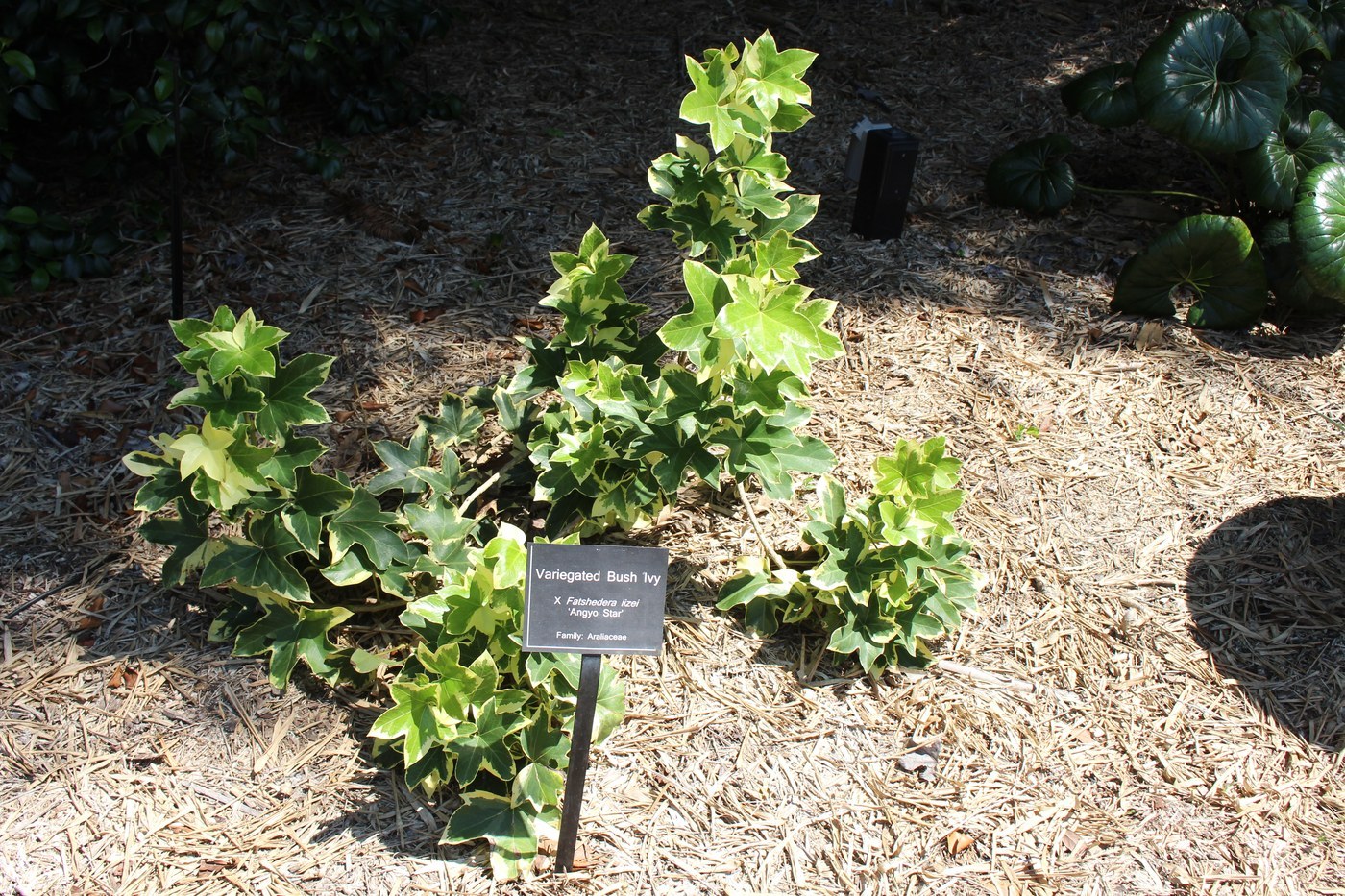
Key Identifying Features
Tree Ivy (Fatshedera lizei) is a remarkable intergeneric hybrid between Japanese aralia (Fatsia japonica) and English ivy (Hedera helix), in the family Araliaceae. It blends a shrubby stem with ivy-like leaves. Identify it by:
- Large, glossy, palmate (hand-shaped) leaves with 5 pointed lobes
- A semi-upright, sprawling stem that needs support intermediate between a shrub and a vine
- Leaves arranged alternately along the stem (not opposite)
- Smooth green or sometimes variegated (cream-edged) foliage
Leaves & Stems
Leaves are the standout feature: each is deeply lobed into five triangular points, 4-8 inches wide, with a leathery, glossy dark-green surface and a heart-shaped base. They resemble an oversized ivy leaf or a smaller fatsia leaf exactly what you'd expect from the cross. Variegated forms ('Variegata') have creamy-white leaf margins. The stems are woody at the base but long, flexible, and weakly upright, sprawling or leaning and benefiting from a stake or wall they cannot truly climb like ivy because they lack clinging rootlets. Young stems are green and may be lightly hairy.
Flowers & Fruit
Mature plants may produce rounded clusters (umbels) of small, pale greenish-white flowers in autumn, arranged in a branched, spherical head much like fatsia's. Because it is a sterile hybrid, it rarely sets viable fruit, so seeds and berries are not reliable ID features. The flowers, when present, confirm the Araliaceae family connection.
How to Tell It Apart from Look-Alikes
- English ivy (Hedera helix): smaller leaves and a true climbing vine with aerial rootlets Tree Ivy has much larger leaves and cannot self-cling.
- Japanese aralia (Fatsia japonica): leaves are far larger (7-9 lobes, up to 16 inches) and the plant is a true upright shrub Tree Ivy is more slender and sprawling with 5-lobed leaves.
- False aralia (Plerandra/Schefflera elegantissima): narrow, toothed, finger-like leaflets radiating from a point very different from Tree Ivy's solid lobed leaf.
- Schefflera: compound leaves with separate oval leaflets, not a single lobed blade.
The single glossy 5-lobed leaf on a semi-upright, non-clinging stem confirms Tree Ivy.
Where You'll Find It
Tree Ivy is a garden and houseplant, grown outdoors in mild temperate climates (shady borders, against walls) and indoors elsewhere. It tolerates shade and cool conditions well, making it popular for north-facing spots and as a tough indoor foliage plant. It is hardy to roughly USDA zone 7-8 and dislikes hot, dry sun.
Quick ID Checklist
- Glossy 5-lobed palmate leaves, leathery, heart-shaped base
- Semi-upright sprawling stem, woody at base, needs support
- Cannot self-cling (no aerial rootlets like ivy)
- Leaves alternate along the stem
- Possible cream-margined variegation in 'Variegata'
- Round umbel of greenish-white flowers in autumn; rarely fruits
Frequently asked questions
Why does Tree Ivy look like a cross between ivy and a shrub?
Because it literally is one. Fatshedera lizei is a hybrid between English ivy (Hedera helix) and Japanese aralia (Fatsia japonica), inheriting ivy-shaped leaves on a more upright, shrubby stem.
Can Tree Ivy climb walls like English ivy?
No. Unlike true ivy, it lacks clinging aerial rootlets, so its long sprawling stems must be tied or staked to a support. This is a key way to tell it from Hedera.
How do I distinguish it from Fatsia japonica?
Fatsia is a larger, fully upright shrub with bigger leaves (7-9 lobes, up to 16 inches). Tree Ivy has smaller 5-lobed leaves and a slender, leaning stem that needs support.
Does it produce seeds?
Rarely. As a sterile hybrid it may flower in autumn but seldom sets viable fruit, so it is propagated from cuttings rather than seed.