
Trillium Identification Guide
Identify Trillium by its signature whorl of three leaves and three-petaled flower borne on a single stem. This guide covers color forms, look-alikes, and its protected woodland status.
Read the full Trillium encyclopedia entry →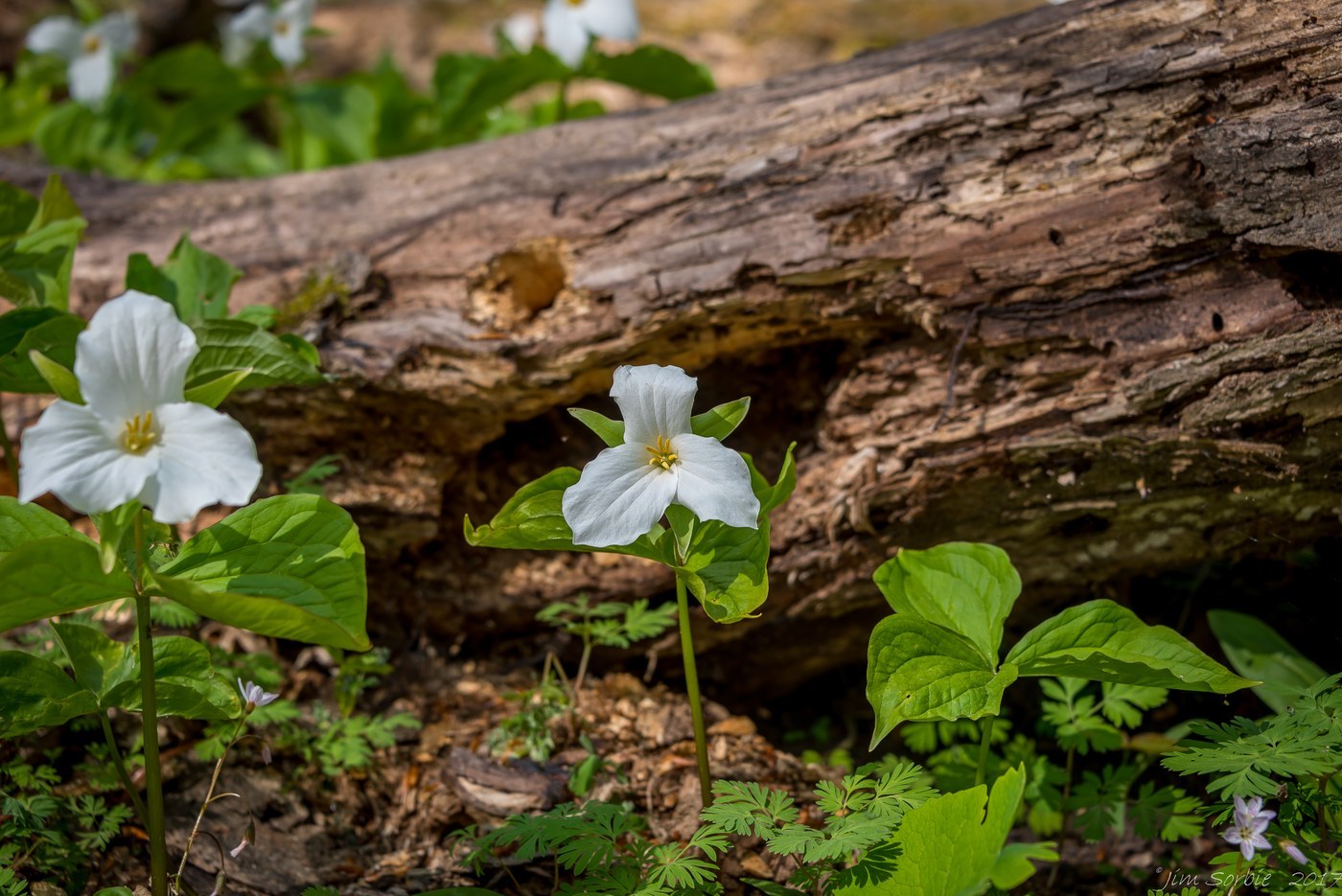
Key Identifying Features
Trillium is a spring woodland wildflower defined by the number three: three leaves, three petals, and three sepals arranged on a single unbranched stem. Plants are usually 6 to 18 inches (15 to 45 cm) tall and form a single, elegant bloom above a whorl of broad leaves. They are classic spring ephemerals of rich forests.
- A whorl of three leaves at the top of the stem
- A single flower with three petals (white, maroon, yellow, or pink)
- Three green sepals behind the petals
- One flower per plant on a single stem
Leaves & Stems
A single smooth, unbranched stem rises from an underground rhizome and bears a whorl of three broad, diamond- to oval-shaped leaves (technically bracts). Leaves may be plain green or mottled with silver and maroon, depending on species. Veins are usually netted rather than parallel. There is typically only one set of three leaves per plant.
Flowers & Fruit
The solitary flower sits directly above the leaves, either on a short stalk (pedicellate) or sitting right on them (sessile). It has three petals and three sepals. Colors include white (often aging to pink), deep maroon-red, yellow, or painted forms. The well-known Trillium grandiflorum has large white blooms. Blooming occurs early to mid spring. The fruit is a fleshy berry-like capsule.
How to Tell It Apart from Look-Alikes
- Jack-in-the-pulpit: has compound leaves in threes but a hooded spathe, not a three-petaled flower.
- False Solomon's seal / bunchberry: bunchberry also has whorled leaves and white bracts but a cluster of tiny central flowers.
- Wild ginger: heart-shaped paired leaves, hidden flower; lacks the three-part symmetry.
The strict count of three leaves, three petals, three sepals is diagnostic and rarely matched by other plants.
Where You'll Find It
Trilliums grow in rich, moist deciduous and mixed woodlands across North America and parts of Asia, favoring shaded, humus-rich soil. They are slow-growing and often legally protected because picking the flower can kill the plant by removing its only leaves. Look for them in early spring before the canopy closes.
Quick ID Checklist
- Three leaves in a whorl
- Three petals and three sepals
- One flower on a single stem
- Leaves plain or mottled
- Shaded, rich woodland in spring
- Do not pick (often protected)
Frequently asked questions
Why is everything about a trillium in threes?
The name comes from the Latin for three, reflecting its three leaves, three petals, and three sepals. This consistent three-part symmetry is the easiest way to recognize the genus.
Is it bad to pick a trillium?
Yes. Picking the flower usually removes the plant's only leaves, which can starve and kill it. Trilliums are slow-growing, often take years to bloom, and are legally protected in many areas, so leave them in place.
Why do some trillium flowers turn pink?
In species like the white Trillium grandiflorum, the blooms naturally fade from white to pink as they age. A pink trillium is often simply an older flower, not a different species.
What colors do trilliums come in?
Depending on the species they can be white, deep maroon-red, yellow, or pink, and some have mottled silvery-maroon leaves. White and maroon are among the most common forms.