
Umbrella Pine Identification Guide
How to identify Japanese umbrella pine (Sciadopitys verticillata) by its unique whorls of long, thick, double needles arranged like umbrella spokes. Covers needles, cones, bark, and look-alikes.
Read the full Umbrella Pine encyclopedia entry →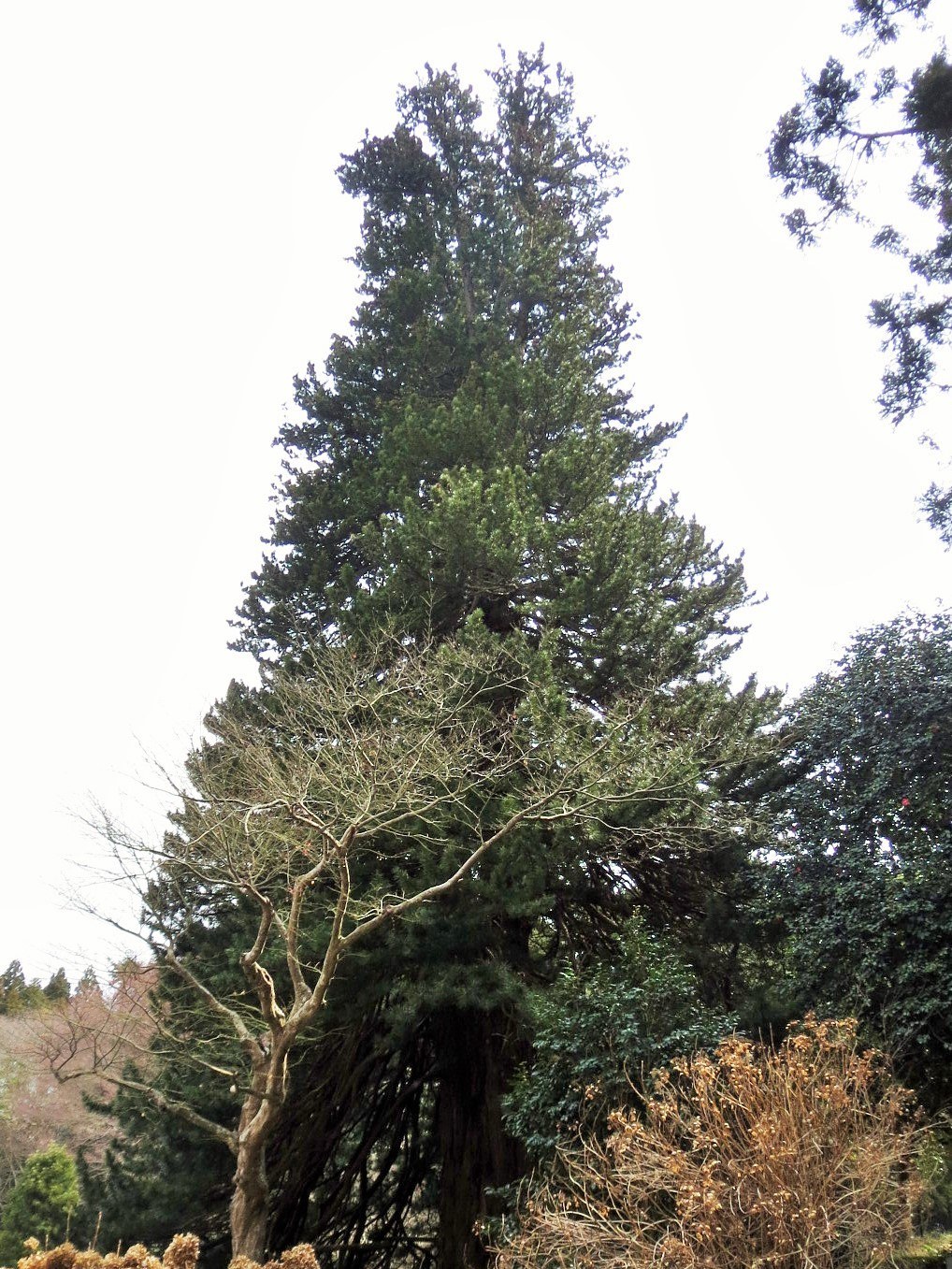
Key Identifying Features
Japanese umbrella pine (Sciadopitys verticillata) is not a true pine at all but a living fossil in its own family, unmistakable for its whorls of long, glossy, leathery 'needles' radiating like the ribs of an umbrella at the tips of the shoots. Once seen, it cannot be confused with anything else.
- Whorled clusters of 15–30 long needles at shoot tips, like umbrella spokes
- Needles thick, flat, glossy deep green, 6–12 cm long, grooved on both faces
- Slow, neat, conical evergreen habit
- Reddish-brown bark peeling in long strips
Leaves & Stems
The 'needles' are actually flattened double needles (cladodes) fused along their length, deeply grooved on both upper and lower surfaces, leathery and pliable, with a notched tip. They are bright glossy green, 6–12 cm long, and arranged in dense radiating whorls (pseudo-whorls) at the ends of the year's shoots, giving the characteristic umbrella or wheel-spoke look. Between these green whorls the shoot bears only tiny brown scale-leaves. Shoots are stout and green when young, browning with age; the bark is reddish-brown to grey, fibrous, and peels in long vertical strips.
Flowers & Fruit
Cones are woody, ovoid, 6–11 cm long, green ripening brown over two seasons, held upright and breaking up slowly to release winged seeds. Male cones are small and clustered at branch tips in spring. The cones are far less conspicuous than the foliage, which does all the identifying.
How to Tell It Apart from Look-Alikes
- True pines (Pinus): Needles in bundles of 2–5 held by a basal sheath; umbrella pine needles are far thicker, longer, grooved, and arranged in radiating whorls, not bundled.
- Yews/Podocarps: Flat single needles, not whorled umbrella clusters.
- Cephalotaxus / Cunninghamia: Spiny or sharp-tipped flat leaves, not the soft, grooved, blunt umbrella needles.
- Nothing else has the fused, double, deeply grooved needles in umbrella whorls—it is essentially unique.
Where You'll Find It
Native to moist mountain forests of central and southern Japan, where it is rare in the wild. It is a prized ornamental and bonsai subject worldwide, planted as a slow-growing specimen in gardens and parks in temperate regions. Look for a tidy, dark-green, conical tree with shoot tips bearing distinct green 'umbrellas'.
Quick ID Checklist
- Whorls of long needles radiating like umbrella spokes
- Needles thick, glossy, grooved on both sides, blunt/notched tips
- Only scale-leaves between the green whorls
- Reddish-brown bark peeling in long strips
- Slow, neat conical evergreen
If shoot tips carry green needles arranged like the ribs of an umbrella, it is the Japanese umbrella pine.
Frequently asked questions
Is umbrella pine a real pine?
No. Despite the name, Sciadopitys verticillata is not a true pine; it is the sole member of its own ancient family (Sciadopityaceae) and a 'living fossil' unrelated to Pinus.
What makes the foliage look like an umbrella?
The long, thick, glossy needles are clustered in whorls at the shoot tips, radiating outward like the ribs or spokes of an umbrella, which gives the tree its name and its unmistakable look.
Why do the needles look doubled or grooved?
Each 'needle' is actually two needles fused together (a cladode), leaving a deep groove down both the upper and lower surfaces, a unique feature among cultivated conifers.
Where does umbrella pine come from?
It is native to moist mountain forests of central and southern Japan, where it is rare in the wild, but it is widely grown as an ornamental and bonsai elsewhere.