
Valerian Identification Guide
Identify common valerian by its tall hollow stems, deeply divided fern-like leaves, domed clusters of fragrant pale pink flowers, and the strong musky smell of its roots.
Read the full Valerian encyclopedia entry →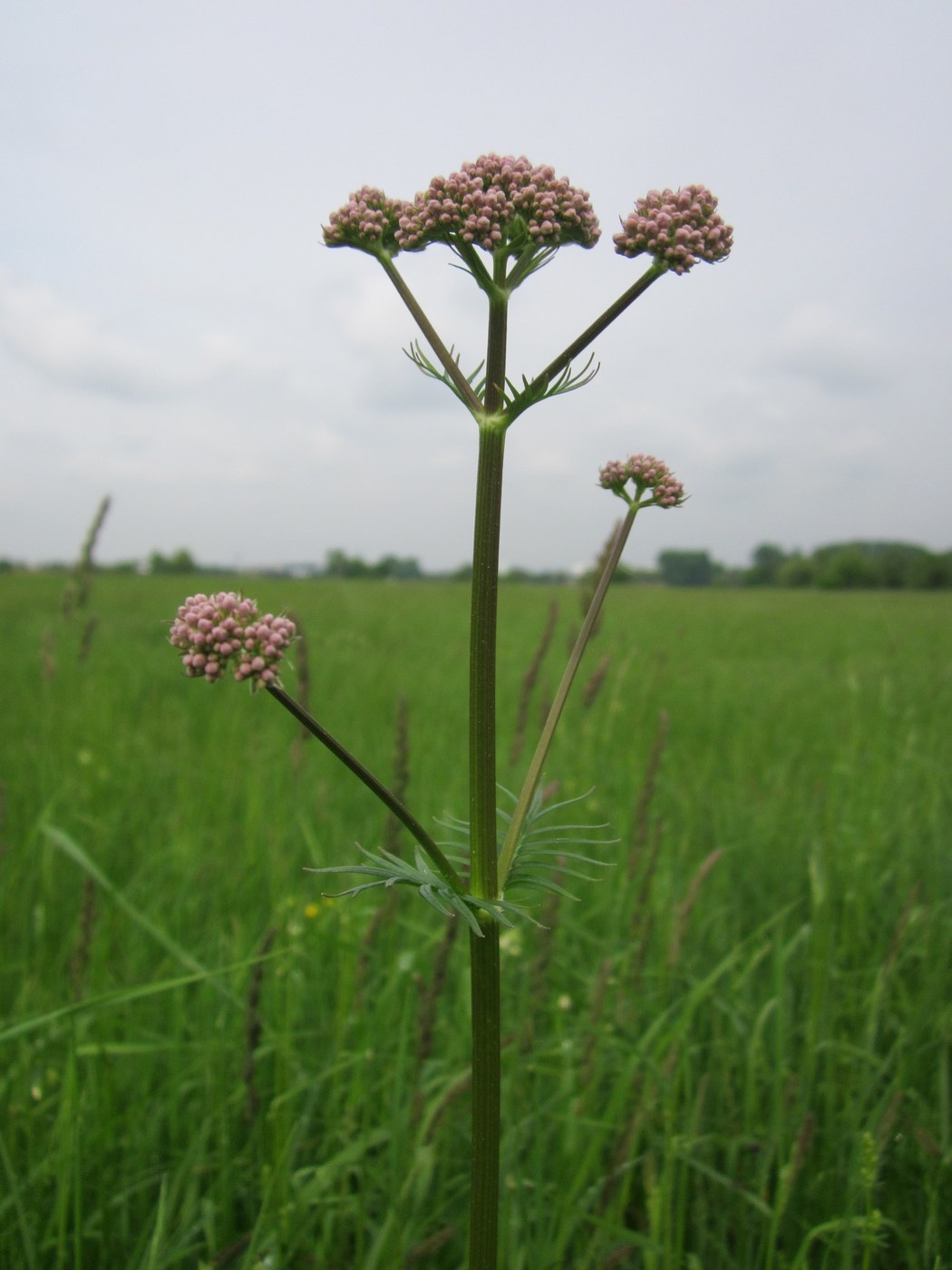
Key Identifying Features
Common valerian (Valeriana officinalis) is a tall perennial in the honeysuckle family (Caprifoliaceae, formerly Valerianaceae), grown and harvested for its sedative roots. It is recognized by its tall, grooved hollow stems, fern-like pinnately divided leaves, and flat-to-domed clusters of small fragrant pale pink or white flowers in summer. The roots have a distinctive strong, musky (some say unpleasant) odor.
- Tall, erect plant 1–1.5 m (3–5 ft), sometimes to 2 m
- Deeply divided (pinnate), fern-like leaves
- Domed/rounded clusters of tiny pink-white flowers
- Sweetly scented flowers; strongly musky-smelling roots
Leaves & Stems
Leaves are pinnately compound, divided into several pairs of toothed, lance-shaped leaflets along a central axis, giving a fern-like appearance. Lower leaves are stalked; upper leaves are smaller and stalkless. Stems are erect, hollow, grooved (ridged), and largely unbranched until the flowering top, sometimes slightly hairy near the base. Leaves are arranged in opposite pairs.
Flowers & Fruit
Flowers bloom in early-to-mid summer in dense, branched flat-topped or domed clusters (cymes) at the stem tips. Individual flowers are tiny (about 5 mm), tubular, five-lobed, and pale pink to white, and sweetly fragrant. The fruit is a small one-seeded structure topped with a feathery pappus that aids wind dispersal.
How to Tell It Apart from Look-Alikes
- Red valerian (Centranthus ruber): a common garden look-alike, but it has undivided, smooth bluish-green leaves and deep red/pink (or white) flowers, and is unrelated to true valerian.
- Elderberry / cow parsley: can resemble it in flower clusters, but elder is a woody shrub and umbellifers (carrot family) have hollow stems with very different leaf and flower structure.
- Hemp agrimony: similar height and habitat but has simpler leaves and fluffier pink heads.
The fern-like pinnate leaves, hollow grooved stem, domed pink-white flower clusters, and musky root smell together confirm true valerian.
Where You'll Find It
Native to Europe and Asia, valerian grows in damp meadows, riverbanks, ditches, woodland edges, and grassland, preferring moist soils in sun or light shade. It is also cultivated in herb gardens and has naturalized in North America.
Quick ID Checklist
- Tall (1–1.5 m+) with hollow, grooved stems
- Pinnate, fern-like, toothed leaves in opposite pairs
- Domed clusters of tiny pale pink-white flowers
- Sweet-smelling flowers; musky-smelling roots
- Damp meadow / riverbank habitat
A tall meadow plant with fern-like leaves, domed pink-white flower heads, and pungent musky roots is common valerian.
Frequently asked questions
Is garden 'red valerian' the same as true valerian?
No. Red valerian (Centranthus ruber) is a different, unrelated plant with undivided bluish leaves and red or pink flowers. True valerian (Valeriana officinalis) has fern-like divided leaves and pale pink-white flower clusters.
Why do valerian roots smell so strong?
Valerian roots have a distinctive, strong, musky-earthy odor (some find it unpleasant) due to volatile compounds. This root smell is a reliable way to confirm the plant, even though the flowers themselves are sweetly fragrant.
What do the leaves look like?
They are pinnately compound, divided into several pairs of toothed, lance-shaped leaflets, giving a fern-like appearance, arranged in opposite pairs along the stem.
Where does valerian grow in the wild?
It favors damp habitats: wet meadows, riverbanks, ditches, and woodland edges, in moist soil and full sun to light shade.