
Velvet Shield Anthurium Identification Guide
Identify the Velvet Shield Anthurium (Anthurium hybrid, often A. 'Velvet Shield') by its large velvety, heart-shaped leaves with bold silvery veins. Covers leaf texture, veining, and look-alikes.
Read the full Velvet Shield Anthurium encyclopedia entry →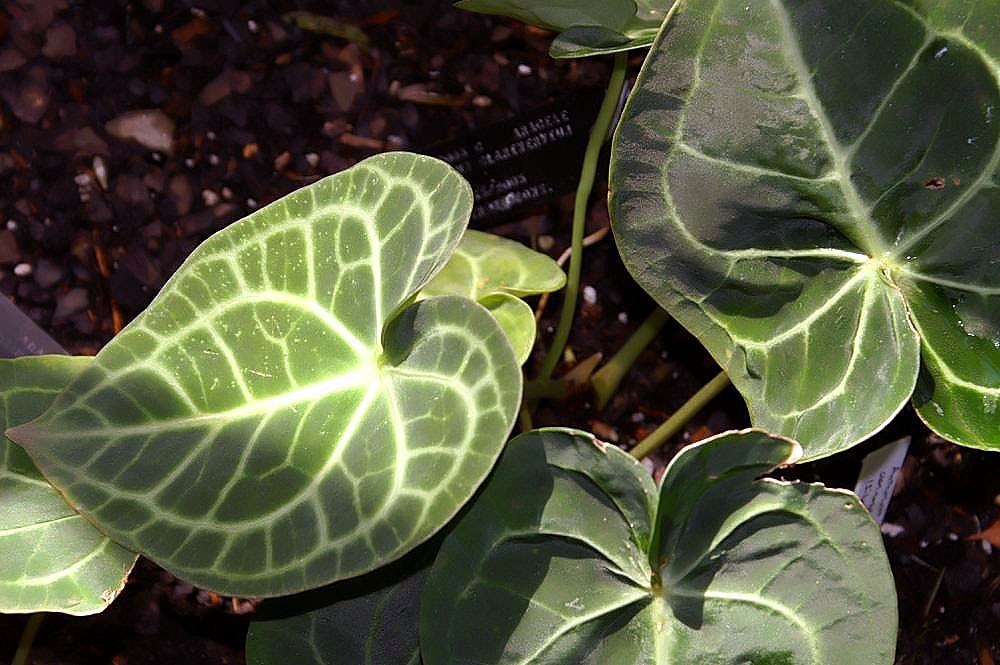
Key Identifying Features
Velvet Shield Anthurium is a velvet-leaved Anthurium (family Araceae), grown for its dramatic foliage rather than flowers it is a hybrid involving large-leaved species like A. crystallinum and A. clarinervium. Identify it by:
- Large, heart-shaped (cordate) leaves with a matte, velvety surface
- Bold, contrasting silvery-white veins radiating across a dark-green blade
- A shield-like, broad leaf held on a long, upright petiole
- A clumping, non-climbing rosette habit
Leaves & Stems
The leaf is everything here. Each blade is broadly heart-shaped with a deep notch at the base and a pointed tip, often 8-14 inches long, with a velvety, light-absorbing matte texture caused by tiny surface cells. The most striking feature is the network of pale, silvery to white veins the main midrib and primary lateral veins stand out vividly against the deep green to bronze-green background, giving a shield or stained-glass effect. New leaves often emerge a coppery-bronze or purplish before darkening. Leaves sit on stout, upright petioles rising from a short central stem; the plant stays compact and does not climb or trail.
Flowers & Fruit
Like other anthuriums it can produce the family's spathe-and-spadix inflorescence, but in velvet-leaved types the spathe is usually a small, narrow green to greenish-brown structure with a slender spadix nothing like the glossy red 'flamingo flower' anthuriums. Flowering is incidental; the foliage is the identifier. Pollinated plants may form berries on the spadix.
How to Tell It Apart from Look-Alikes
- Flamingo flower (Anthurium andraeanum): glossy, non-velvety leaves and a showy waxy red/pink spathe velvet shield types are matte with prized foliage and dull flowers.
- Anthurium clarinervium: very similar stiff, velvety, silver-veined leaves but typically thicker and more rounded the 'Velvet Shield' hybrid often has larger, slightly more elongated heart shape.
- Alocasia (jewel types): also velvety with pale veins, but Alocasia leaves point upward and arrow-shaped, and the plant grows from a corm Anthurium leaves are heart-shaped from a fibrous crown.
- Philodendron gloriosum: velvety heart leaf with white veins too, but it creeps along a horizontal rhizome, while the anthurium clumps upright.
Where You'll Find It
Native parentage is tropical Central and South American rainforest understory. It is grown almost exclusively as a collector's houseplant in warm, humid conditions with bright indirect light. It dislikes direct sun (which scorches the velvet) and cold, and needs a chunky, airy aroid mix. You'll find it indoors, in terrariums, or in greenhouse collections.
Quick ID Checklist
- Large heart-shaped leaves with a deep basal notch
- Velvety, matte surface (not glossy)
- Bold silvery-white veins on dark-green/bronze blade
- New leaves emerge coppery/bronze
- Upright clumping rosette, not climbing or creeping
- Small dull green spathe if flowering (not showy red)
Frequently asked questions
Why doesn't my Velvet Shield Anthurium have showy red flowers?
It is a foliage anthurium, not the flamingo-flower type. Velvet-leaved anthuriums produce small, dull green spathes; they are grown for their velvety, silver-veined leaves rather than blooms.
How is it different from Anthurium clarinervium?
They are closely related and look alike both have velvety, silver-veined heart leaves. The 'Velvet Shield' hybrid generally has larger, slightly more elongated leaves, while clarinervium leaves tend to be thicker and rounder.
How can I tell it from Philodendron gloriosum?
Both have velvety heart leaves with white veins, but gloriosum creeps along a horizontal rhizome at soil level, while the anthurium grows as an upright clumping rosette.
Why is the leaf surface matte instead of shiny?
Microscopic surface cells scatter light, giving the velvety, light-absorbing texture typical of velvet anthuriums. Direct sun can damage this surface, so it prefers bright indirect light.