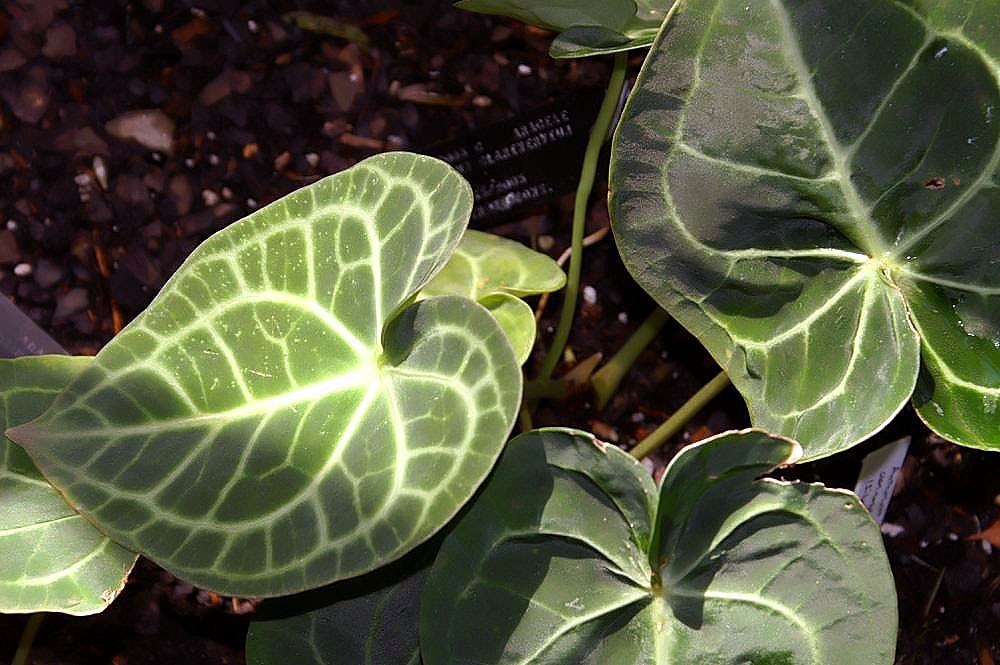
Velvet Shield Anthurium
Anthurium clarinervium
This collector's anthurium is grown for its large, velvety, heart-shaped leaves emblazoned with bold, contrasting white veins. The thick, dark foliage has a stiff, almost cardboard-like texture that gives it its nicknames.
- Light
- Bright indirect light
- Water
- When top inch dries
- Difficulty
- Moderate
Got a plant like this?
Identify any plant from a photo, free.
Overview
Anthurium clarinervium is a velvet-leaved species from Mexico, prized by aroid enthusiasts for dramatic foliage rather than flowers. Its common names - velvet shield, velvet cardboard - describe its thick, suede-textured, shield-shaped leaves.
Each dark green leaf is etched with a network of pale, silvery-white veins that stand out in sharp relief, making it one of the most ornamental of the velvet anthuriums.
It grows as an epiphyte or lithophyte in habit, so it appreciates a chunky, airy mix and steady humidity rather than dense, wet soil.
How to identify it
- Thick, stiff, heart-shaped (cordate) leaves with a velvety matte surface
- Striking network of contrasting white-to-silver veins over dark green
- Leathery, almost cardboard-like leaf texture
- Compact, slow-growing rosette habit, usually under 2 ft
- Inconspicuous green spathe-and-spadix flowers followed by berries
Care & growing
Light: Bright indirect light; never harsh direct sun, which scorches the velvety leaves.
Water: Water when the top inch dries; keep evenly moist but never soggy. It is prone to root rot in dense, wet mixes.
Soil: A chunky, airy aroid mix of bark, perlite, and some peat or coir for sharp drainage.
Temperature & humidity: Warm (65-80 F) and humid (ideally 60%+); protect from cold and dry air.
Feeding: Dilute balanced fertilizer monthly in growth.
Propagation: Division of offsets, or seed; it is slow to multiply.
Habitat & origin
Anthurium clarinervium is native to the limestone cliffs and karst outcrops of Chiapas, southern Mexico, where it grows as a lithophyte clinging to shaded rocks in humid forest.
It is grown worldwide as a sought-after indoor collector's plant, usually in terrariums, greenhouses, or humid rooms that mimic its native conditions.
Frequently asked questions
What soil does it need?
A chunky, fast-draining aroid mix of bark and perlite - it grows on rocks in the wild and resents dense, soggy soil.
Why are the leaves curling or browning?
Usually low humidity or underwatering. Raise humidity above 60% and keep the mix lightly moist.
Is it the same as Anthurium crystallinum?
They are close relatives with similar veined velvet leaves, but clarinervium has thicker, stiffer, more rounded leaves.
Velvet Shield Anthurium guides
In-depth guides for identifying, growing, and caring for Velvet Shield Anthurium.
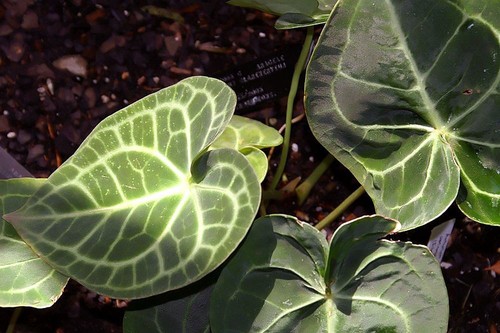
How to Care for Velvet Shield Anthurium
Grow Anthurium clarinervium for its dramatic velvety, silver-veined heart-shaped leaves with bright indirect light and airy soil.
Velvet Shield Anthurium Identification Guide
Identify the Velvet Shield Anthurium (Anthurium hybrid, often A. 'Velvet Shield') by its large velvety, heart-shaped leaves with bold silvery veins. Covers leaf texture, veining, and look-alikes.