How to Care for Verbena
Garden Verbena delivers nonstop clusters of jewel-toned flowers all summer. An easy, sun-loving plant for beds, baskets, and containers.
Read the full Verbena encyclopedia entry →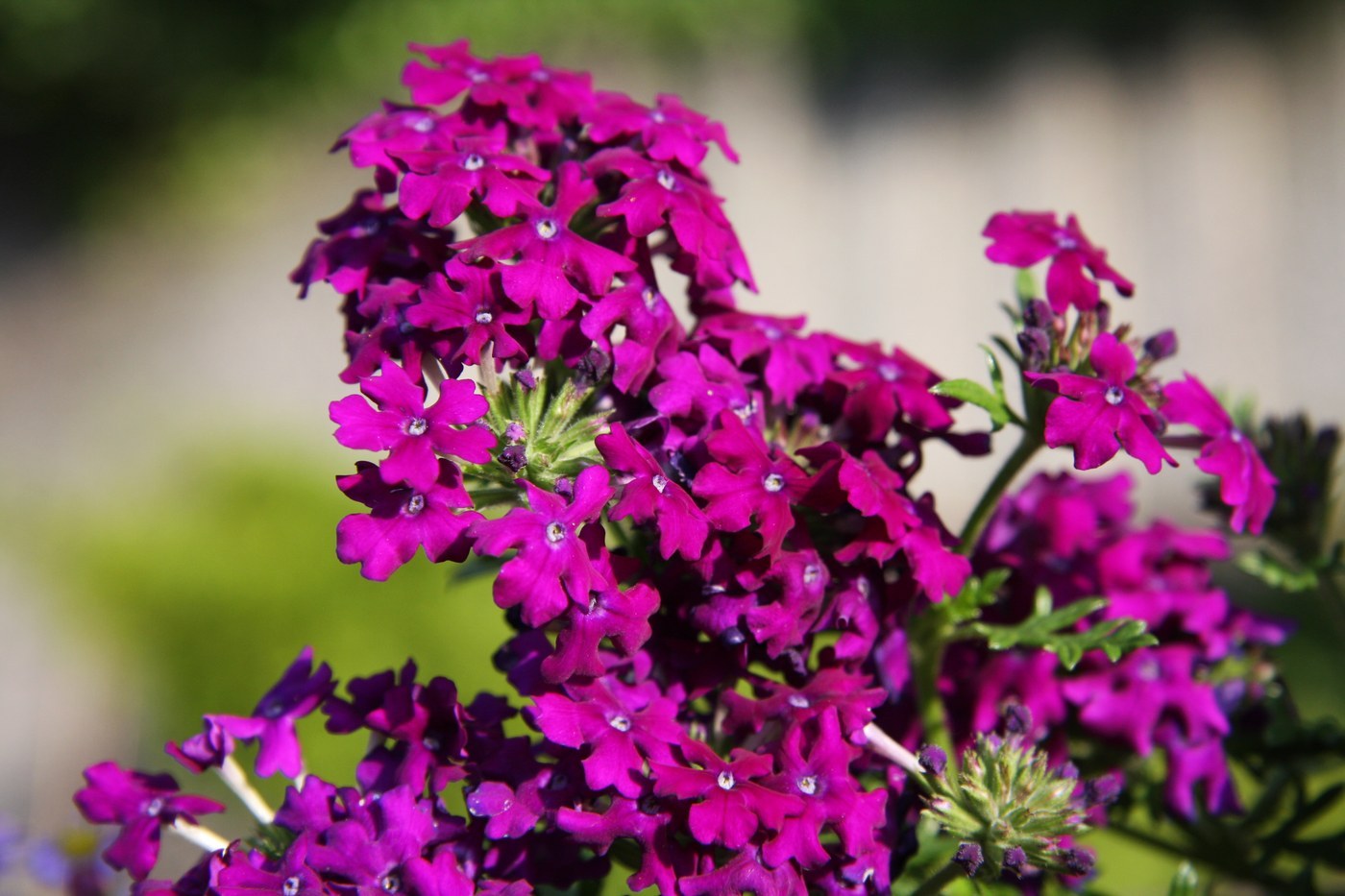
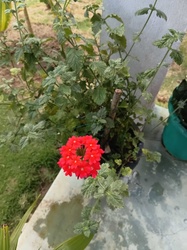
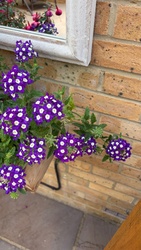
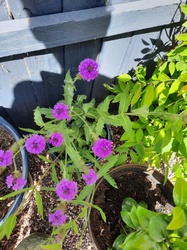
Verbena (Verbena x hybrida) is a heat-loving, free-flowering plant grown for its rounded clusters of small five-petaled blooms in vivid reds, purples, pinks, whites, and bicolors that appear continuously from late spring until frost. Low, spreading, and tireless, it is a mainstay of summer beds, borders, hanging baskets, and window boxes.
Light
Verbena is a sun worshipper: give it full sun, at least six to eight hours daily, for compact growth and maximum bloom. In shade it becomes leggy, flowers sparsely, and is far more prone to mildew, so choose the brightest position you have.
Water
Water moderately and let the top of the soil dry out between waterings. Verbena dislikes constantly wet feet and is fairly drought-tolerant once established. Aim for deep, less frequent watering rather than frequent light sprinkles, and water at the base to keep the foliage dry and mildew-free. Containers dry faster and need closer attention in heat.
Soil & Potting
Grow in light, well-drained soil of average fertility; sharp drainage is the single most important factor for healthy verbena. Heavy, soggy soils invite root rot. In containers use a free-draining potting mix and ensure drainage holes are clear. A slightly gritty, open medium suits it well.
Humidity & Temperature
Verbena thrives in heat and full sun and tolerates dry air with ease. It is typically grown as an annual or tender perennial, planted out after the last frost. High humidity with poor airflow is its main enemy, encouraging powdery mildew, so space plants for good ventilation.
Feeding
As a heavy, continuous bloomer, verbena benefits from regular feeding. Apply a balanced or bloom-boosting liquid fertilizer every two to four weeks through the growing season, or incorporate a slow-release feed at planting. Container plants especially need steady feeding to keep the flowers coming all summer.
Propagation
Verbena propagates readily from softwood stem cuttings taken in late summer, which root easily in a moist, free-draining mix and can overwinter frost-free to plant out next year. Seed-grown types can be started indoors in late winter, and trailing forms are simple to layer where stems touch the soil.
Repotting / Pruning
The secret to nonstop bloom is regular shearing: trim the whole plant back by about a third when flowering slows, and it will rebound with a fresh flush within a couple of weeks. Deadhead spent clusters and pinch young plants to encourage branching. Refresh container plantings or repot overwintered stock into fresh mix in spring.
Common Problems & Pests
Powdery mildew is the most frequent issue, thriving in shade, crowding, and overhead watering; prevent it with full sun, good spacing, and watering at the base. Spider mites can attack in hot, dry spells, showing as fine stippling and webbing, so rinse foliage and monitor closely. Aphids and whiteflies occasionally appear. Root rot follows overwatering in poorly drained soil.
Seasonal Care Tips
In spring, plant out after frost in a sunny, well-drained spot and pinch young plants for bushiness. Through summer, feed regularly, water deeply but not too often, and shear back midseason to renew flowering. In fall, take cuttings to carry favorites over; in frost-prone areas the plant is treated as an annual, while in mild climates it may persist as a short-lived perennial.
Frequently asked questions
How do I keep my Verbena blooming all summer?
Shear the whole plant back by about a third whenever flowering slows, and feed with a bloom-boosting fertilizer every two to four weeks. Combined with full sun and deadheading, this midseason haircut triggers a fresh flush of flowers within a couple of weeks.
Why does my Verbena have white powder on the leaves?
That is powdery mildew, verbena's most common ailment. It thrives in shade, crowding, and damp foliage. Move plants to full sun, space them for airflow, and water at the base rather than overhead to keep the leaves dry.
How often should I water Verbena?
Water deeply but let the top of the soil dry out between waterings. Verbena is drought-tolerant once established and hates soggy roots. Frequent light sprinkling encourages disease, so favor deeper, less frequent watering, checking containers more often in heat.
Is Verbena an annual or a perennial?
Garden verbena is a tender perennial usually grown as an annual, since frost kills it. In mild, frost-free climates it can persist as a short-lived perennial. Elsewhere, take late-summer cuttings and overwinter them frost-free to carry favorites over.
Verbena identified by the community
Recent Verbena specimens identified with Plant Identifier.