Verbena Identification Guide
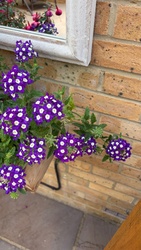
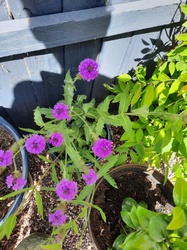
Recognize verbena by its flat-topped clusters of small five-lobed tubular flowers, opposite toothed leaves, and square stems. Covers garden verbena and tall Verbena bonariensis.
Read the full Verbena encyclopedia entry →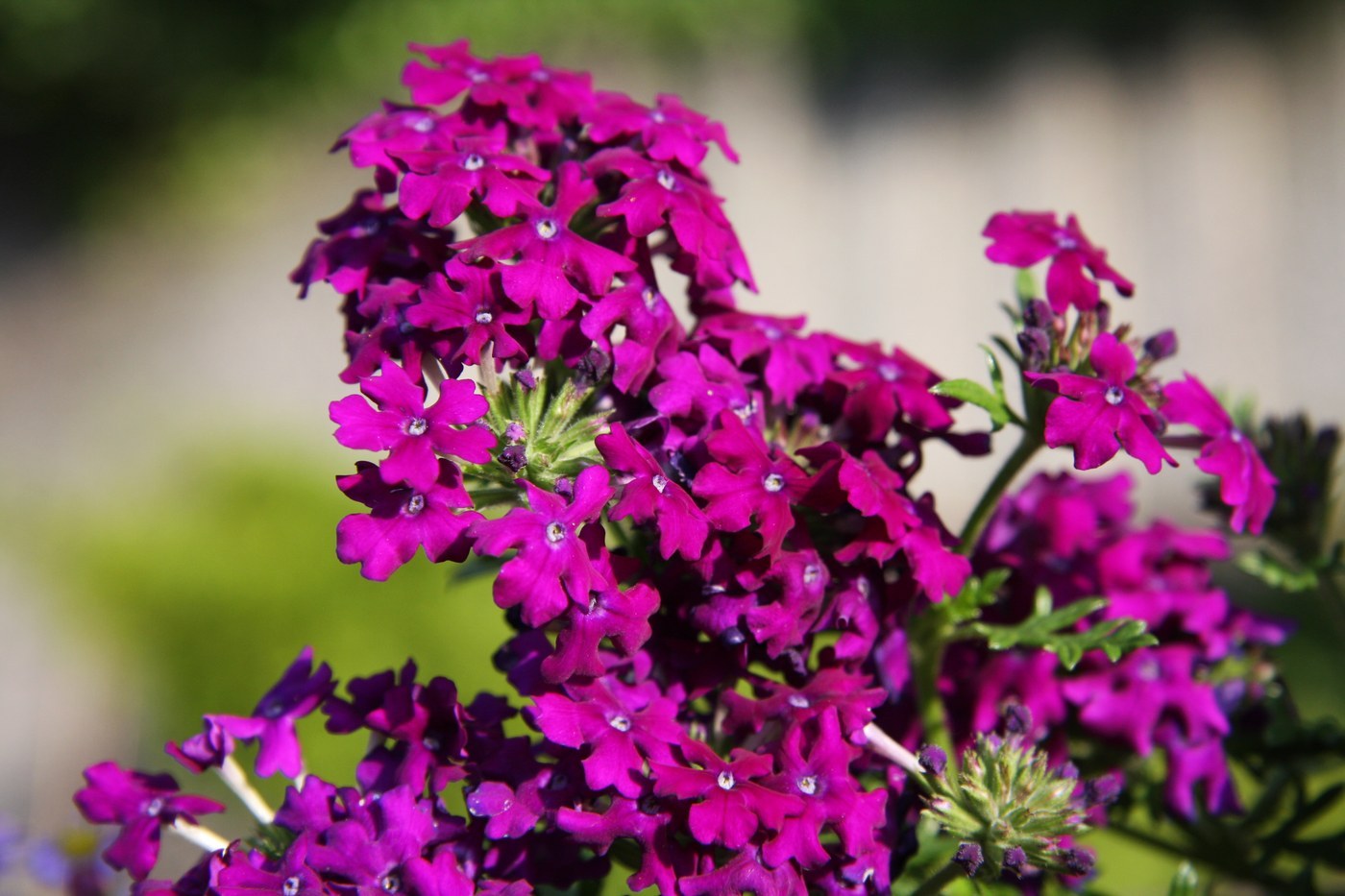
Key Identifying Features
Verbenas are clump-forming or sprawling plants in the vervain family, grown for long-blooming clusters of small bright flowers. The flowers sit in tight rounded or flat-topped heads atop branching stems.
- Small flowers in dense clusters (umbels or spikes)
- Each flower a tube flaring into 5 lobes, often slightly notched
- Colors: purple, violet, red, pink, white, sometimes bicolor with a pale eye
- Long bloom season from spring into fall
Leaves & Stems
Leaves are opposite (paired across the stem), usually toothed or deeply cut, lance-shaped to oval, and often rough or slightly hairy to the touch. Stems are commonly squarish in cross-section and may be wiry. Garden verbena trails and mounds; Verbena bonariensis sends up tall (3-6 ft), nearly leafless airy stems topped with small purple clusters.
Flowers & Fruit
Flower clusters open gradually, the cluster widening as new buds bloom at the edges. Each tubular flower is slightly two-lipped/5-lobed. After bloom, small dry seeds (nutlets) form in the persistent calyx. Some verbenas are fragrant; many are powerful butterfly magnets.
How to Tell It Apart from Look-Alikes
- Lantana (a relative): also has clustered small tubular flowers, but lantana flowers are usually multicolored within one head (changing color as they age) and have very aromatic foliage; lantana is woody and shrubbier.
- Phlox: has 5 flat petals but lacks the square stem and toothed opposite leaves; phlox flowers are individually larger.
- Lemon verbena (Aloysia): a related shrub with long fragrant lance leaves and tiny white flowers—grown for scent.
- Square stems + opposite toothed leaves + flat clusters of 5-lobed tube flowers identify true verbena.
Where You'll Find It
Verbenas are popular in beds, borders, hanging baskets, and containers, and several species grow wild in meadows, prairies, and roadsides in the Americas. They thrive in full sun and well-drained soil, tolerating heat and drought, which is why they bloom so reliably all summer.
Quick ID Checklist
- Small flowers in dense rounded/flat clusters
- Each flower a 5-lobed tube
- Opposite, toothed leaves
- Stems often square in cross-section
- Long bloom, butterfly-friendly
- Purple, red, pink, or white
Clusters of tiny five-lobed tubular flowers above opposite toothed leaves on squarish stems point to verbena.
Frequently asked questions
How do I tell verbena from lantana?
Both have clustered tubular flowers, but lantana heads are often multicolored as flowers age and its foliage is strongly aromatic and woody, while verbena clusters are typically one color with toothed opposite leaves on square stems.
Why is verbena good for butterflies?
Its long-blooming clusters of small nectar-rich tubular flowers provide an easy landing platform and steady food source, making verbena, especially Verbena bonariensis, a top butterfly plant.
Is lemon verbena the same plant?
No. Lemon verbena (Aloysia citrodora) is a related fragrant shrub grown for its lemon-scented leaves, distinct from the ornamental flowering verbenas in genus Verbena.
Why does verbena bloom so long?
Verbenas flower continuously from spring to fall because new buds open at the edges of each cluster over weeks, and the plants tolerate heat and drought well.
Verbena identified by the community
Recent Verbena specimens identified with Plant Identifier.