
Virginia Bluebells Identification Guide
Identify Virginia Bluebells (Mertensia virginica) by their nodding clusters of trumpet-shaped blue flowers and pink buds. This guide covers their smooth foliage and spring woodland habitat.
Read the full Virginia Bluebells encyclopedia entry →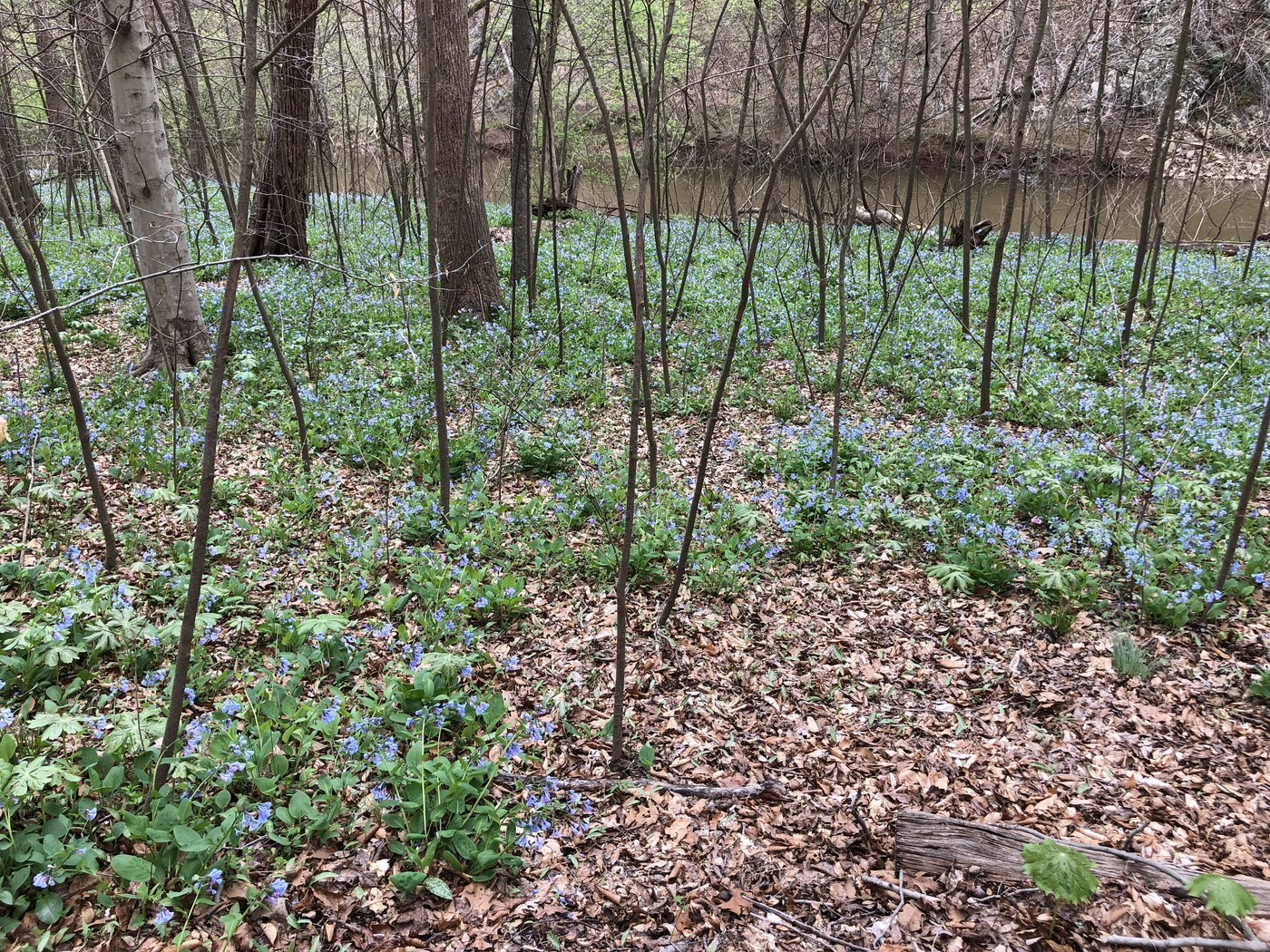
Key Identifying Features
Virginia Bluebells (Mertensia virginica) are a beloved spring woodland wildflower, recognized by clusters of nodding, trumpet-shaped sky-blue flowers that emerge from pink buds. Plants form mounded clumps 1 to 2 feet (30 to 60 cm) tall and often carpet forest floors in early spring before tree canopies leaf out.
- Bell- or trumpet-shaped flowers hanging in loose clusters
- Buds open pink and mature to blue (sometimes both colors at once)
- Smooth, soft, blue-green oval leaves
- A spring ephemeral that dies back by early summer
Leaves & Stems
Stems are smooth, succulent, and gray-green to slightly purplish. Leaves are alternate, oval to elliptical, smooth-edged, and gently veined, with a soft, almost waxy texture and rounded tips. Foliage has a distinct blue-green cast. The whole plant is hairless, an important contrast with many borage-family relatives that are bristly.
Flowers & Fruit
Flowers hang in drooping (nodding) clusters at the top of arching stems. Each bloom is a tubular bell about 1 inch (2.5 cm) long that flares into five shallow lobes. The pink-to-blue color shift happens as flowers age, so a single cluster often shows pink buds and blue open flowers together. Blooming peaks in March to May. The fruit consists of four small wrinkled nutlets.
How to Tell It Apart from Look-Alikes
- Wild blue phlox (Phlox divaricata): has flat five-petaled flowers facing outward, not nodding tubular bells.
- Forget-me-nots (Myosotis): much smaller flat flowers and bristly foliage.
- Common comfrey (Symphytum): similar bell flowers but very coarse, hairy leaves.
The key giveaways are the nodding tubular bells, pink-to-blue transition, and smooth hairless foliage.
Where You'll Find It
Virginia Bluebells thrive in moist, rich deciduous woodlands, floodplains, and stream banks across eastern and central North America. They favor dappled spring sunlight and damp soil. Because they are a spring ephemeral, the foliage yellows and disappears by midsummer, so look for them from early to mid spring.
Quick ID Checklist
- Nodding clusters of trumpet-shaped flowers
- Buds pink, open flowers blue
- Smooth, blue-green, oval leaves (no hairs)
- Soft, succulent stems
- Moist woodland floor in early spring
- Foliage disappears by summer
Frequently asked questions
Why are some Virginia Bluebell flowers pink and others blue?
The buds start out pink and turn sky-blue as the flowers open and mature, due to a change in pH within the petal cells. A single cluster often displays both pink buds and blue blooms at the same time.
Where do Virginia Bluebells grow?
They favor moist, rich deciduous woodlands, floodplains, and stream banks across eastern and central North America, blooming in early to mid spring before the forest canopy fills in.
Why do the plants disappear in summer?
Virginia Bluebells are spring ephemerals. They complete their growth and flowering in early spring, then the leaves yellow and die back, leaving the plant dormant underground until the next spring.
How do I distinguish them from wild blue phlox?
Wild blue phlox has flat, outward-facing five-petaled flowers, while Virginia Bluebells have nodding, tubular bell-shaped flowers. Bluebells also have smooth, hairless blue-green leaves.