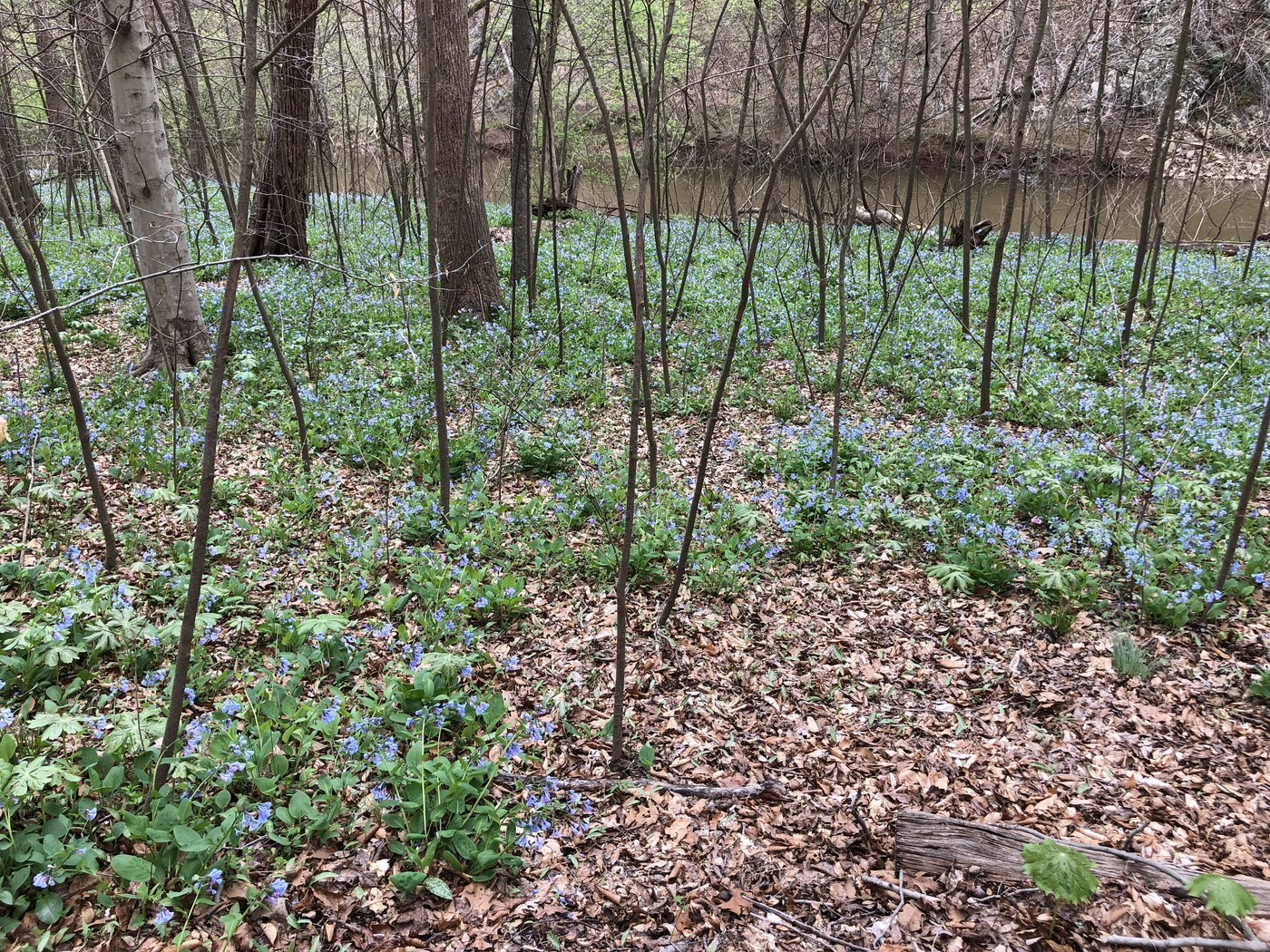
Virginia Bluebells
Mertensia virginica
A beloved spring ephemeral whose pink buds open into clusters of nodding, sky-blue trumpet flowers. It blooms in woodland shade then dies back by summer, vanishing until the next spring.
- Light
- Part shade to full shade
- Water
- Moderate; consistently moist soil
- Difficulty
- Easy
Got a plant like this?
Identify any plant from a photo, free.
Overview
Virginia bluebells (Mertensia virginica) are a much-loved spring ephemeral of eastern North American woodlands. They emerge early, bloom in a burst of blue, and then go dormant, disappearing entirely by midsummer.
A charming feature is the color shift of the blooms: buds start pink and turn blue as they open, so a single cluster often shows both hues at once. This change reflects shifting pH in the petal tissue.
They naturalize beautifully in shade gardens, slowly forming drifts that return reliably each spring.
How to identify it
Look for low clumps of soft foliage topped by nodding clusters of blue bells in early spring.
- Flowers: Trumpet- or bell-shaped, about 1 inch long, opening sky-blue from pink buds, in drooping clusters
- Leaves: Oval, smooth, soft gray-green, with a slightly bluish cast
- Size: 1 to 2 feet (30 to 60 cm) tall
- Habit: Clump-forming spring ephemeral that dies back after blooming
- Bloom time: Early to mid-spring
Care & growing
Virginia bluebells are easy in the right shady, moist setting.
- Light: Part to full shade; they bloom before trees fully leaf out
- Water: Keep soil consistently moist during the growing season; tolerates drought once dormant
- Soil: Rich, humusy, well-drained woodland soil
- Temperature: Cold-hardy perennial across much of the temperate zone
- Propagation: By seed or by division of dormant rhizomes in late summer
- Note: Plant alongside ferns and hostas that fill in as the bluebells go dormant
Habitat & origin
Virginia bluebells are native to eastern and central North America, from Ontario and the eastern United States west to Kansas.
They grow naturally in moist, rich deciduous woodlands, floodplains, and along stream bottoms, often forming large colonies on the forest floor.
They are widely planted in temperate shade and woodland gardens, where they naturalize into spreading drifts over time.
Frequently asked questions
Why do the flowers change from pink to blue?
The buds start pink and turn blue as they open, due to a change in pH within the petal tissue, so clusters often show both colors at once.
Why do my bluebells disappear in summer?
They are spring ephemerals. After blooming, the foliage naturally yellows and dies back, and the plant goes dormant until the next spring.
Where should I plant Virginia bluebells?
In moist, rich, shaded woodland soil, ideally alongside ferns or hostas that fill the gap when the bluebells go dormant.
Are Virginia bluebells easy to grow?
Yes, in the right conditions. Given shade and consistent spring moisture, they are low-maintenance and naturalize readily.
Virginia Bluebells guides
In-depth guides for identifying, growing, and caring for Virginia Bluebells.
How to Care for Virginia Bluebells
A shade-loving spring ephemeral prized for pink buds opening to nodding sky-blue bells before summer dormancy.
Virginia Bluebells Identification Guide
Identify Virginia Bluebells (Mertensia virginica) by their nodding clusters of trumpet-shaped blue flowers and pink buds. This guide covers their smooth foliage and spring woodland habitat.