
Water Oak Identification Guide
How to identify Water Oak (Quercus nigra) by its spatula- or club-shaped leaves with a rounded, flaring tip, semi-evergreen habit, and small striped acorns.
Read the full Water Oak encyclopedia entry →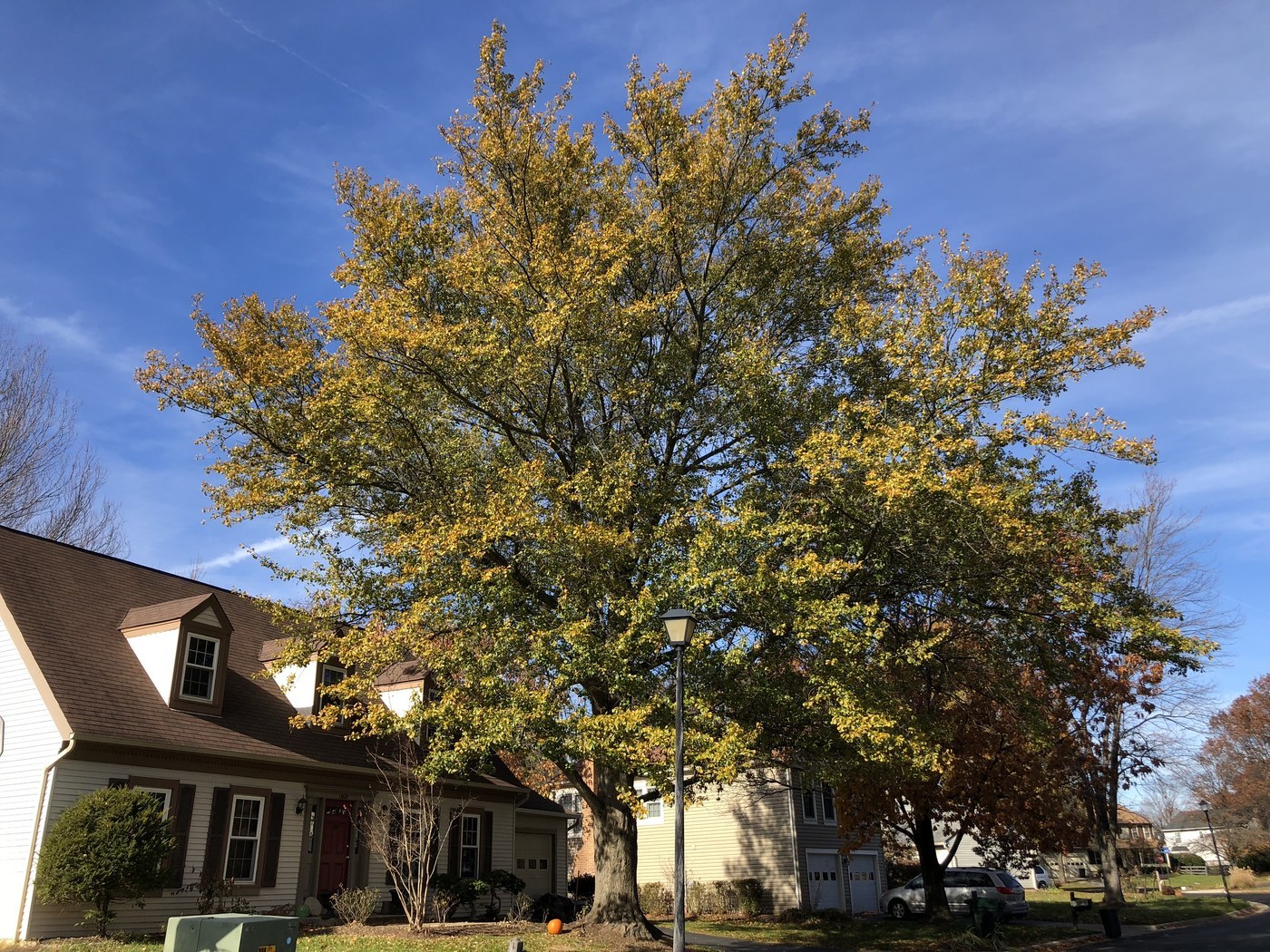
Key Identifying Features
Water Oak (Quercus nigra) is a fast-growing red-oak-group tree of the southeastern United States, 50-80 feet tall. Its most recognizable feature is the leaf shape: many leaves are spatula- or club-shaped (obovate) — narrow at the base and broadening to a rounded, often slightly three-lobed flaring tip, like a tiny duck's foot or spoon. Leaf shape is, however, notably variable, so combine it with the tree's wet-site habitat and small striped acorns.
- Spatula/club-shaped leaves with a broad rounded tip
- Leaves variable, some unlobed, some shallowly 3-lobed at the apex
- Semi-evergreen in the South, holding leaves into winter
- Bristle tip(s) at the leaf apex (red oak group)
Leaves & Stems
Leaves are small, 2-4 inches long, wedge-shaped at the base and flaring toward a rounded apex that often bears one or a few tiny bristle tips. Some leaves are entire and paddle-like; others have a few shallow lobes near the tip; juvenile and shoot leaves can be more deeply lobed. The leaf surface is dull blue-green above, paler below, with small rusty tufts in the vein axils beneath. Foliage is tardily deciduous, often persisting and turning yellow-brown into winter.
Twigs are slender and reddish-brown to gray. Buds are small, reddish-brown, and angled. Bark is smooth and gray-brown on young trees, becoming roughly furrowed with age.
Flowers & Fruit
Drooping yellow-green catkins appear in spring. The acorn is small (about 1/2 inch), nearly round, dark brown to black, often finely striped, and set in a thin, shallow, saucer-like cap covering only the base. Acorns mature in two seasons (red oak group) and are bitter; they are produced abundantly.
How to Tell It Apart from Look-Alikes
- Willow oak (Quercus phellos): narrow, willow-like leaves with no lobes; water oak leaves are broader and spatula-shaped at the tip.
- Laurel oak (Quercus laurifolia/hemisphaerica): leaves more elliptical and laurel-like, less club-shaped.
- Blackjack oak: thick leathery club-shaped leaves but larger, rusty-hairy, on dry sites; water oak leaves are thin and on wet sites.
The small, thin, spatula-shaped, variable leaf on a wet-site tree with tiny striped acorns is the signature.
Where You'll Find It
Water Oak grows in moist to wet sites — bottomlands, stream edges, floodplains, and poorly drained flats — but also adapts to drier urban soils, where it is a popular fast-growing shade and street tree. It ranges across the southeastern Coastal Plain and Piedmont from New Jersey to Florida and west to eastern Texas and up the Mississippi Valley.
Quick ID Checklist
- Spatula/club-shaped leaves, broad rounded tip, wedge base
- Leaf shape highly variable; tiny apex bristle(s)
- Semi-evergreen, holding leaves into winter
- Small, round, striped acorn in a shallow saucer cap; matures in 2 years
- Moist bottomlands and floodplains of the southeastern U.S.
Frequently asked questions
What does a water oak leaf look like?
Most are small and spatula- or club-shaped — narrow at the base and broadening to a rounded, slightly flaring tip, sometimes with a few shallow lobes. Leaf shape is quite variable on the same tree.
How do I tell water oak from willow oak?
Willow oak has narrow, unlobed, willow-like leaves, while water oak leaves are broader and paddle-shaped toward the tip. Both grow in similar wet southern habitats.
Is water oak evergreen?
It is semi-evergreen or tardily deciduous in the South, often holding many of its brown leaves through winter before dropping them in spring.
Are water oak acorns useful to wildlife?
Yes. Despite being bitter, the small striped acorns are produced abundantly and are a major food source for ducks, deer, turkeys, squirrels, and other wildlife.