
Western Red Cedar Identification Guide
Identify western red cedar by its flat, fern-like sprays of scale leaves, fibrous reddish bark, and small upturned cones. Includes how to tell it from incense cedar, arborvitae, and Port Orford cedar.
Read the full Western Red Cedar encyclopedia entry →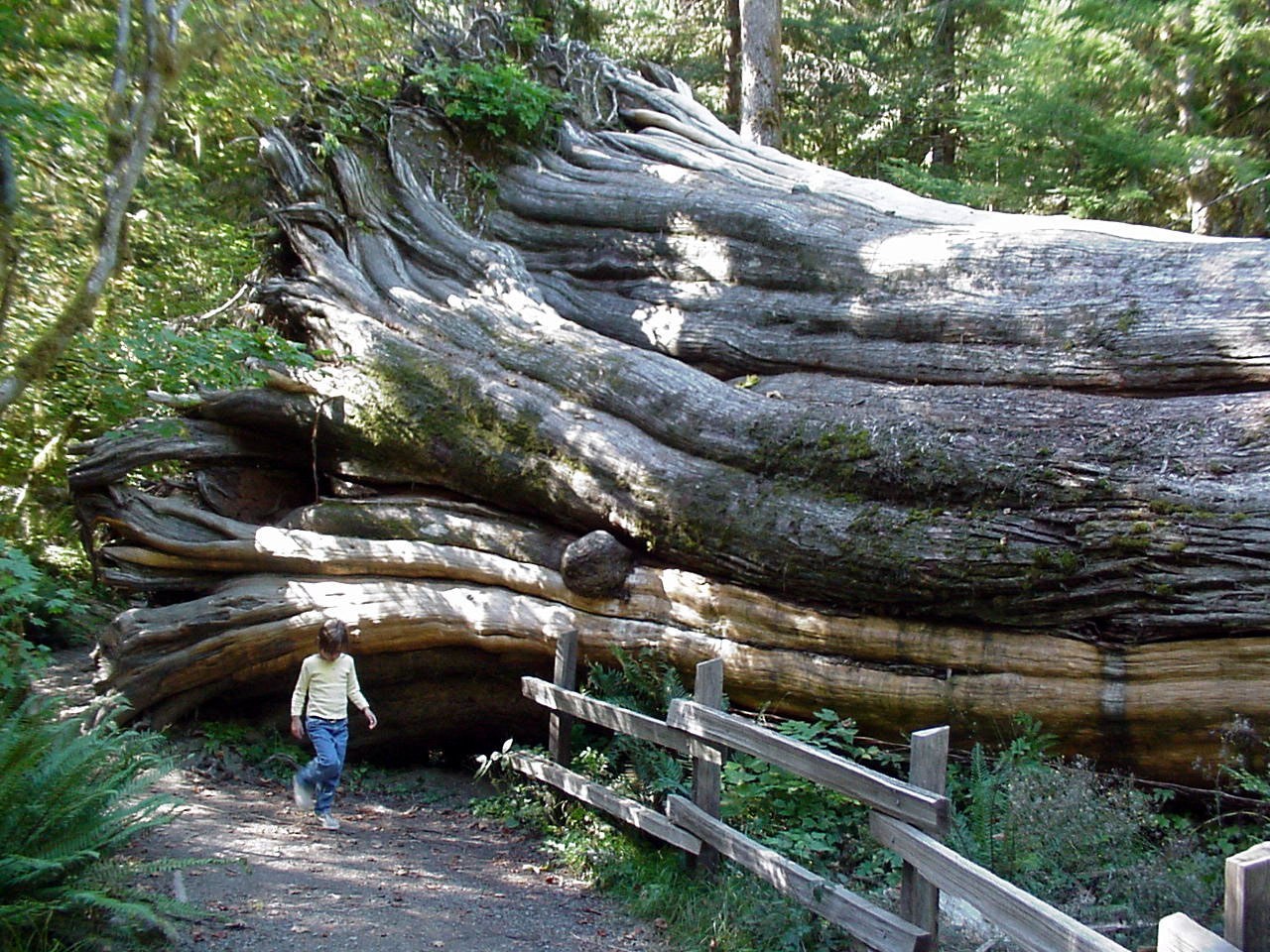
Key Identifying Features
Western red cedar (Thuja plicata) is a large evergreen conifer of the Pacific Northwest, and despite its name it is an arborvitae, not a true cedar. Look for flattened, fern-like sprays of scale-like leaves, stringy reddish-brown bark that peels in long vertical strips, and small upright cones shaped like rosebuds. Crushed foliage has a sweet, pineapple-like scent.
- Flat sprays of scale leaves arranged like overlapping shingles
- White butterfly-shaped marks on the leaf undersides
- Fibrous, stringy reddish-brown bark
- Small (1 cm) upturned cones with a few woody scales
Leaves & Stems
The foliage is not needle-like but scale-like, with tiny leaves pressed flat against the twig in four ranks, forming soft, flattened, drooping sprays that look fern- or frond-like. Turn a spray over and you will see faint white, butterfly- or hourglass-shaped stomatal bands on the underside, a key diagnostic. Crushing the foliage releases a fruity, sweetish smell. Bark is thin, fibrous, reddish to grey-brown, peeling in long vertical strips. Mature trees develop buttressed, fluted trunk bases and can exceed 50 to 60 m, often with drooping branch tips.
Flowers & Fruit
Western red cedar bears small, inconspicuous cones rather than flowers. Pollen cones are tiny and reddish at branch tips. Seed cones are small, about 1 to 1.5 cm, egg-shaped, and held upright (turned up at the branch tips), green ripening to brown, opening to release winged seeds. Each cone has only a few pairs of thin, leathery-woody scales that spread like the petals of a tiny opening rosebud.
How to Tell It Apart from Look-Alikes
- Incense cedar (Calocedrus decurrens): foliage in longer, less flattened sprays; cones are larger and shaped like a duck's bill / flying goose when open; crushed foliage smells of shoe polish.
- Arborvitae (Thuja occidentalis): closely related but smaller, with foliage that often bronzes in winter and lacks the bold white underside marks.
- Port Orford cedar (Chamaecyparis lawsoniana): undersides show distinct white X-shaped markings, and cones are small and round (globose), not upright rosebud cones.
The white butterfly-marked undersides plus upturned rosebud cones plus fruity scent confirm western red cedar.
Where You'll Find It
Western red cedar grows in the moist forests of the Pacific Northwest, from southern Alaska to northern California and inland to the northern Rockies. It favors damp, shaded ravines, streamsides, and cool slopes. It is a cornerstone of coastal temperate rainforests and widely planted as an ornamental and hedge tree elsewhere.
Quick ID Checklist
- Flat fern-like sprays of scale leaves
- White butterfly/hourglass marks on leaf undersides
- Crushed foliage smells sweet and fruity
- Stringy reddish-brown peeling bark
- Small upturned rosebud-shaped cones (~1 cm)
- Moist Pacific Northwest forests, drooping branch tips
Frequently asked questions
Is western red cedar a true cedar?
No. Despite the name, it is an arborvitae (Thuja plicata), not a true cedar (Cedrus). True cedars have needles in clusters; western red cedar has flat scale-like foliage in sprays.
What are the white marks on the underside of the leaves?
Those are stomatal bands, shaped like little white butterflies or hourglasses. They are a reliable feature for distinguishing western red cedar from look-alikes like incense cedar.
How do I tell it from incense cedar?
Check the cones and smell. Western red cedar has small upturned rosebud cones and sweet fruity foliage, while incense cedar has larger duck-bill-shaped cones and foliage smelling of shoe polish.
Why does the bark peel in strips?
Western red cedar has thin, fibrous bark that naturally shreds into long vertical reddish-brown strips. This stringy bark is both an identifier and the traditional fiber source for many Indigenous cultures.