
Wild Ginger Identification Guide
Identify Wild Ginger (Asarum) by its paired heart-shaped leaves and hidden maroon, cup-shaped flower at ground level. This guide covers its spreading habit and ginger-scented roots.
Read the full Wild Ginger encyclopedia entry →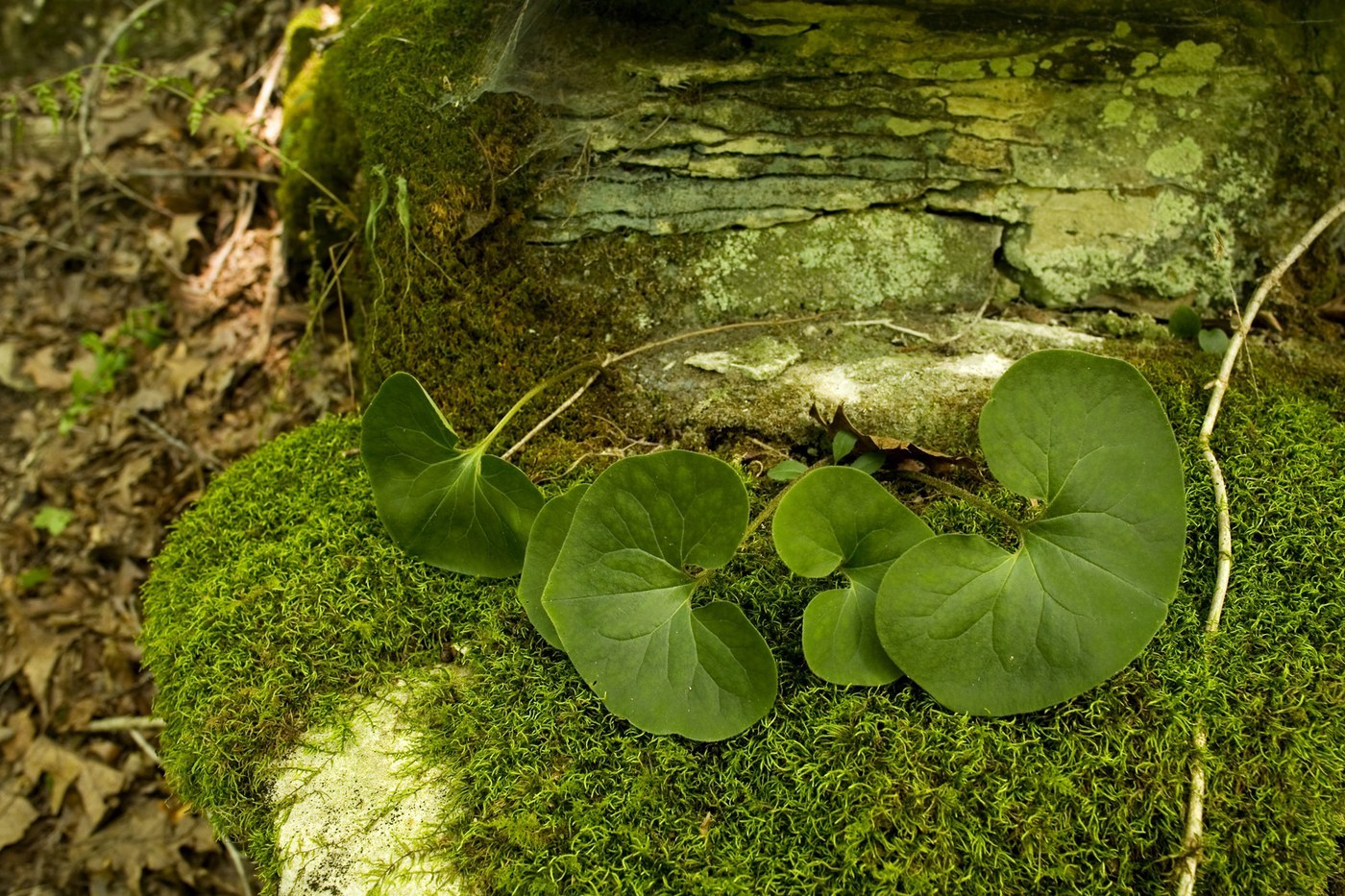
Key Identifying Features
Wild Ginger (genus Asarum, e.g. Asarum canadense) is a low, spreading woodland groundcover recognized by its pairs of heart-shaped, velvety leaves and an unusual maroon-brown flower hidden at ground level. It rarely exceeds 6 to 12 inches (15 to 30 cm) tall and forms dense, slowly spreading mats.
- Two heart- or kidney-shaped leaves per stem
- A single cup-shaped, reddish-brown flower sitting on the ground
- Ginger-scented rhizomes when broken
- Low, carpet-forming woodland habit
Leaves & Stems
The leaves are the most noticeable feature: broadly heart-shaped (cordate), soft, and often slightly fuzzy, borne in pairs on hairy stalks rising from a creeping rhizome. Foliage is deep green and can form a continuous groundcover. The rhizome and roots smell strongly of ginger when scratched, though the plant is unrelated to true ginger.
Flowers & Fruit
The flower is easy to miss because it sits at ground level, between the two leaf stalks, often hidden under leaf litter. It is a bell- or cup-shaped, three-lobed, reddish-brown to maroon structure with pointed tips, and it has no true petals (the color comes from sepals). Blooming occurs in spring (April to May). Pollination is by ground-dwelling insects. The fruit is a fleshy capsule.
How to Tell It Apart from Look-Alikes
- Violets: also have heart-shaped leaves but bear showy upright flowers; wild ginger's flower is hidden and maroon.
- Hepatica: lobed leaves and upright spring flowers, not paired heart leaves at ground level.
- European wild ginger (Asarum europaeum): glossier, more rounded evergreen leaves; native A. canadense is matte and deciduous.
The paired velvety heart leaves, hidden ground-level maroon flower, and ginger-scented root together are diagnostic.
Where You'll Find It
Wild Ginger grows in rich, moist, shaded deciduous woodlands and slopes, often in large colonies, across eastern and central North America (with relatives elsewhere). It favors humus-rich soil and deep shade.
Quick ID Checklist
- Paired heart-shaped, velvety leaves
- Single maroon, cup-shaped flower at ground level
- Ginger-scented rhizome
- Low, mat-forming groundcover
- Shaded, rich woodland soil
- Blooms in spring
Frequently asked questions
Is wild ginger the same as the ginger used in cooking?
No. It is unrelated to the tropical ginger used in cooking, despite the similar scent of its rhizomes; it simply shares a ginger-like aroma.
Why is the flower so hard to find?
The maroon, cup-shaped flower sits right at ground level between the two leaf stalks, often hidden under fallen leaves. It is thought to be pollinated by ground-dwelling insects, so it blooms close to the soil.
How do I recognize wild ginger by its leaves?
Look for pairs of broad, heart-shaped, slightly fuzzy green leaves on hairy stalks forming a low carpet on the shaded forest floor. The paired heart-shaped leaves are the most obvious clue.
Where does wild ginger grow?
It grows in rich, moist, shaded deciduous woodlands and slopes, often forming large colonies, across eastern and central North America, preferring humus-rich soil and deep shade.