
How to Care for Willow Oak
Willow Oak (Quercus phellos) is a fast, adaptable shade tree with fine willow-like leaves that thrives in sun and tolerates wet or average soil.
Read the full Willow Oak encyclopedia entry →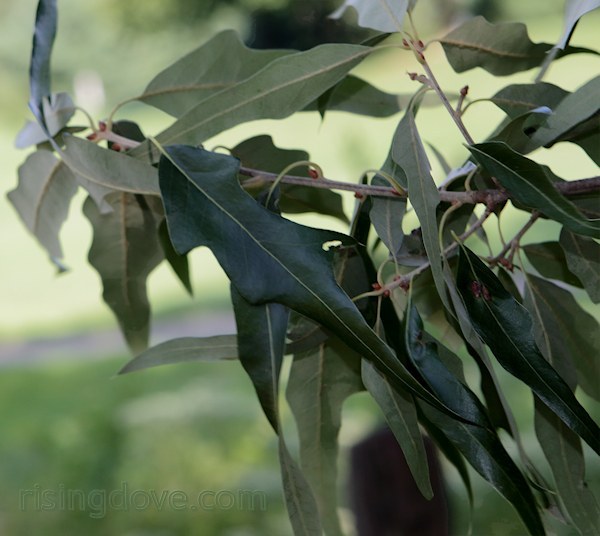
Willow Oak (Quercus phellos) is a large, graceful shade tree in the red oak group, distinguished by slender, willow-like leaves rather than the lobed foliage of most oaks. It is fast-growing for an oak, adaptable, and long-lived, making it a popular street and lawn tree.
Light
Plant Willow Oak in full sun for the strongest, most symmetrical growth. It needs plenty of light to develop its broad, rounded canopy and will grow thin and lopsided if heavily shaded, so give it an open site well away from buildings and larger trees.
Water
Willow Oak is notably adaptable to moisture, tolerating both wet, seasonally flooded ground and average, well-drained soil. Water young trees deeply and regularly through the first two to three years to establish a strong root system. Once established it withstands periodic drought, but occasional deep watering during prolonged dry spells keeps it vigorous.
Soil & Potting
This oak grows in a wide range of soils, including heavy clay and periodically saturated bottomland ground. It prefers moist, acidic soil and can develop leaf yellowing (chlorosis) in high-pH, alkaline conditions. Because it forms a fibrous, relatively shallow root system, it transplants more easily than many oaks. Plant balled-and-burlapped or container stock with the root flare at or slightly above grade.
Humidity & Temperature
Willow Oak is a tree of temperate climates and tolerates hot, humid summers and cold winters equally well. It is hardy across a broad range and needs no special humidity considerations; simply give it room, as mature specimens grow large and wide.
Feeding
Established trees in reasonable soil rarely need feeding. For young trees or those showing pale foliage, apply a balanced slow-release tree fertilizer in early spring. If chlorosis appears in alkaline soil, treat with soil acidifiers or chelated iron and work toward lowering soil pH over time.
Propagation
Willow Oak is grown from acorns. Collect mature acorns in autumn, sow promptly in deep containers or directly outdoors, and protect from rodents. The acorns need no long stratification and germinate readily; provide a deep pot to accommodate the developing taproot before transplanting to a permanent site.
Repotting / Pruning
As a landscape tree, Willow Oak needs structural pruning while young to establish a single strong central leader and well-spaced scaffold branches. Prune in the dormant season, removing crossing, weak, or damaged limbs. Minimize pruning during the growing season and avoid heavy cuts on mature trees. Container-grown saplings should be moved into deeper pots or planted out before the taproot circles.
Common Problems & Pests
Willow Oak is generally tough and pest-resistant. It can host aphids, scale, gall-forming insects, and defoliating caterpillars, though these are usually cosmetic. Chlorosis in alkaline soil is the most frequent cultural issue. Like other oaks it can be affected by fungal leaf diseases, cankers, and root rots in poorly managed sites; good siting, air circulation, and avoiding trunk wounds prevent most problems. The tree drops abundant small acorns and fine leaves, which is a maintenance consideration near paving.
Seasonal Care Tips
Plant in autumn or early spring. Water new trees deeply through the first summers and mulch the root zone to conserve moisture and suppress weeds, keeping mulch off the trunk. Do major pruning in winter dormancy. Expect leaves to persist late and turn yellow-bronze in fall, with some clinging into winter on younger trees. Rake fallen leaves and acorns as needed in autumn.
Frequently asked questions
How fast does a Willow Oak grow?
Willow Oak is one of the faster-growing oaks, often putting on a couple of feet of height per year when young in good conditions. Give it full sun, deep establishment watering, and room to spread, and it will develop a broad shade canopy relatively quickly.
Can Willow Oak handle wet soil?
Yes. It naturally grows in bottomlands and tolerates seasonally wet, even briefly flooded ground, while also performing well in average well-drained soil. This adaptability to moisture is one of its strengths as a landscape tree.
Why are my Willow Oak's leaves turning yellow?
Yellowing between green veins usually indicates iron chlorosis, common when the tree grows in alkaline soil. Lower the soil pH over time with acidifiers and apply chelated iron for a shorter-term correction. Uniform yellowing in fall is simply normal seasonal color.
How do I grow a Willow Oak from an acorn?
Collect ripe acorns in autumn and sow them promptly in deep containers or directly in the ground, protecting them from rodents. They germinate readily without long cold stratification; use a deep pot to accommodate the taproot before planting out.