Willow Oak
Quercus phellos
A fast-growing red-oak with narrow, willow-like leaves that lack the typical oak lobes, prized as a tough shade and street tree across the southeastern United States.
- Light
- Full sun
- Water
- Tolerates wet and average soils
- Difficulty
- Easy
Got a plant like this?
Identify any plant from a photo, free.
Overview
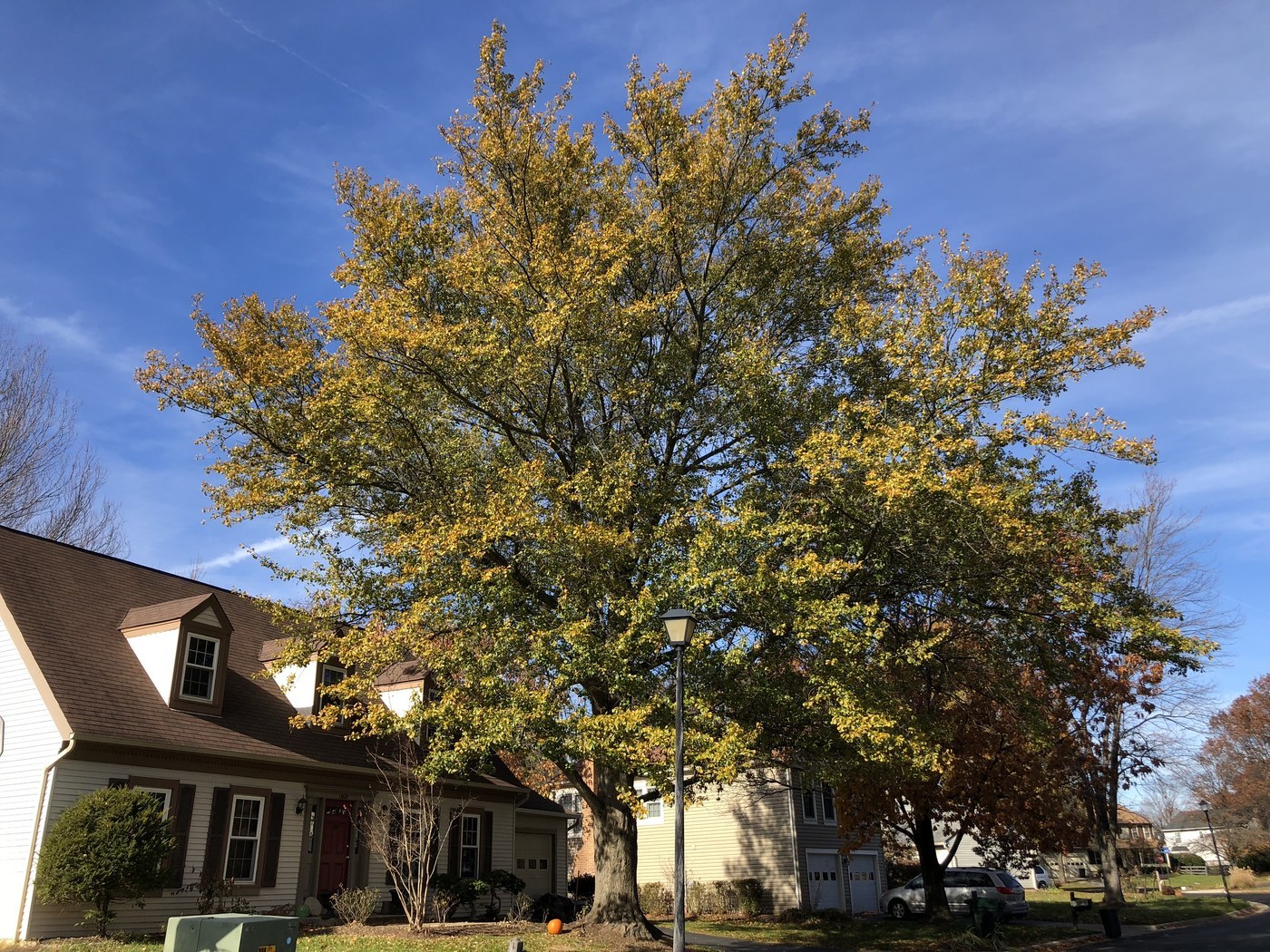
Willow oak is a member of the red oak group that breaks the usual oak mold with slim, unlobed leaves resembling those of a willow. It forms a dense, rounded to oval crown and grows quickly for an oak, often adding more than two feet per year when young.
Widely planted as a street, park, and lawn tree, it adapts to poor, compacted, and seasonally wet soils, making it a workhorse of urban forestry in the South. Its small acorns are a valuable resource for wildlife.
How to identify it
Look for the unusual foliage and clean, straight trunk:
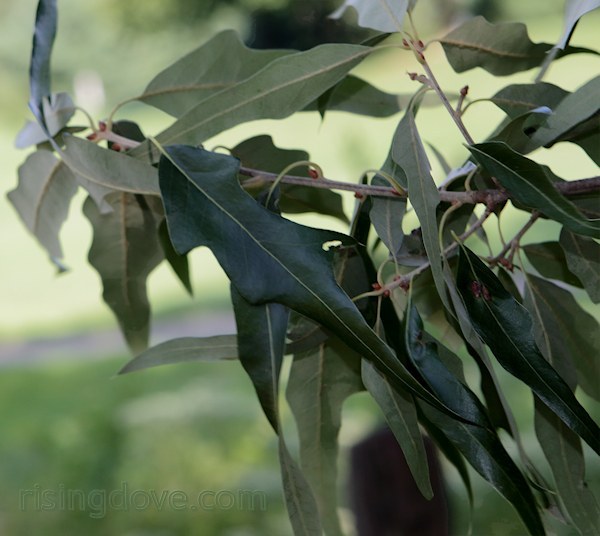
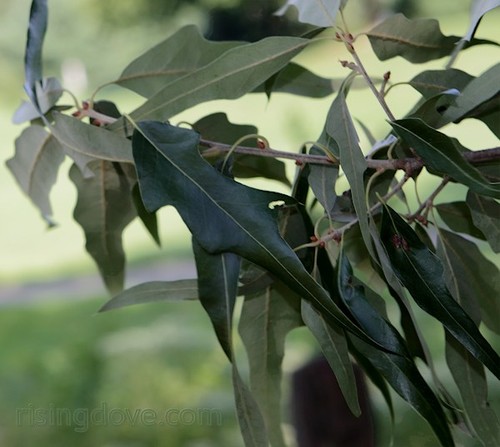
- Leaves narrow, lance-shaped, 2-5 in long, smooth-edged with a single bristle tip, light green turning yellow-bronze in fall
- Bark smooth and gray-brown when young, developing shallow ridges and dark plates with age
- Acorns small (about 1/2 in), nearly round, with a thin shallow cap, maturing in two seasons
- Form rounded to oval crown, typically 40-75 ft tall, with fine twiggy branching
- Habit fast-growing, often retaining lower branches in open sites
Care & growing
An undemanding tree once established.
- Light: Full sun for best growth and form
- Water: Drought-tolerant when mature; appreciates moisture and handles periodic flooding
- Soil: Prefers moist, acidic, well-drained loam but tolerates clay and compaction; can develop chlorosis in alkaline soils
- Temperature: Hardy in USDA zones 5-9
- Feeding: Rarely needed in decent soil
- Propagation: From fresh acorns sown in fall; needs no stratification
Habitat & origin
Native to the lowlands of the eastern and southeastern United States, from New Jersey south to Florida and west to Texas. In the wild it thrives in floodplains, bottomlands, and along streams where soils stay moist.
Because of its adaptability and clean appearance, it is one of the most commonly planted shade and avenue trees throughout the American South.
Frequently asked questions
Why doesn't it look like a normal oak?
Its narrow, unlobed leaves resemble a willow's, but it is a true red oak — confirmed by its bristle-tipped leaves and acorns.
How fast does willow oak grow?
Quite fast for an oak, often 1.5-2.5 ft per year when young, reaching mature size in a few decades.
Is it messy?
It drops many small acorns and fine leaves, but the litter is less coarse than larger-leaved oaks.
Will it grow in wet soil?
Yes. It naturally occurs in floodplains and tolerates seasonally wet ground better than most shade trees.
Willow Oak guides
In-depth guides for identifying, growing, and caring for Willow Oak.
How to Care for Willow Oak
Willow Oak (Quercus phellos) is a fast, adaptable shade tree with fine willow-like leaves that thrives in sun and tolerates wet or average soil.
Willow Oak Identification Guide
How to recognize willow oak by its distinctive narrow, willow-like leaves, small acorns, and form. Covers leaves, bark, fruit, look-alikes, and habitat.