
How to Care for Winterberry
Grow Winterberry, a deciduous holly whose bare winter branches blaze with red berries; it loves moist, acidic soil and sun.
Read the full Winterberry encyclopedia entry →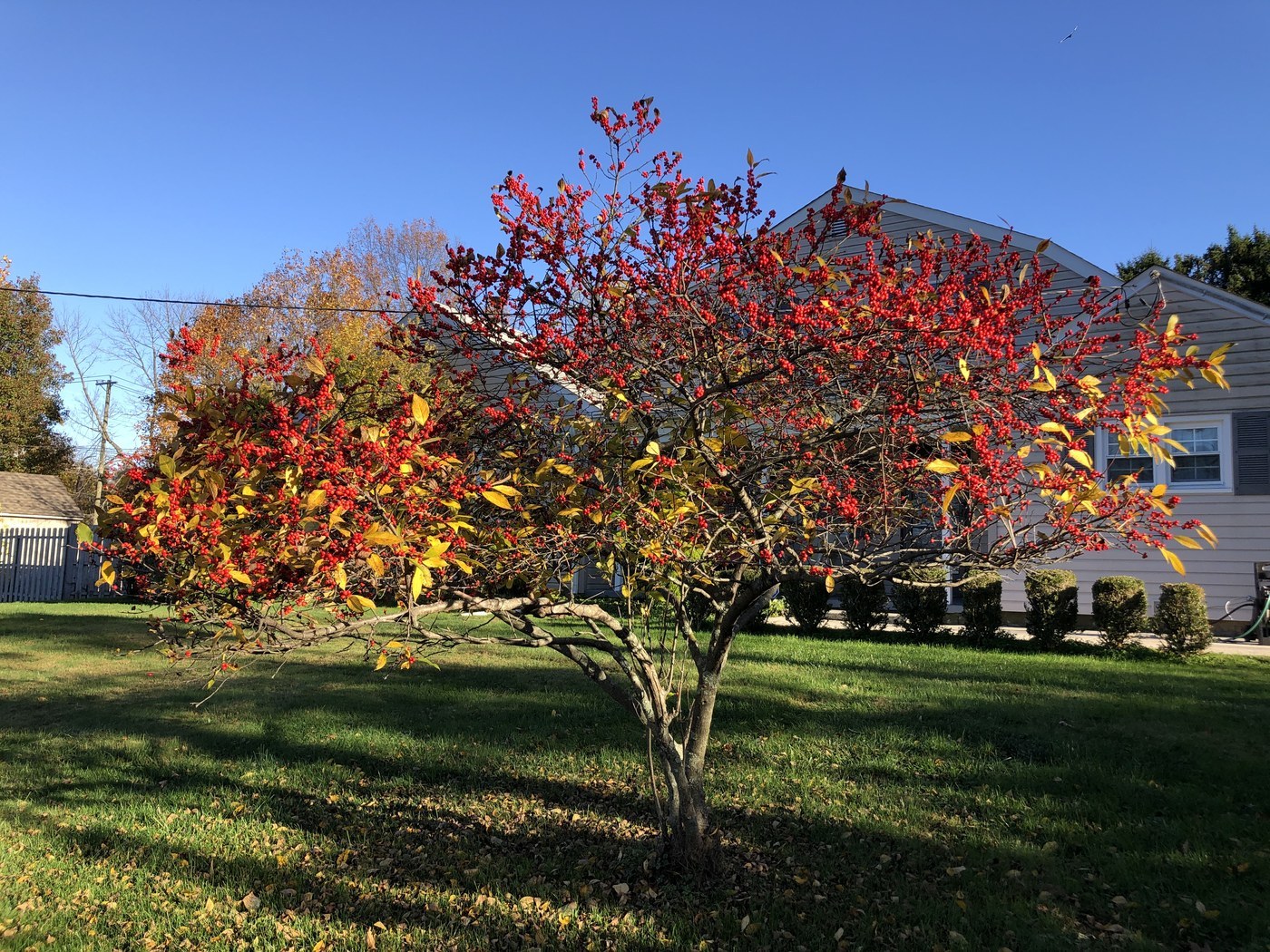
Winterberry (Ilex verticillata) is a deciduous native holly celebrated for the brilliant red berries that cloak its bare branches all winter after the leaves drop. Tolerant of wet ground and easy to grow, it makes a spectacular ornamental for rain gardens, borders, and winter interest.
Light
Winterberry produces the heaviest berry set in full sun but tolerates part shade. More sun means more flowers and therefore more fruit. In deep shade the shrub grows thinner and fruits sparsely, so aim for at least four to six hours of direct light.
Water
This is a moisture-loving shrub that thrives in consistently moist soil and tolerates outright wet, boggy conditions where many plants fail. Keep the soil evenly damp, especially while establishing and during fruit development. It is far less tolerant of prolonged drought than of wet feet.
Soil & Potting
Winterberry prefers acidic, humus-rich soil and can suffer chlorosis (yellowing leaves) in alkaline ground. It excels in the moist, low-lying, clay or peaty soils that challenge other shrubs. Amend with organic matter and avoid lime. Mulch heavily to conserve moisture and keep roots cool.
Humidity & Temperature
Winterberry is very cold hardy and thrives in temperate climates with distinct seasons; it needs winter cold and drops its leaves each year. It has no special humidity needs and handles both humid summers and freezing winters gracefully.
Feeding
Feed lightly in early spring with a fertilizer formulated for acid-loving plants to support healthy foliage and fruiting. Avoid heavy feeding, which encourages leafy growth over berries. A layer of organic mulch or compost also supplies steady, gentle nutrition.
Propagation
Propagate from softwood cuttings taken in early summer, which root reliably under mist. It can also be grown from seed, though seed requires lengthy cold stratification and is slow. Most gardeners buy named male and female cultivars chosen to bloom together.
Repotting / Pruning
Prune in late winter while dormant, removing dead or crossing branches and shaping as needed; it blooms and fruits on new wood, so this does not sacrifice berries. Winterberry suckers and can form colonies, so remove unwanted shoots to control spread.
Common Problems & Pests
Winterberry is generally trouble-free. The most common issue is a lack of berries, which almost always means no compatible male pollinator shrub is nearby, since plants are either male or female and a female needs a male to set fruit. Leaf yellowing signals soil that is too alkaline. Occasional pests include leaf miners and mites.
Seasonal Care Tips
Ensure a male cultivar is planted within pollinating distance of your berry-bearing females. Keep soil moist through summer while fruit forms. Enjoy the berry display from autumn through winter. Prune in late winter before spring growth resumes, and refresh mulch in spring.
Frequently asked questions
Why does my Winterberry have no berries?
Winterberry plants are either male or female, and only females produce berries, but they need a nearby compatible male to pollinate them. Plant at least one male cultivar within pollinating range of your females, matched for bloom time.
Does Winterberry need full sun?
It tolerates part shade but fruits far more heavily in full sun. For the best red berry display, give it at least four to six hours of direct light per day.
Can Winterberry grow in wet soil?
Yes, it is one of the best shrubs for consistently moist or even boggy ground where other plants rot. Keep the soil evenly damp; it dislikes prolonged drought much more than wet feet.
Why are my Winterberry leaves turning yellow?
Yellowing between the veins usually means the soil is too alkaline for this acid-loving shrub. Amend with organic matter, avoid lime, and use a fertilizer formulated for acid-loving plants.