
Winterberry Identification Guide
How to recognize winterberry (Ilex verticillata), a deciduous native holly known for its brilliant red berries on bare winter stems.
Read the full Winterberry encyclopedia entry →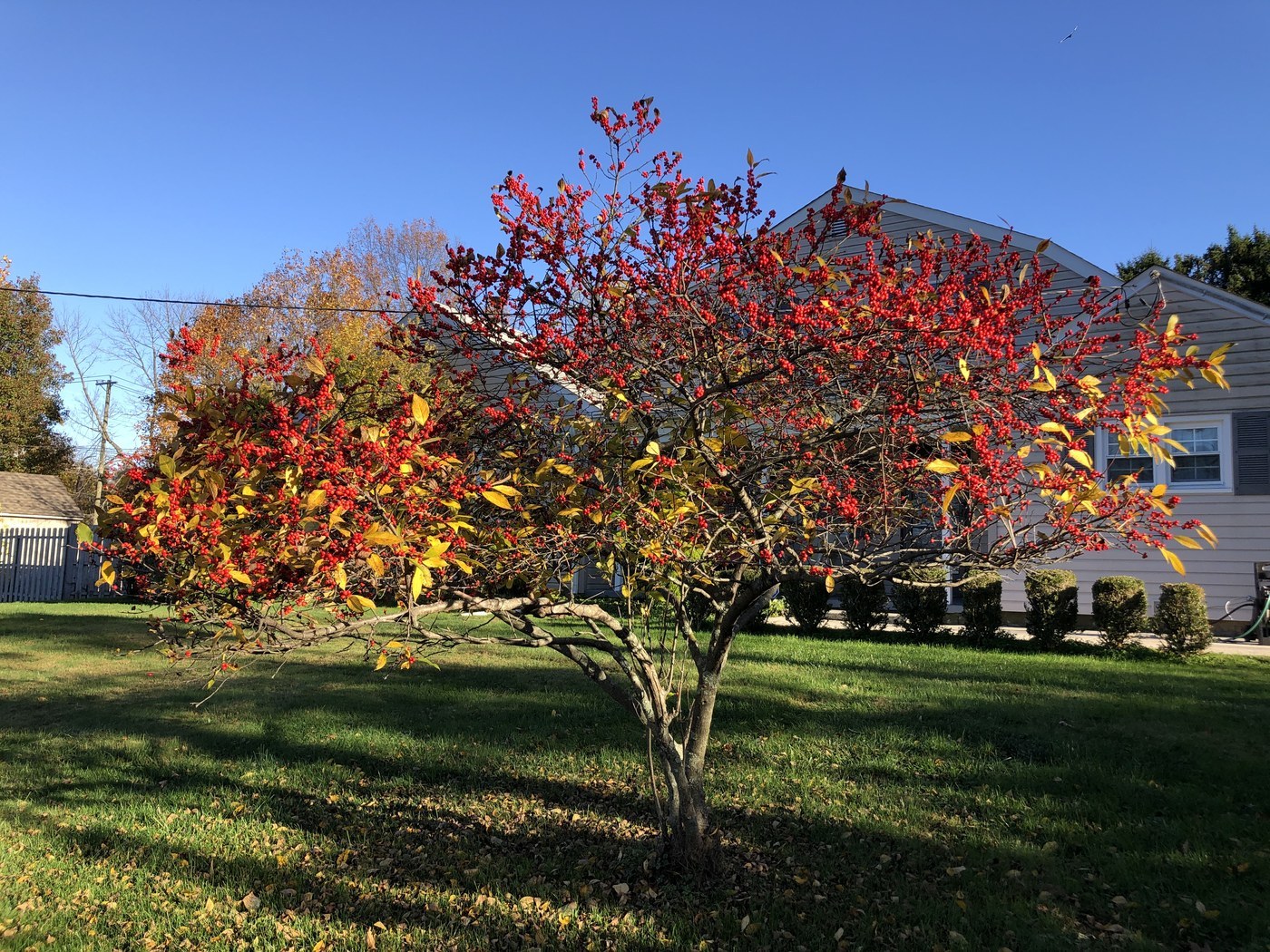
Key Identifying Features
Winterberry (Ilex verticillata) is a deciduous holly native to eastern North America. Unlike evergreen hollies, it drops its leaves in fall, leaving bare gray stems studded with dense clusters of bright red berries that persist into winter. This leafless-but-berried look in November through January is the single most reliable field clue.
- Multi-stemmed shrub, typically 3-12 ft tall, often forming thickets
- Smooth to lightly speckled gray bark
- Berries borne tightly against the twigs in the leaf axils
- Dioecious: only female plants bear fruit, and a nearby male is required for pollination
Leaves & Stems
The leaves are alternate, elliptic to oval, 1.5-3 inches long, with finely toothed (serrate) margins and a pointed tip. The upper surface is dull dark green, not glossy like English holly. There are no spines on the leaf margins, an important distinction from spiny-leaved hollies. In autumn the foliage turns a modest yellow to bronze and falls early, often before the berries fully color. Stems are slender, gray, and lack thorns.
Flowers & Fruit
Flowers appear in late spring to early summer and are small, greenish-white, and easily overlooked. They cluster in the leaf axils. The fruit is the star: round, bright scarlet (occasionally orange or yellow) berries about 1/4 inch across, ripening in late summer and holding through winter until birds strip them. Berries sit in dense whorl-like clusters hugging the stem.
How to Tell It Apart from Look-Alikes
- American holly (Ilex opaca) and English holly: evergreen with stiff, spiny leaves; winterberry is deciduous with smooth-edged leaves.
- Possumhaw (Ilex decidua): also deciduous with red fruit, but leaves are clustered on short spur shoots and tend to be broadest above the middle; ranges overlap mainly in the South.
- Common winterberry vs. cultivars: garden plants like 'Winter Red' are the same species selected for heavy fruiting.
- Spicebush or chokeberry: berries differ and these lack the tight, persistent red clusters on bare stems.
Where You'll Find It
Winterberry favors wet, acidic soils: swamp edges, marshes, pond margins, wet woods, and low spots. It tolerates standing water and is common in the eastern and central U.S. and southeastern Canada. In landscapes it is widely planted for winter color and bird value.
Quick ID Checklist
- Deciduous shrub with bare stems in winter
- Dense clusters of bright red berries hugging the twigs
- Alternate, finely toothed, non-spiny elliptic leaves in season
- Gray, thornless, multi-stemmed habit
- Growing in wet, acidic ground
Frequently asked questions
Why doesn't my winterberry have berries?
Winterberry is dioecious, so only female plants fruit and they need a compatible male within roughly 50 feet for pollination. A lone plant, an all-male plant, or one without a pollinator nearby will stay bare.
How do I distinguish winterberry from evergreen holly?
Winterberry is deciduous and drops its leaves, leaving red berries on bare gray stems. Its leaves are flat with fine teeth and no spines, unlike the stiff, spiny evergreen leaves of American or English holly.
When are the berries most visible?
From late fall through midwinter (roughly November to January) the leafless red-berried stems are unmistakable, until birds eventually strip the fruit.
Where does winterberry typically grow?
It favors wet, acidic ground such as swamp edges, marshes, pond margins, and low wet woods, and tolerates standing water across the eastern and central U.S. and southeastern Canada.