
Wintercreeper Identification Guide
Recognize Wintercreeper (Euonymus fortunei) by its evergreen opposite leaves, trailing and climbing rootlet-bearing stems, and bumpy bark on mature growth.
Read the full Wintercreeper encyclopedia entry →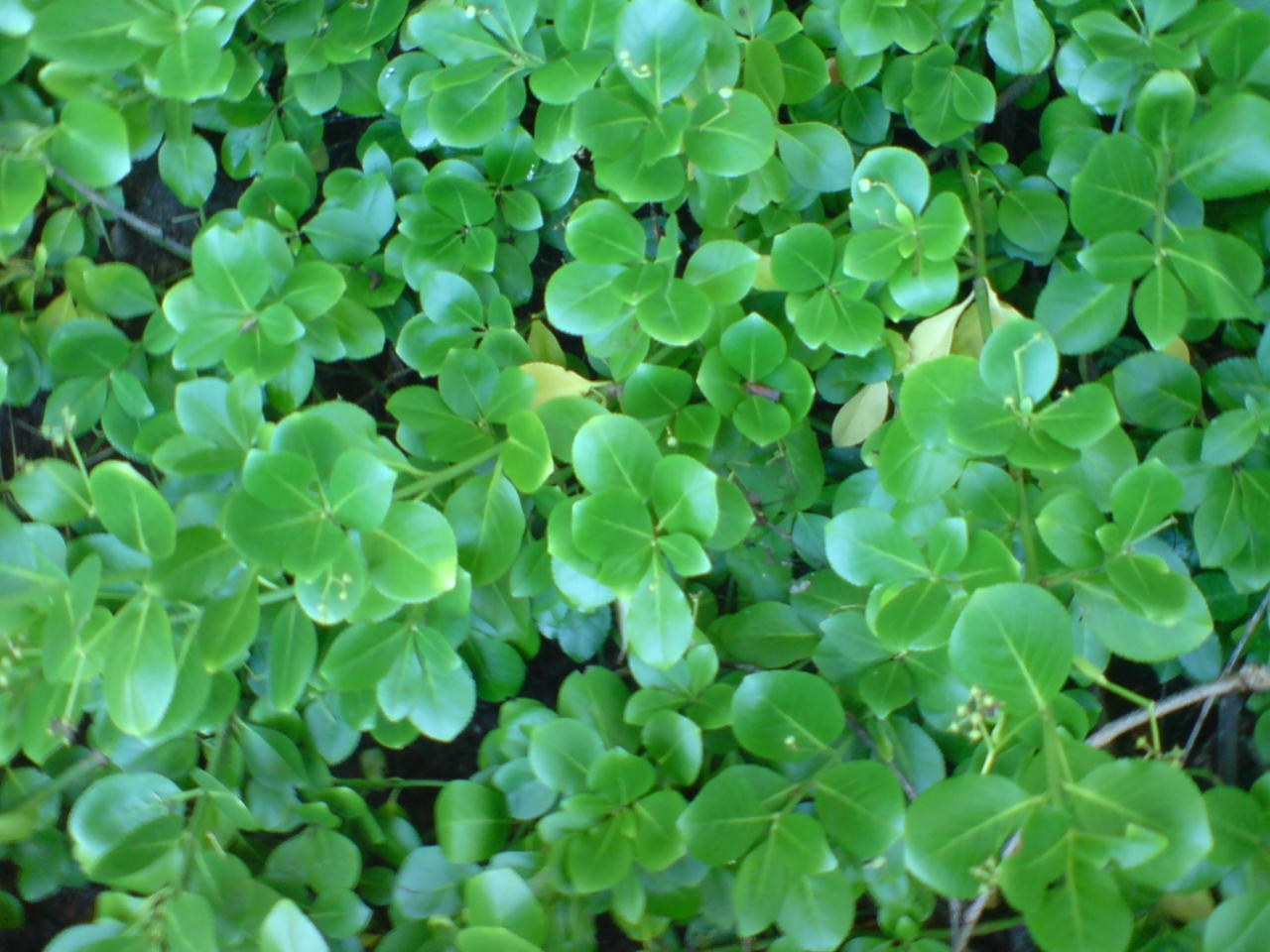
Key Identifying Features
Wintercreeper (Euonymus fortunei) is an evergreen, woody vine and groundcover in the staff-tree family (Celastraceae). It is identified by opposite, leathery evergreen leaves, stems that both trail along the ground and climb by aerial rootlets, and a tendency to form dense mats. Many cultivars are variegated. It is widely planted but is also an aggressive invasive in parts of North America.
- Evergreen vine/groundcover that can climb 40+ ft or sprawl as a mat
- Opposite leaves with finely toothed margins
- Climbs via clinging rootlets along the stem
- Mature climbing stems develop corky, warty bark
Leaves & Stems
Leaves are opposite, oval to elliptic, 1–2.5 in long, thick and leathery, with finely scalloped/toothed edges and clear, often whitish veins. The typical color is dark glossy green, but cultivars like 'Emerald 'n' Gold' and 'Emerald Gaiety' show white or yellow variegation, sometimes flushing pink in cold weather. Stems are green when young, becoming woody; climbing stems are studded with rootlets and develop a rough, corky texture.
Flowers & Fruit
Mature plants in the upright/climbing 'adult' phase produce small, inconspicuous greenish-white flowers in summer. These are followed by pinkish-red capsules that split open to reveal bright orange seeds in fall — a classic Euonymus trait. Groundcover-form plants that never climb often don't flower or fruit.
How to Tell It Apart from Look-Alikes
- English ivy (Hedera helix): Also evergreen and clinging, but ivy has alternate, lobed leaves; Wintercreeper leaves are opposite and toothed but not lobed.
- Vinca (periwinkle): Opposite leaves but smooth-edged, with blue-purple flowers and no woody climbing rootlets.
- Other Euonymus: Look-alike shrubs, but Wintercreeper's clinging, climbing/trailing vining habit sets it apart.
The evergreen opposite toothed leaves + clinging rootlets + orange-seeded pink capsules combination is diagnostic.
Where You'll Find It
Found throughout USDA zones 5–9 as planted groundcover, foundation greenery, and erosion control, and escaping into woodlands, forest edges, and fence lines where it climbs trees and walls. Native to East Asia; considered invasive in many U.S. states, where it shades out native groundcover and can damage tree bark and structures.
Quick ID Checklist
- Evergreen vine or mat-forming groundcover
- Opposite, leathery, finely toothed leaves
- Climbs by aerial rootlets; corky bumpy bark on old stems
- Often white/gold variegated in cultivars
- Pink capsules splitting to orange seeds in fall
- Aggressive spreader — frequently invasive
Frequently asked questions
How do I tell Wintercreeper from English ivy?
Wintercreeper has opposite, toothed (but unlobed) leaves, while English ivy has alternate, lobed leaves. Both climb by clinging rootlets.
Is Wintercreeper invasive?
Yes, in much of North America Euonymus fortunei is considered invasive, climbing trees and forming dense mats that crowd out native plants.
What are the orange berries on my Wintercreeper?
Mature climbing plants produce pink-red capsules that split open to expose bright orange-coated seeds in fall, a hallmark of the Euonymus genus.
Why does my Wintercreeper not flower?
Plants kept as low groundcover stay in a juvenile phase and rarely flower; only the upright, climbing 'adult' growth produces flowers and fruit.