
Wisteria Identification Guide
Identify wisteria by its long cascading clusters of fragrant pea flowers, compound pinnate leaves, twining woody stems, and velvety seed pods.
Read the full Wisteria encyclopedia entry →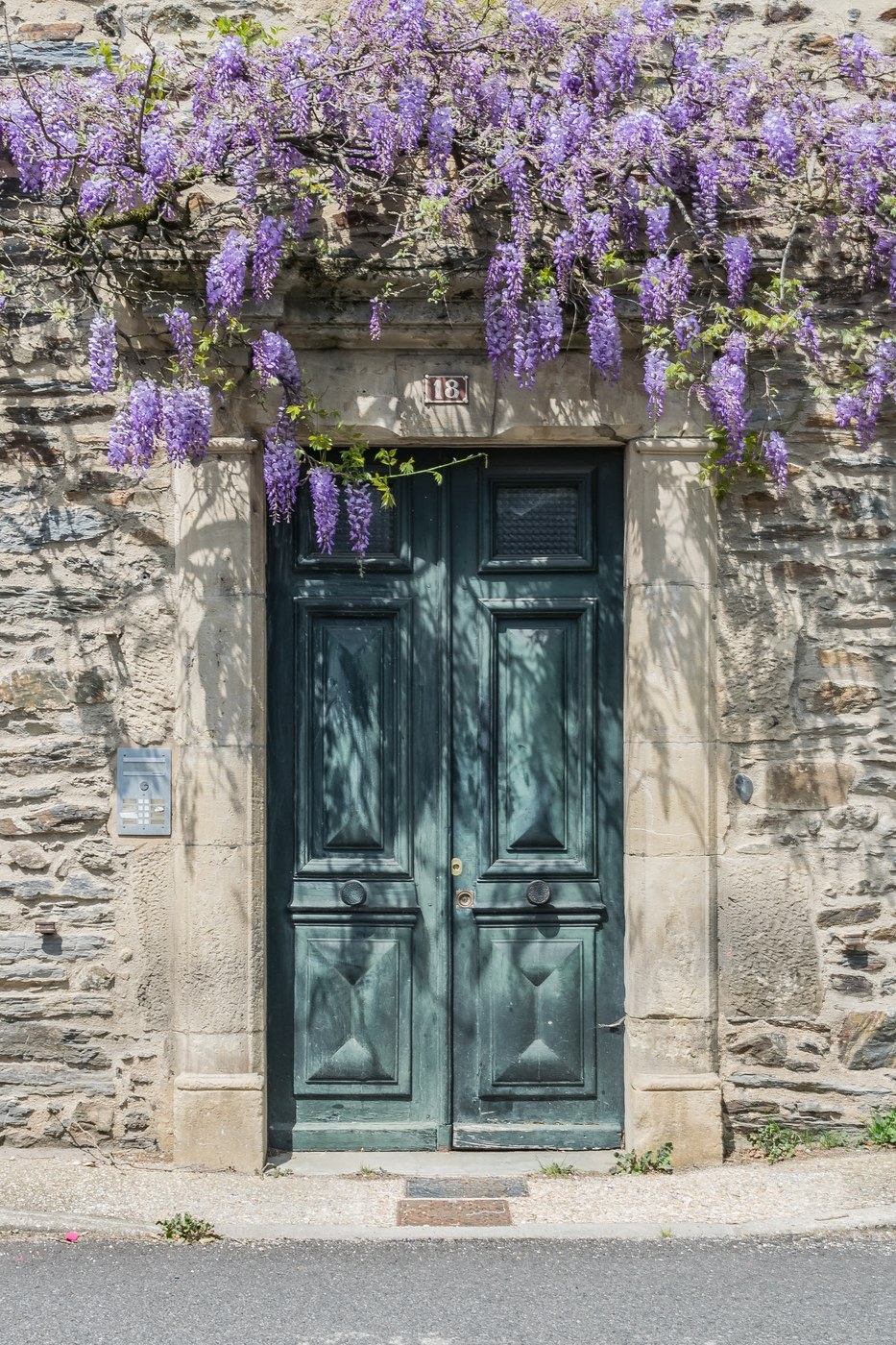
Key Identifying Features
Wisteria (Wisteria species, including Chinese W. sinensis and Japanese W. floribunda) is a vigorous woody climbing vine in the legume family (Fabaceae). Recognize it by:
- Long, drooping clusters (racemes) of fragrant purple, blue, pink, or white pea-shaped flowers.
- Twining woody stems that spiral around supports.
- Pinnately compound leaves with many paired leaflets.
Leaves & Stems
Leaves are alternate and pinnately compound, 6–14 inches long, each with 7–19 oval leaflets arranged in pairs along a central stalk with a single leaflet at the tip. Young leaflets are often silky-haired, maturing to bright green and turning yellow in fall. Stems are woody, twining lianas that wrap tightly around trellises and trees, becoming thick and gnarled with age. Direction of twining helps ID: Chinese wisteria twines counterclockwise, Japanese wisteria twines clockwise.
Flowers & Fruit
Flowers are the showstopper: pendulous racemes 6–24 inches long (Japanese types longest) packed with pea/butterfly-shaped flowers, each with an upright banner petal, two wings, and a keel. Colors are violet-blue, lavender, pink, or white, and most are sweetly fragrant. Chinese wisteria opens its whole cluster nearly at once before leaves; Japanese opens progressively from top to bottom with the leaves. After flowering, flattened, velvety, bean-like seed pods 4–6 inches long develop, splitting to release hard seeds.
How to Tell It Apart from Look-Alikes
- Laburnum (golden chain tree): Has similar hanging pea-flower chains but is bright yellow and a small tree, not a twining vine.
- Kudzu: A legume vine too, but leaves have only three broad leaflets and flowers are upright, not cascading.
- Black locust / Robinia: Compound leaves and pea flowers, but a thorny tree with shorter upright flower clusters.
The long pendant racemes + twining woody stems + many-leaflet compound leaves combination is unique to wisteria.
Where You'll Find It
Wisteria is a classic ornamental for pergolas, arbors, walls, and porches, prized for its spring flower curtains. It thrives in full sun and deep, moist, well-drained soil. It can escape cultivation and become invasive, smothering trees along woodland edges and roadsides in temperate regions.
Quick ID Checklist
- Long cascading racemes of fragrant pea flowers
- Twining woody climbing stems
- Pinnately compound leaves with 7–19 leaflets
- Velvety flattened bean-like pods after bloom
- Blue/purple/pink/white butterfly-shaped flowers
- Spring bloom, often before full leaf-out
Frequently asked questions
How can I tell Chinese from Japanese wisteria?
Chinese wisteria twines counterclockwise and opens its whole short raceme nearly at once before the leaves. Japanese wisteria twines clockwise and has much longer racemes that open gradually from top to bottom with the leaves.
How do I distinguish wisteria from a golden chain tree?
Both have hanging chains of pea flowers, but wisteria is a twining woody vine with purple, blue, pink, or white blooms, while laburnum is a small tree with bright yellow flower chains.
Why is wisteria sometimes considered invasive?
The Asian species are extremely vigorous and can escape gardens, climbing and smothering native trees along woodland edges. In many temperate regions they self-seed and spread aggressively.
How long do wisteria flower clusters get?
The pendulous racemes range from about 6 to 24 inches long, with Japanese types producing the longest clusters and Chinese types shorter ones.