
How to Care for Witchgrass
Witchgrass thrives in full sun and lean, dry soil, forming airy, cloud-like seed heads with almost no maintenance.
Read the full Witchgrass encyclopedia entry →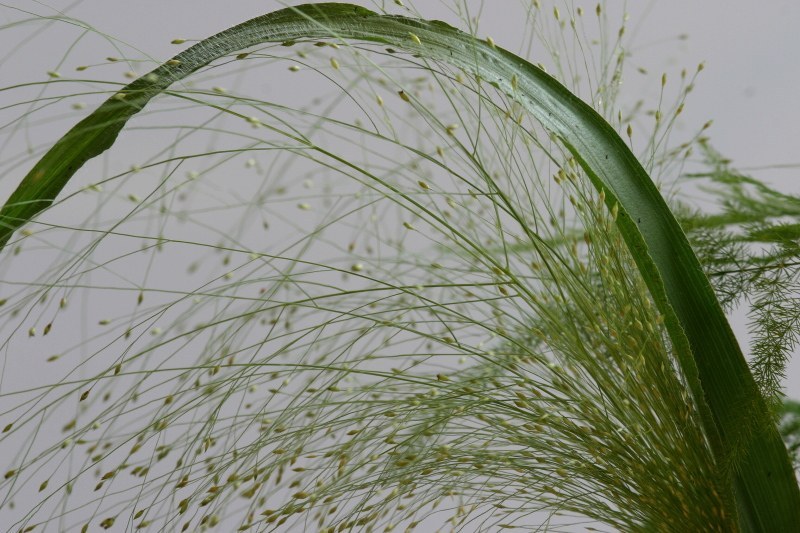
Witchgrass (Panicum capillare) is a fine-textured annual grass prized for its delicate, cloud-like flowering panicles that catch light and wind. It is exceptionally easy and drought-tolerant, thriving on neglect in sunny, open ground.
Light
Grow witchgrass in full sun for the sturdiest stems and the fullest, most airy seed heads. It is a sun-loving grass that grows lax and floppy in shade. An open, unshaded position gives the best form and the shimmering backlit effect that makes the plant ornamental.
Water
Witchgrass is drought-tolerant once established and needs very little supplemental water. Give occasional deep watering during establishment or prolonged dry spells, but otherwise let the soil dry between waterings. Overwatering produces soft, weak growth, so err firmly on the dry side.
Soil & Potting
This grass is adaptable and actually favors lean, well-drained soils, including sandy or gravelly ground where richer plants struggle. It tolerates poor fertility and a wide pH range. Avoid heavy, waterlogged soil; sharp drainage keeps the plant upright and healthy. Rich soil tends to make growth lank and floppy.
Humidity & Temperature
Witchgrass is a warm-season annual that grows fastest in summer heat and tolerates a broad range of humidity. It is not frost-hardy, completing its life cycle in a single warm season. No special humidity is required; it handles hot, dry air well.
Feeding
Feeding is generally unnecessary and often counterproductive. Excess fertility, especially nitrogen, causes weak, floppy stems that flatten in wind or rain. On very poor ground a single light feeding early in the season is more than enough.
Propagation
Witchgrass is an annual grown readily from seed. Sow directly outdoors after the soil warms in spring, scattering seed on prepared ground and lightly covering it. It germinates quickly in warmth and readily self-sows, so deadhead panicles if you want to limit its spread.
Repotting / Pruning
As an annual, witchgrass is not repotted. No routine pruning is needed during the season. Cut or pull spent plants at the end of the season, and remove seed heads before they shatter if you wish to control self-seeding in the garden.
Common Problems & Pests
Witchgrass is largely trouble-free and rarely bothered by serious pests. Rust and other leaf fungi can appear in damp, crowded, poorly drained conditions, so favor airflow and dry soil. Its main drawback is prolific self-seeding, which can make it weedy if panicles are left to mature and scatter.
Seasonal Care Tips
Sow seed in spring once the ground has warmed, and let plants grow with minimal water through summer. The airy panicles are most striking in late summer when backlit. Cut plants down and clear seed heads in autumn to keep the planting tidy and manage volunteer seedlings the following year.
Frequently asked questions
Does witchgrass need a lot of water?
No. It is drought-tolerant once established and prefers to dry out between waterings. Provide occasional deep water only during establishment or long dry spells.
Why is my witchgrass flopping over?
Floppy growth usually comes from too much shade, overly rich soil, or excess nitrogen. Grow it in full sun on lean, well-drained ground and skip the fertilizer for sturdier stems.
Will witchgrass spread on its own?
Yes, it self-sows readily from its seed heads. If you want to limit spread, cut or remove the panicles before the seed matures and shatters.
Does witchgrass come back every year?
It is a warm-season annual, so individual plants finish in one season. It often reappears the next year from self-sown seed rather than from the original roots.
What soil is best for witchgrass?
Lean, well-drained soils, including sandy or gravelly ground, suit it best. It tolerates poor fertility; rich soil tends to produce weak, floppy growth.