
Wood Anemone Identification Guide
How to recognize Wood Anemone, a low spring woodland wildflower, by its solitary white star-shaped flowers and deeply divided whorled leaves.
Read the full Wood Anemone encyclopedia entry →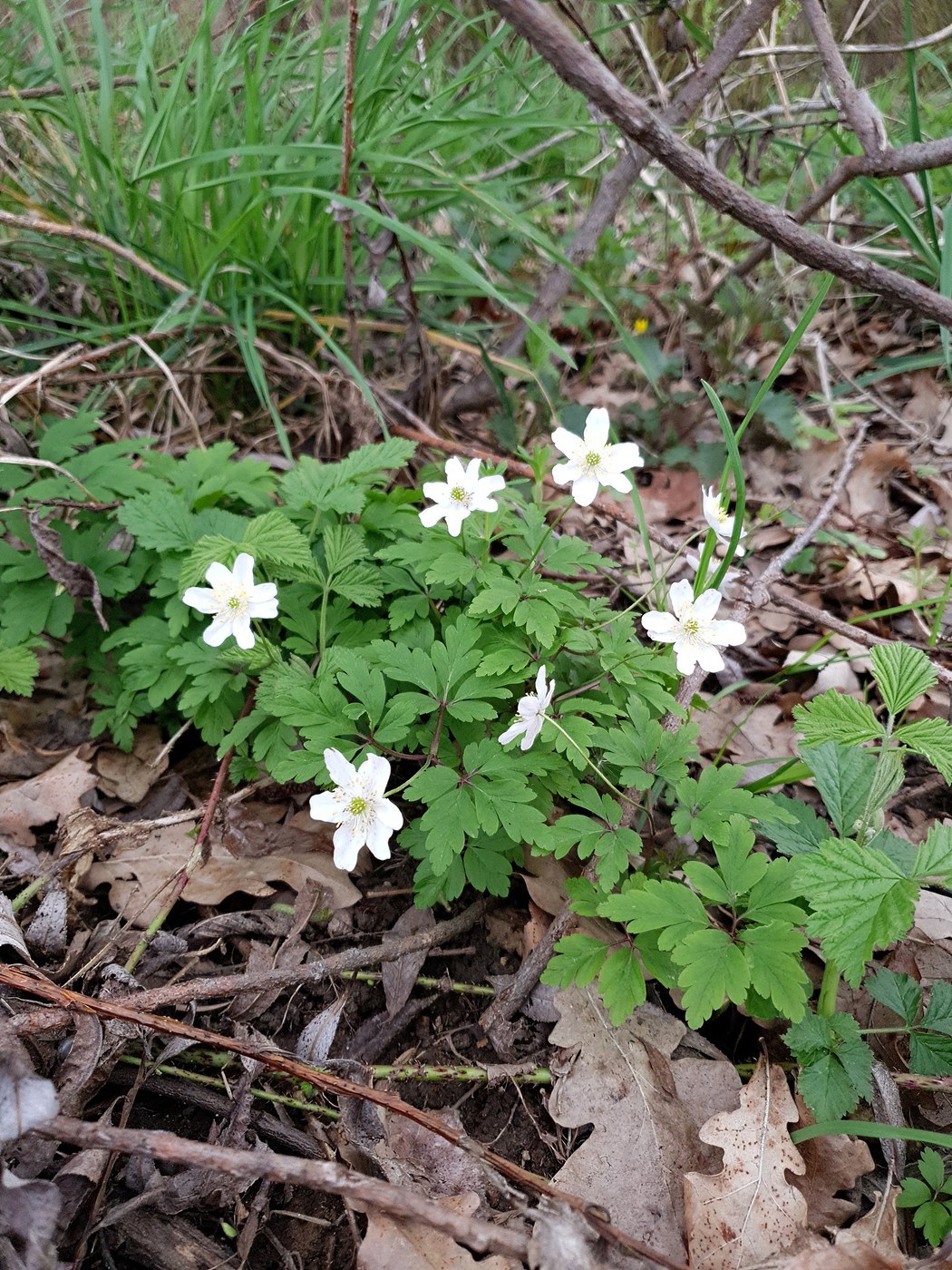
Key Identifying Features
Wood Anemone (Anemonoides nemorosa, formerly Anemone nemorosa) is a delicate, low-growing spring wildflower of deciduous woodland. Look for these reliable signs:
- A single white, star-like flower held on a slender stalk above the leaves.
- A whorl of three deeply divided leaves partway up the flower stem.
- A carpet-forming creeping rhizome that produces large drifts across the woodland floor.
- Plants stand just 8–15 cm (3–6 in) tall.
The flower has 6–8 petal-like sepals (true petals are absent), often flushed pink or purple on the reverse. A central boss of yellow stamens surrounds a cluster of green carpels.
Leaves & Stems
The stem leaves are arranged in a distinctive whorl of three, each leaf palmately divided into three lobed segments that are sharply toothed. They are mid-green, thin and slightly hairy. Basal leaves usually appear later, often after flowering, on long stalks rising directly from the rhizome. Stems are thin, reddish at the base, and unbranched, carrying just one flower each.
Flowers & Fruit
Flowering runs from March to May, before the tree canopy closes. Each flower is 2–4 cm across, opening flat in sunshine and nodding and closing at night or in rain. As blooms age the sepals may take on a pink tinge. After flowering, a small rounded head of downy achenes (dry single-seeded fruits) develops, though the plant spreads mainly by rhizome rather than seed.
How to Tell It Apart from Look-Alikes
- Wood Sorrel (Oxalis acetosella) also makes white woodland carpets but has clover-like trifoliate leaves and pencil-veined pink-striped petals.
- Yellow Anemone (Anemonoides ranunculoides) is nearly identical in leaf and habit but has bright yellow flowers.
- Lesser Celandine has glossy heart-shaped leaves and glossy yellow flowers — never white.
- Garden anemones (e.g. Anemone blanda) have many more, narrower petals (often blue) and finely cut leaves.
The combination of one white flower + a whorl of three divided leaves + carpeting habit in spring woodland is diagnostic.
Where You'll Find It
Wood Anemone favors ancient deciduous woodland, hedge banks, and shaded grassland on moist, humus-rich soils. It is a recognized indicator of long-established woodland in Britain and Europe. Native across Europe and into western Asia, it spreads very slowly (a few feet per century), so large stands signal old habitat. It thrives in dappled light and goes dormant by midsummer.
Quick ID Checklist
- Single white star flower, 2–4 cm, 6–8 sepals
- Whorl of three deeply lobed, toothed leaves on the stem
- Low, 8–15 cm carpeting plant in spring
- Flowers nod and close at night/rain
- Pink flush on sepal undersides
- Growing in shaded deciduous woodland, March–May
Frequently asked questions
Does Wood Anemone really have no petals?
Correct — the showy white 'petals' are actually petal-like sepals (tepals), usually 6–8 of them. True petals are absent, which is common in the buttercup family.
Why are the flowers closed when I find them?
Wood Anemone flowers close up and nod in dull weather, rain, and at night, opening flat only in sunshine. Return on a bright day to see them fully open.
Is a carpet of Wood Anemone a sign of old woodland?
Yes. It spreads extremely slowly by rhizome, so extensive drifts usually indicate ancient, long-undisturbed deciduous woodland.
Could I confuse it with Wood Sorrel?
Both form white spring carpets, but Wood Sorrel has clover-like three-part leaves and delicately pink-veined petals, while Wood Anemone has deeply lobed whorled leaves and a single flat star flower.