Wood Anemone
Anemone nemorosa
A low-growing spring ephemeral of European woodlands that carpets the forest floor with star-shaped white flowers before the tree canopy leafs out.
- Light
- Dappled shade to partial sun
- Water
- Keep evenly moist in spring; tolerates summer dryness
- Difficulty
- Easy
Got a plant like this?
Identify any plant from a photo, free.
Overview
Wood anemone is one of the classic harbingers of spring in temperate European deciduous woods, flowering from March to May while the canopy is still bare. It spreads slowly by creeping underground rhizomes, eventually forming extensive colonies that are often regarded as an indicator of ancient woodland.
After flowering and setting seed, the entire plant dies back by early summer, retreating underground until the following spring. This spring-ephemeral lifestyle lets it exploit the bright light and moisture available before larger plants take over.
How to identify it
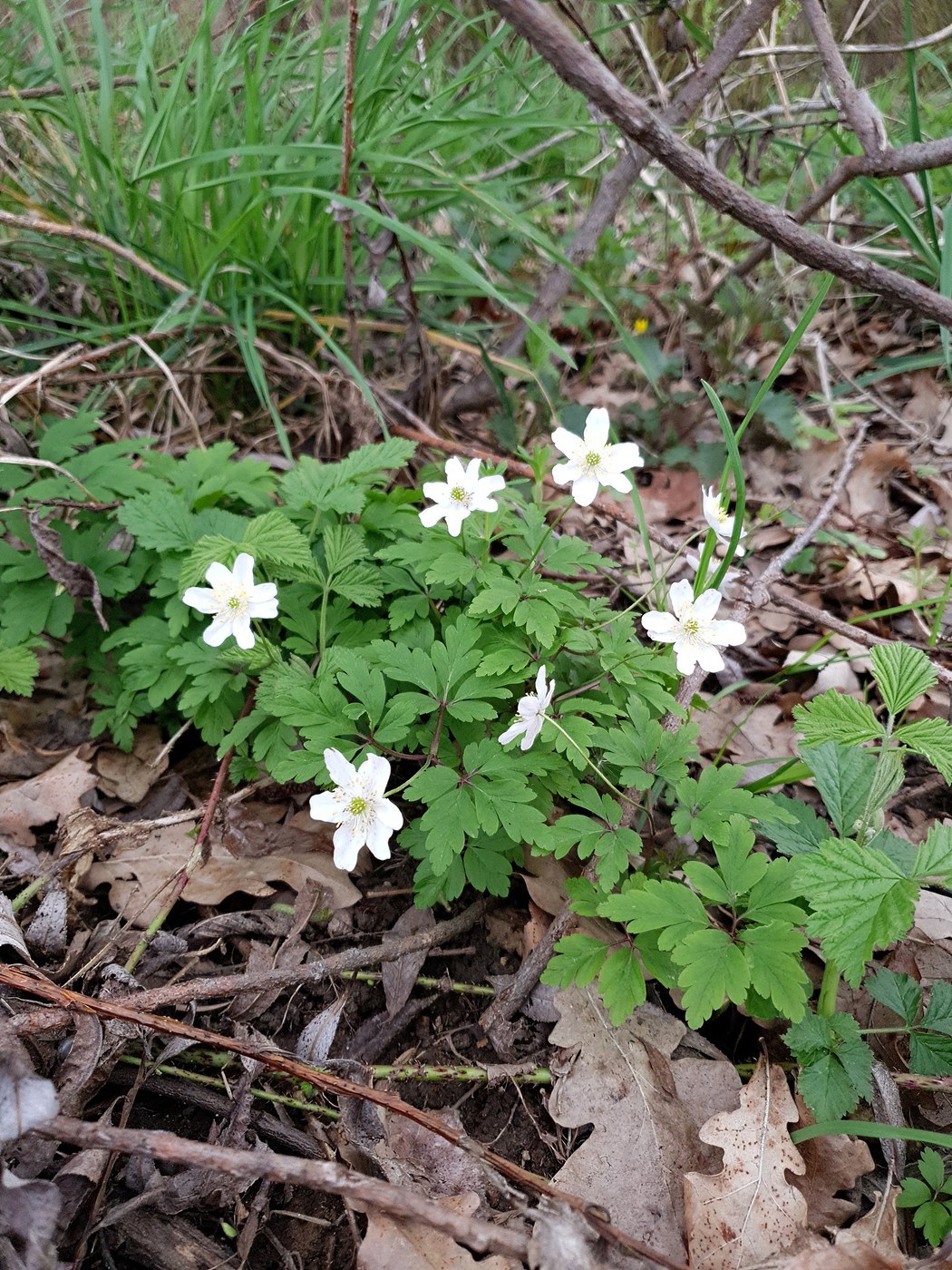
- Flowers: Solitary, 2-4 cm across, with 6-7 (sometimes up to 8) petal-like sepals, white and often flushed pink or purple on the reverse.
- Leaves: Deeply divided into three lobed, toothed segments, borne in a whorl of three below the flower.
- Height: Low, typically 5-15 cm tall.
- Habit: Spreads via thin, horizontal rhizomes to form loose carpets.
- The flowers nod and close at night or in dull weather, tracking the sun when open.
Care & growing
Light: Best in dappled woodland shade; tolerates spring sun before trees leaf out.
Water: Likes moist, humus-rich soil during active growth; can go dry once dormant in summer.
Soil: Prefers loose, leaf-mould-rich, slightly acidic to neutral soils.
Temperature: Fully hardy; thrives in cool temperate climates.
Feeding: Generally unnecessary; an annual leaf-mould mulch is ideal.
Propagation: Lift and divide the brittle rhizomes in late summer while dormant, or sow fresh seed.
Habitat & origin
Native across much of Europe, from the British Isles eastward to the Caucasus, where it grows in deciduous woodland, hedgerows, and shaded grassland. It favors moist but well-drained soils rich in organic matter.
In cultivation it is widely grown in shade gardens and woodland borders throughout temperate regions, valued as a naturalizing groundcover beneath deciduous shrubs and trees.
Frequently asked questions
Why does it disappear in summer?
It is a spring ephemeral. After flowering and seeding it dies back to its underground rhizome and stays dormant until the next spring.
Does it indicate old woodland?
Because it spreads very slowly, dense established colonies are often used by ecologists as an indicator of ancient, undisturbed woodland.
How do I propagate it?
Divide the brittle rhizomes in late summer when the plant is dormant, replanting them shallowly in moist, leaf-rich soil.
Wood Anemone guides
In-depth guides for identifying, growing, and caring for Wood Anemone.
How to Care for Wood Anemone
Grow the delicate spring woodland Wood Anemone (Anemone nemorosa): dappled shade, moist spring soil, and easy naturalizing under trees.
Wood Anemone Identification Guide
How to recognize Wood Anemone, a low spring woodland wildflower, by its solitary white star-shaped flowers and deeply divided whorled leaves.